



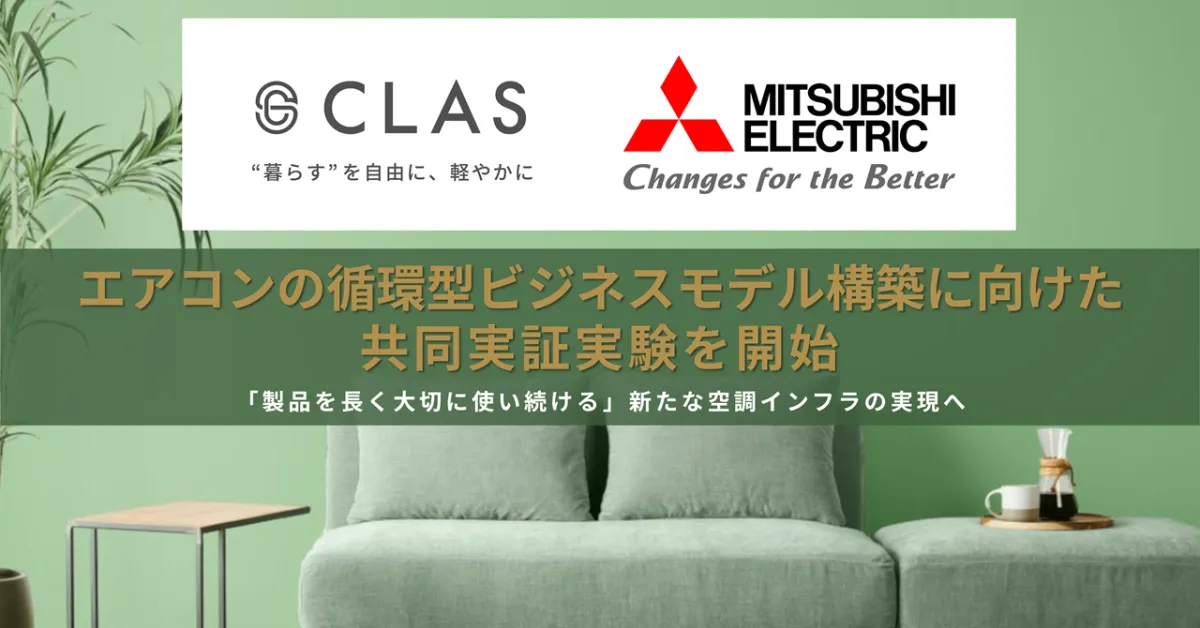
CLAS and Mitsubishi Electric Initiate Circular Economy Project for Air Conditioners
Innovating Air Conditioning: A Move Towards Sustainability
In a groundbreaking initiative aimed at establishing a circular economy for air conditioning, CLAS, a Tokyo-based company specializing in sustainable interior solutions, has partnered with Mitsubishi Electric. Together, they plan to launch a proof-of-concept (PoC) for a rental subscription service focusing on wall-mounted air conditioners, effectively promoting resource efficiency and environmental stewardship.
The Need for Change
Air conditioning units, essential for maintaining comfortable living conditions, also pose significant challenges in terms of resource management and environmental impact. As climate change intensifies, the risk of heat-related illnesses due to rising temperatures increases. This calls for a more sustainable and innovative approach to how we utilize such appliances. The collaboration between CLAS and Mitsubishi Electric highlights the critical need to shift from a throwaway culture to one that values longevity, quality, and efficient resource use.
Key Objectives of the Initiative
1. Building an Operational Foundation for Circular Use
- Air conditioners are major consumers of household electricity, making their efficient use crucial. CLAS sees the circular use of air conditioning units as a pivotal aspect of a sustainable economy. By combining Mitsubishi Electric’s trust in durability and reliability with CLAS's expertise in creating circular business practices, the partners aim to establish stringent quality standards for the second-use of air conditioning units.
2. Distributing a Comfortable Air-Con Environment
- With increasing global heat waves, providing a reliable air conditioning service has become vital. This project intends to evaluate if offering Mitsubishi Electric's high-quality air conditioning systems via a monthly subscription model can meet various needs while reducing initial financial burdens. This will allow customers to smoothly transition from old, less efficient models to energy-saving, high-performance alternatives.
3. Visualizing Residual Value and Zero Waste Commitment
- After customers return their air conditioning units, the project will utilize Mitsubishi Electric's longstanding technical expertise to develop a maintenance and inspection system. This will ensure that the units reach their full lifespan, promoting a culture where still-functional products are reused rather than discarded.
Contributions to Society Through Circular Economy
The project aims to offer multiple contributions to society:
- - Creating an Infrastructure for Shared Lifelong Value: Rather than viewing air conditioning as a disposable product, CLAS and Mitsubishi Electric are encouraging a paradigm shift where the collective care for products extends their lifecycle, aiming to maximize their inherent value while minimizing waste.
- - Establishing a Repairable and Continuously Usable Model: Moving beyond the traditional approach where repair typically equates to disposal, this initiative focuses on creating a sustainable model where maintenance is prioritized, reducing the need for new resource input and lowering environmental burdens.
- - Improving Energy Efficiency for Both Households and the Environment: By utilizing a subscription model, initial costs are spread out, making energy-efficient air conditioning systems more accessible to all. This not only eases financial pressure on families but also contributes to a broader strategy for creating energy-efficient homes that benefit society at large.
Remarks from Leadership
Yuto Kubo, President of CLAS, expressed his enthusiasm for the partnership, acknowledging the significant challenges posed by discarded appliances and the inefficiency of resource use. He highlighted that by merging CLAS's circular platform with Mitsubishi Electric's advanced technology, they could build a new framework for linking product consumption cycles. The goal is to enable more sustainable living choices that prioritize environmental consideration while maintaining individual comfort.
Conclusion
This partnership between CLAS and Mitsubishi Electric embodies a forward-thinking solution to global environmental challenges while enhancing consumer convenience. As the proof-of-concept progresses, it promises to redefine how air conditioning is perceived and utilized, paving the way for a more sustainable future. Through collaborative initiatives like this, the potential for a zero-waste ecosystem becomes increasingly achievable, setting a precedent for industries worldwide.
For those interested in participating in this innovative proof-of-concept, be sure to check the CLAS service site for availability and further details. Together, we can foster a more sustainable approach to modern living, benefiting both people and the planet.

Topics Consumer Products & Retail)
【About Using Articles】
You can freely use the title and article content by linking to the page where the article is posted.
※ Images cannot be used.
【About Links】
Links are free to use.