



How Digital Habits Shape Early Childhood Learning in the AI Era
Introduction
The rapid rise of generative AI has significantly transformed our lifestyles and work practices. While the accessibility of information offers undeniable conveniences, it also raises pressing questions on how to cultivate critical thinking skills in children from a young age. Recent research by Aru-Ku Co., Ltd. examined parenting strategies to raise children aged 2 to 7 in a manner that doesn’t overly rely on AI tools.
Survey Overview
Conducted from March 30 to March 31, 2026, this survey gathered responses from 1,004 caregivers of young children. It aimed to explore concerns regarding the use of generative AI in children's education and how it impacts their cognitive development.
Digital Exposure among Young Children
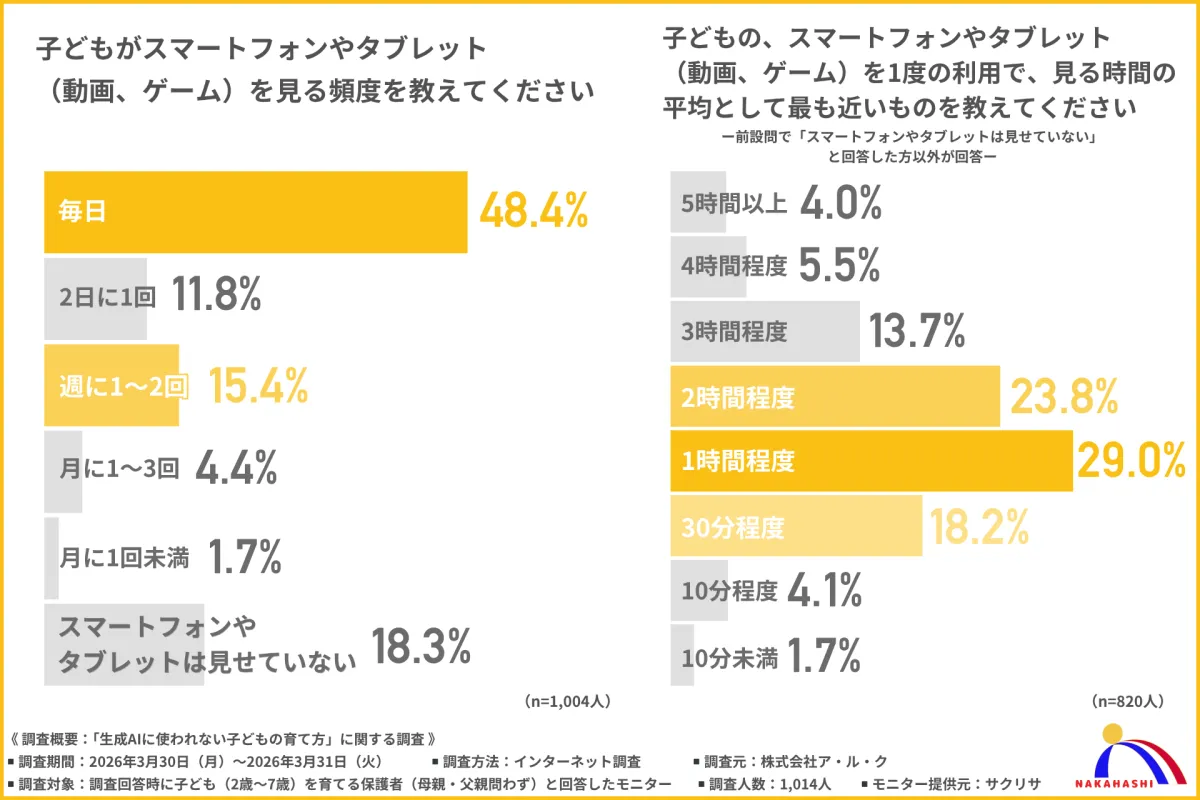
The survey revealed that children aged 2 to 7 primarily engage with digital devices for about an hour daily. Approximately 48.4% of respondents indicated that their children use smartphones or tablets daily, while the average usage per session ranged from 30 minutes to 2 hours. This finding indicates a shift from traditional, active play to a more passive consumption of digital content, which could hinder the development of critical thinking and problem-solving skills.
Once upon a time, children spent their time in creative, hands-on play like building with blocks or engaging in imaginative role-play. Nowadays, screens dominate their experiences, leading to a lifestyle where passive entertainment has become normalized. This transition poses critical questions about the long-term effects on young minds, especially regarding their ability to engage in independent thought and decision-making.
Parental Concerns about AI Usage
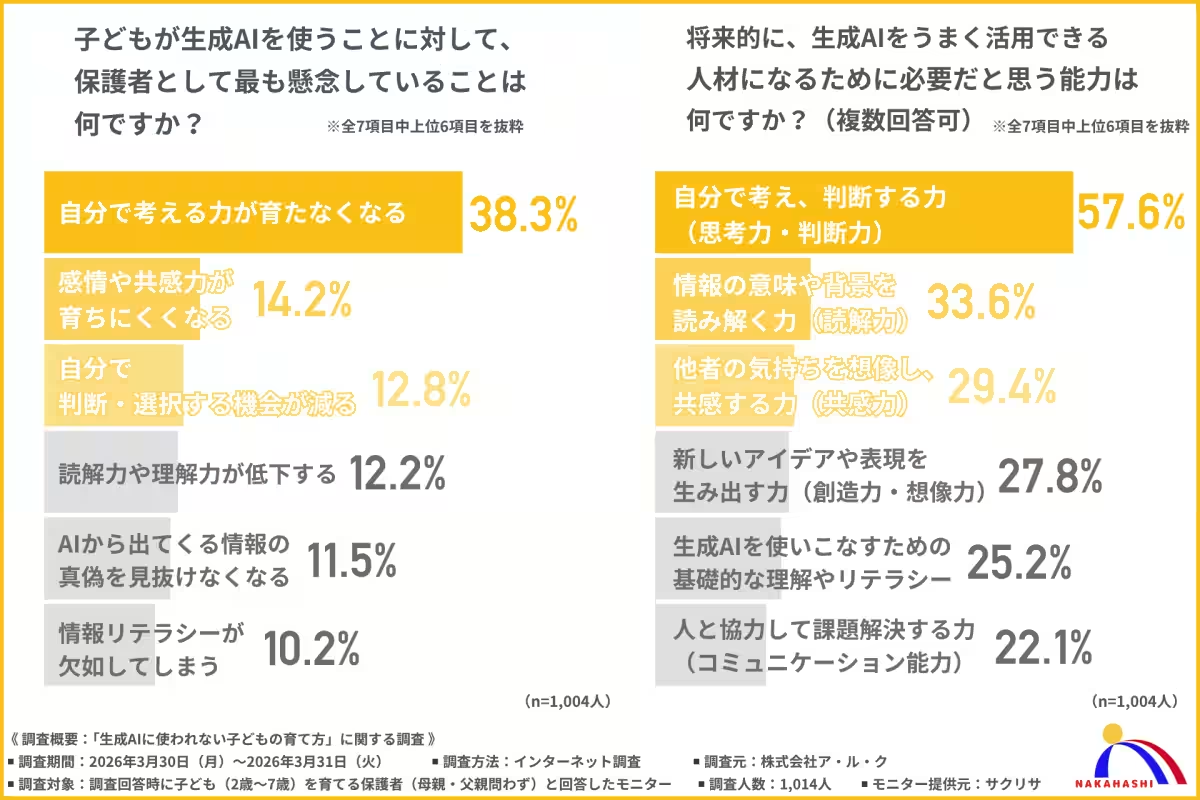
As digital devices become more integrated into daily life, parents are increasingly concerned about how generative AI affects their children's capacity for critical thinking. When asked about their worries, a staggering 38.3% of parents cited a significant concern that AI usage could stunt their children’s ability to think independently. Other prevalent concerns included diminishing emotional intelligence (14.2%) and reducing opportunities for personal decision-making (12.8%). Parents feel that while AI offers quick answers, it may inadvertently rob their children of the valuable process of wrestling with challenges and learning through failure.
Moreover, parents also articulated skills they believe children must acquire to thrive in a future characterized by AI. A notable 57.6% claimed that the ability to think and reason independently is paramount. Understanding information context (33.6%) and empathy (29.4%) were also deemed crucial for responsible AI use in the adult world.
Challenges in Everyday Parenting
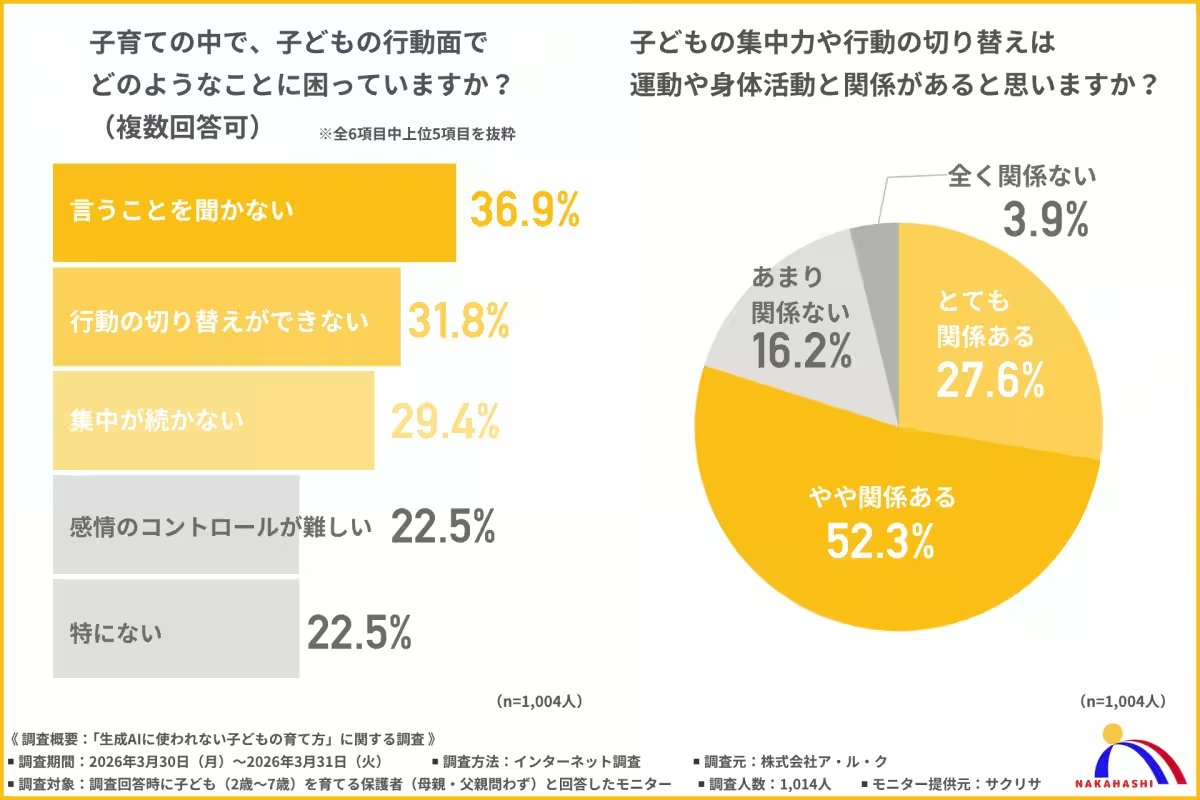
Participants were especially vocal about difficulties they face in daily interactions with their children. The most common concern (36.9%) was that children often refuse to listen, alongside issues with transitioning between tasks (31.8%) and maintaining concentration (29.4%). These behaviors suggest that excessive digital stimulation may be affecting children’s self-regulatory abilities and decision-making skills.
Notably, many parents reported needing to repeatedly prompt their children to initiate action, highlighting how modern children may respond well to external stimulation but struggle with self-directed motivation.
The Need for Active Solutions
When asked if they believe that physical activity plays a role in children's ability to focus and switch tasks effectively, around 80% of parents agreed, with a significant portion citing a strong connection. This indicates that active engagement through sports and physical activities is not just beneficial but necessary for fostering essential skills in children, countering the passivity that digital screens promote.
Parental Insights and External Support
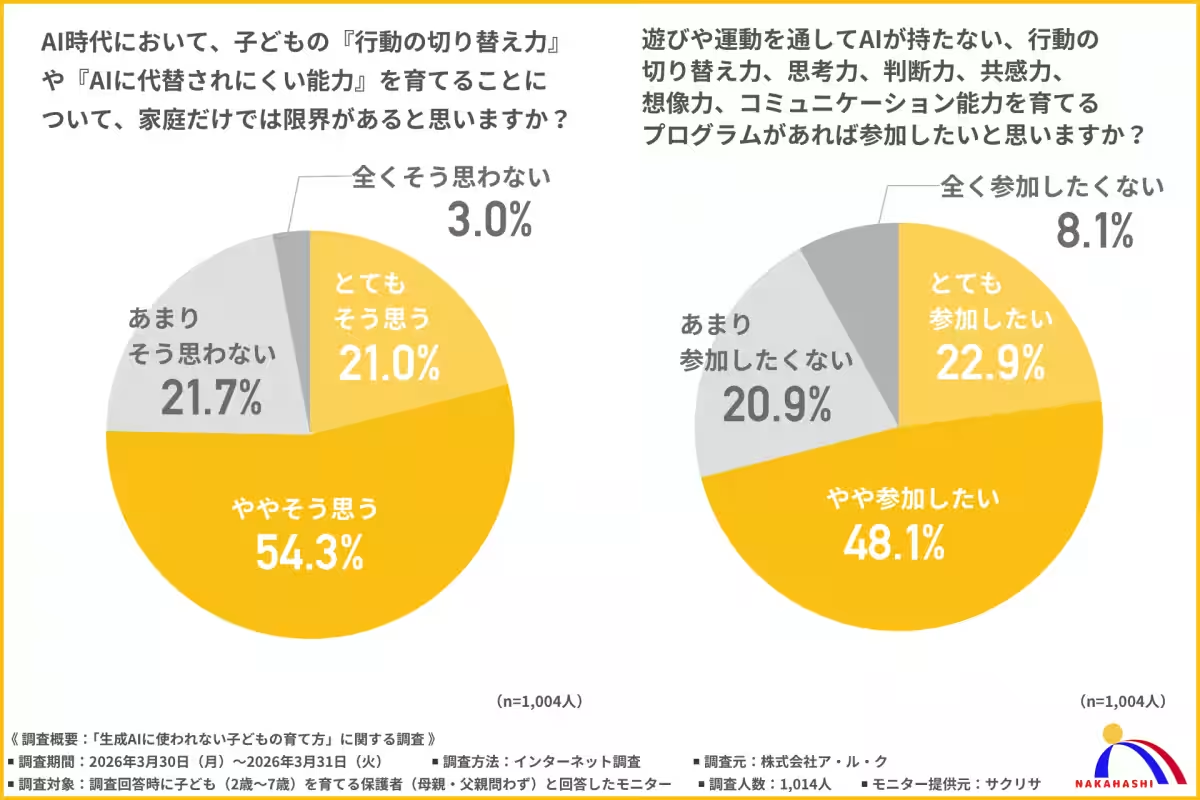
Despite recognizing the importance of cognitive skills, many parents find it challenging to cultivate these abilities solely within the home environment. Approximately 75% expressed beliefs that there are limitations to what family settings can achieve in developing their children's ability to adapt and grow alongside emerging technologies.
This challenge has led to a strong desire for external support programs focused on enhancing creativity, critical thinking, and social skills through play and physical activity. In fact, around 70% of respondents showed interest in participating in such programs.
Conclusion
This survey illuminates a crucial gap in early education: the integration of body and mind in an increasingly digital landscape is paramount. As passive consumption of content rises, many parents are awake to the potential risks of diminished thinking skills and autonomy among children. While the rise of AI presents new opportunities, fostering a generation of critical thinkers requires proactive engagement that blends physical experiences with cognitive challenges. Hence, programs such as Aru-Ku's initiative to merge sports with exploration and active decision-making serve as a promising model for addressing these contemporary concerns.
To mitigate the risks of becoming overly reliant on digital aids, it is essential that educational frameworks evolve alongside technology, emphasizing the vital interplay of physical activity and cognitive development.
About Aru-Ku Co., Ltd.
Aru-Ku Co., Ltd. is set to launch a unique sports academy focusing on cultivating active learning through physical activity in May 2026. The program aims to ensure children develop independent thinking while navigating the complexities of modern technology.
Visit https://nakahashi-method.com to learn more.
Contact Information
Company: Aru-Ku Co., Ltd.
Established: April 17, 1991
Location: 4-5-21 Akasaka, Minato-ku, Tokyo, Japan.
Phone: 03-4405-3720.
URL: https://nakahashi-method.com


Topics People & Culture)









【About Using Articles】
You can freely use the title and article content by linking to the page where the article is posted.
※ Images cannot be used.
【About Links】
Links are free to use.