



How Should Corporate Management Prepare for Next-Gen Risks in the Age of AI?
Event Report: Preparing for Next-Generation Risks in the Age of AI
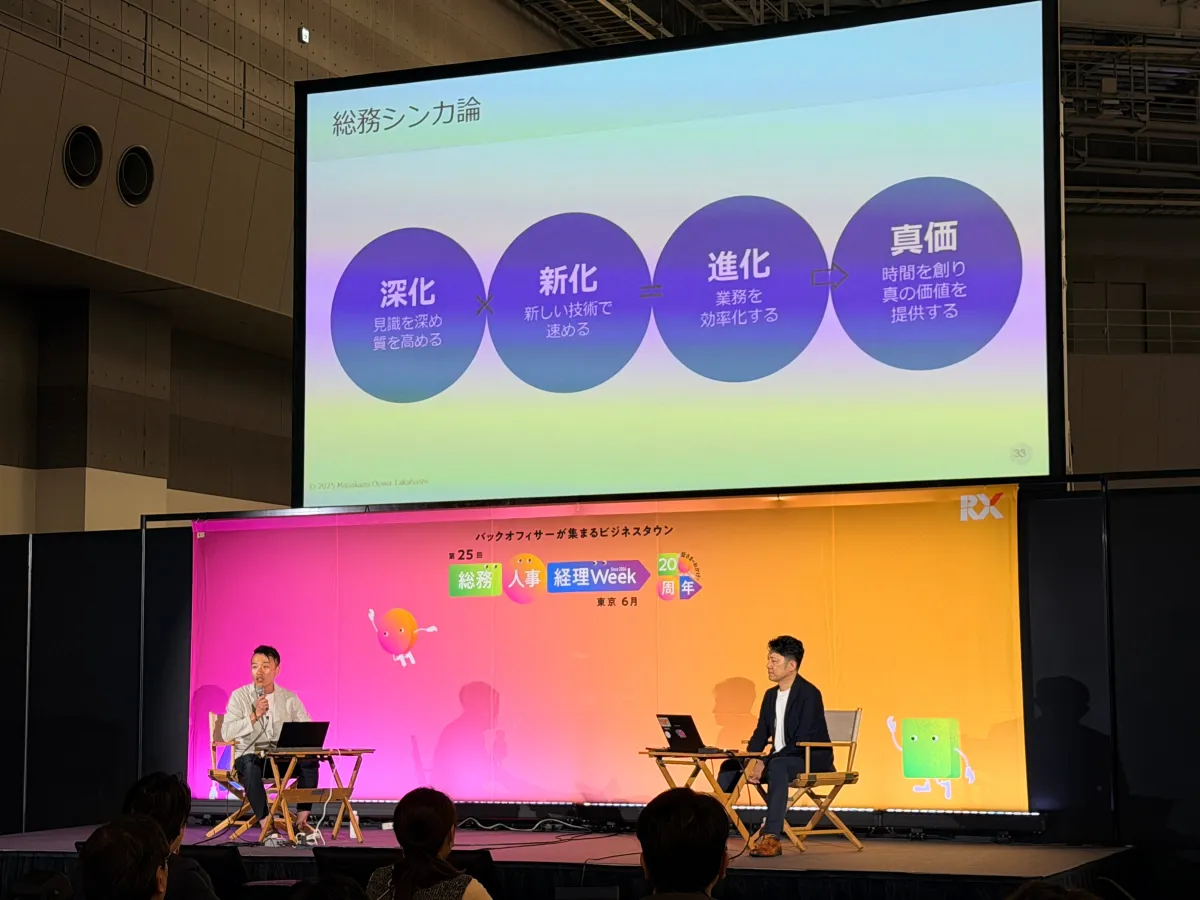
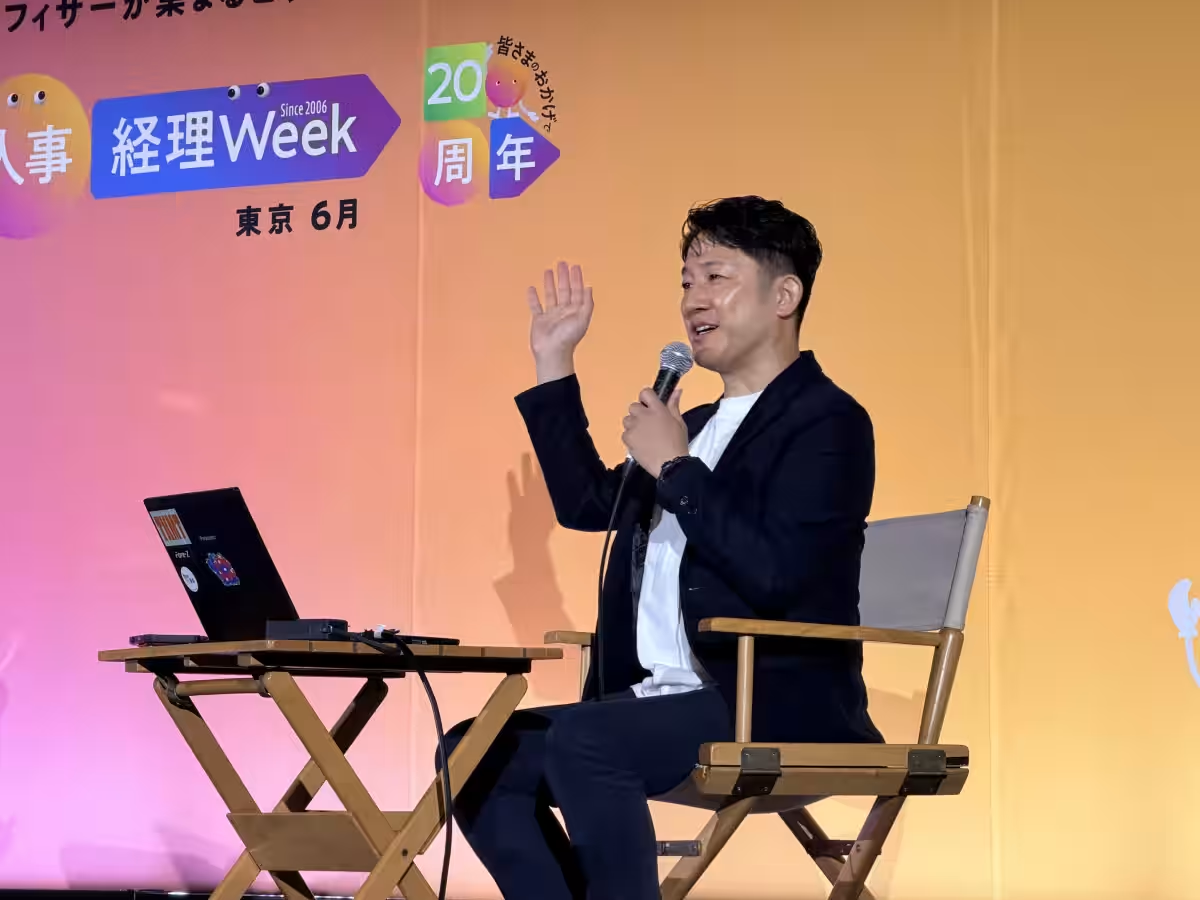
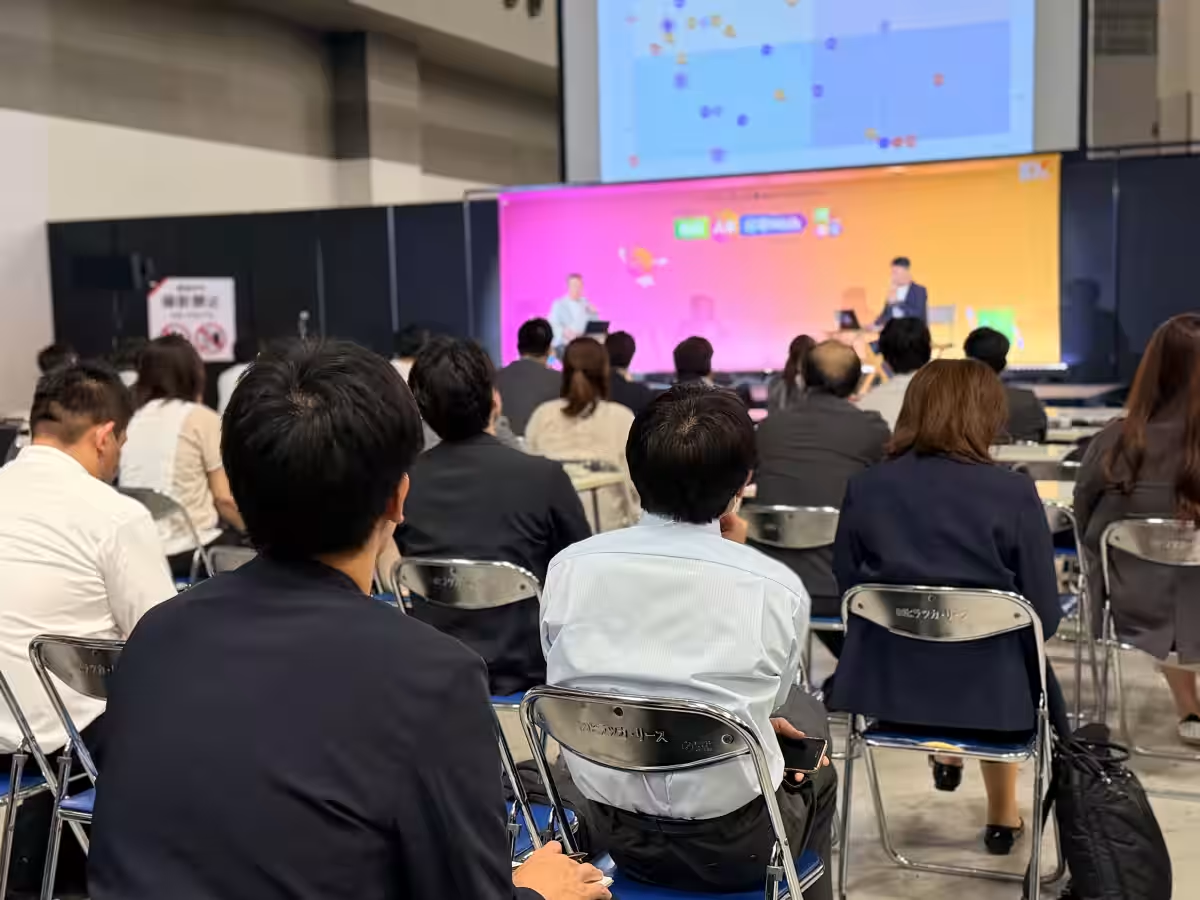
On June 18, 2026, at Tokyo Big Sight, a special lecture titled "General Affairs ∞ - AI Era Insurance Response" was presented during the General Affairs, HR, and Accounting Week exhibition. This session featured insights from Takahashi Oka from DMM.com and Shuzo Kazue, Vice President of Nippon Soken, who focused on the changing nature of risk management amidst today’s VUCA/BANI environment.
Insights from the Special Lecture
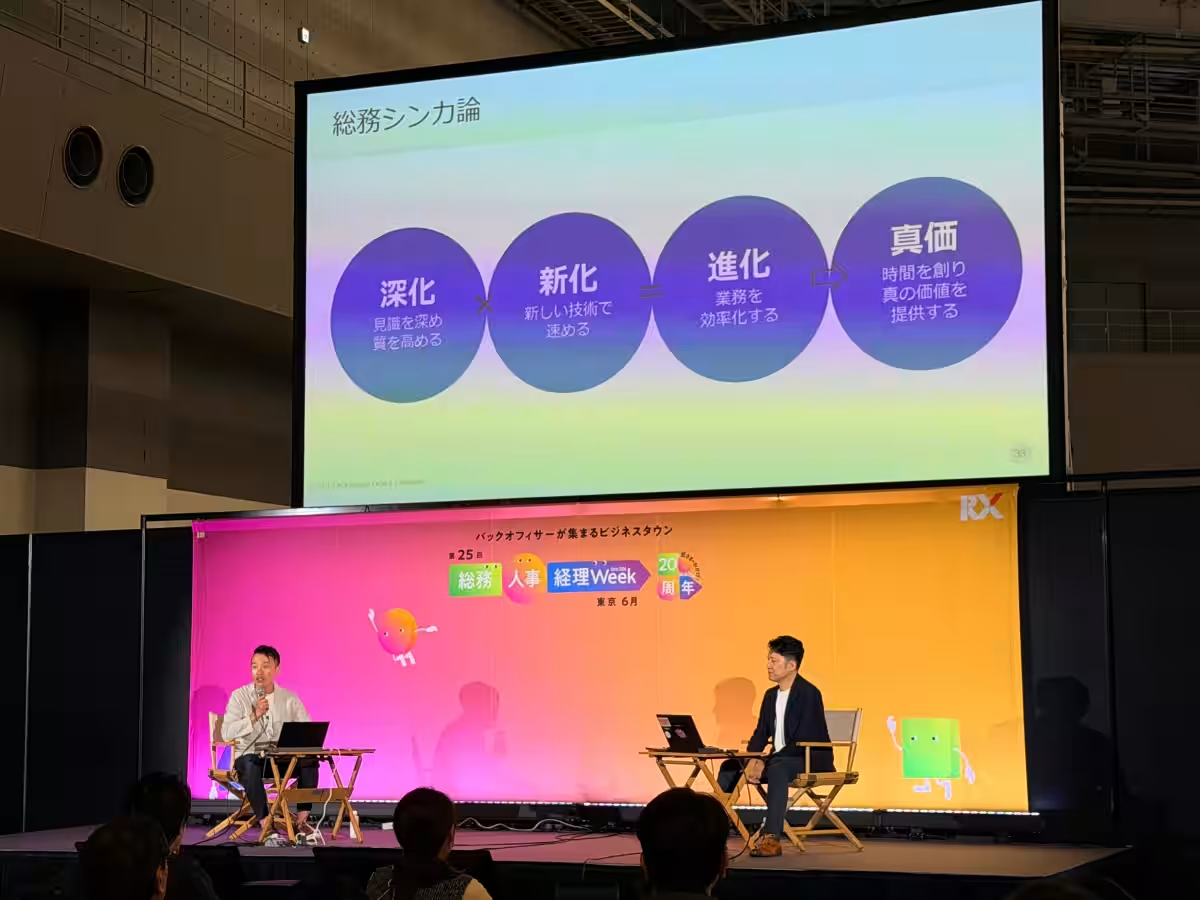
The lecture was designed as a deep discussion where Takahashi, known for earning numerous internal awards and initiating progressive office reforms, adopted an approach of soliciting wisdom from professionals across diverse fields. He introduced a concept he called "General Affairs Evolution Theory," which emphasizes the importance of three developmental strategies for corporate management:
- - Deepening understanding and quality
- - Innovating processes through new technologies
- - Evolving operations for efficiency
Analysis of Next-Gen Risks Amidst Rapid AI Adoption
The first part of the session tackled the structural changes brought by the post-COVID working environment, emphasizing that sticking rigidly to outdated methods can lead to deterioration in effectiveness. Key insights into how the rapid proliferation of generative AI can shift risk dynamics were shared, alongside tangible data and case studies from abroad. Critical lessons emphasized the need for human verification processes in back-office operations to reduce dependency on digital solutions.
Notable Risk Cases Shared
1. Confidential Information Leakage: An engineer inadvertently uploaded sensitive source code to a generative AI tool, resulting in data being sent to external servers and incorporated into training datasets.
2. Hallucination Incident: A chatbot used by an airline mistakenly informed customers of fictitious discount rules, leading to court-ordered compensation to the company.
3. Deepfake Fraud Case: A company was deceived by AI-generated videos impersonating their CFO, resulting in multiple transactions worth billions of yen being unwittingly processed.
Redefining Corporate Insurance in the Age of Complexity
The lecture also raised concerns about the complexities surrounding corporate insurance. With many financial professionals often deferring their engagement in insurance discussions due to the complexities of policy language, Kazue urged for a re-evaluation of the core value insurance provides. By integrating perspectives from statistics, management strategy, and philosophy, he outlined four fundamental risk management strategies:
1. Avoidance: Cease operations for risks considered fatal with high frequency and potential damage.
2. Transfer: Offload catastrophic risks like major earthquakes or massive liabilities to insurance coverage.
3. Reduction: Implement preventive measures for frequent, low-damage risks to minimize potential losses.
4. Retention: Accept minor risks without extensive resource allocation, managing impacts internally as needed.
Kazue argued that while comprehensive packages may sound appealing, the actual insurance coverage varies significantly across businesses due to their unique risk profiles. Thus, it’s essential to build tailored insurance plans based on a company's particular risk landscape.
The Concept of a Risk Map
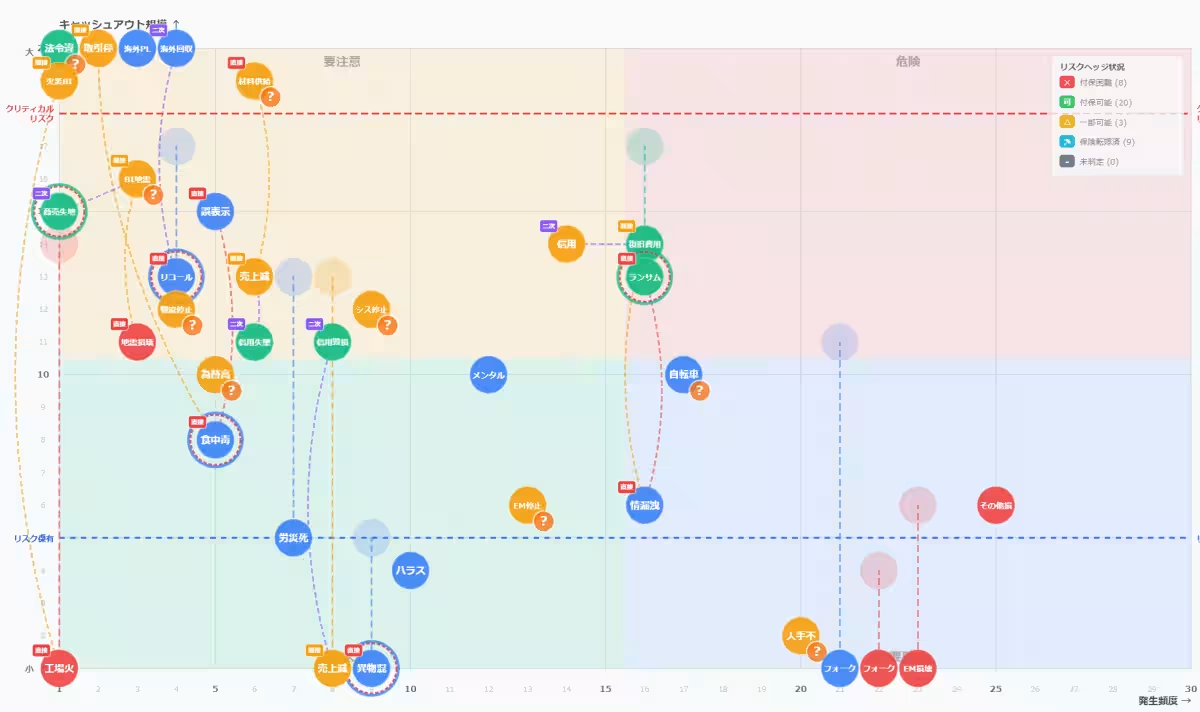
To effectively implement these four strategies, Kazue introduced a proprietary risk management tool called the "Risk Map." This tool visually categorizes potential risks based on their frequency and severity, empowering businesses across various sectors to identify and mitigate specific risks. This structured approach facilitates informed decision-making regarding insurance needs tailored to individual business situations.
Live Q&A Session on AI Implementation Risks
Towards the latter part of the event, a live consulting segment was held, addressing audience queries, particularly about risks associated with generative AI coding tools in software engineering. Questions focused on potential vulnerabilities and liability concerns regarding code produced by AI systems. Kazue stressed that liability rests with the organization deploying the AI-generated code unless specific contractual provisions were in place to mitigate these risks.
In closing, the session emphasized the transformation of the general affairs unit from merely performing tasks to achieving outcomes, urging participants to focus on how their actions improve organizational states and overall welfare. This culminated in a rallying call for businesses to embrace a proactive mindset in risk management as a foundation for sustainable growth.
Conclusion
Nippon Soken reaffirms its commitment to navigating the complexities of the evolving risk landscape as a corporate intermediary, ensuring that companies can confidently pursue growth amid uncertainty. The insights shared in this session will guide organizations in establishing robust risk management practices that not only safeguard the business but also enhance quality of life for all stakeholders involved.
Topics Business Technology)

【About Using Articles】
You can freely use the title and article content by linking to the page where the article is posted.
※ Images cannot be used.
【About Links】
Links are free to use.