



Breda University Creates Innovative VR Tool to Combat Alcohol Temptation During Holiday Season
Breda University Develops VR Tool for Alcohol Addiction Recovery
As the festive season approaches, many people recovering from alcohol addiction face unique challenges. This time of year often brings increased anxiety and significantly raises the risk of relapse, putting individuals in difficult social situations where alcohol is prevalent. Researchers from Breda University of Applied Sciences (BUas), in collaboration with Novadic-Kentron (NK) and Thalamusa, have introduced an innovative solution: a virtual reality (VR) tool named RECOVRY (RElapse COntrol VR therapY).
The Challenge of the Festive Season
The month of December can be particularly daunting for those recovering from alcohol addiction, with social gatherings commonly associated with alcohol consumption. Research indicates a distressing statistic: between 47% and 75% of individuals relapse within a year post-treatment, showcasing the urgency for effective support systems. Traditional methods of support can be limited, often resulting in feelings of isolation during festive events that should be joyful.
Introducing the RECOVRY Tool
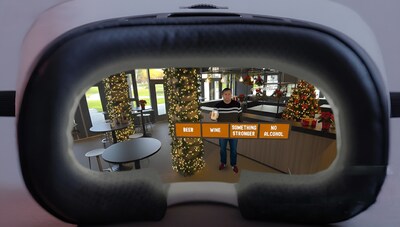
The RECOVRY project endeavors to tackle these challenges by utilizing VR technology to simulate social situations that might trigger cravings. According to Professor Marnix van Gisbergen from BUas, environments like bars have been recreated in virtual reality, including props such as alcohol glasses and virtual people, to help users practice resisting alcohol in real-life scenarios. In addition to virtual simulations, the project implements augmented reality (AR) elements that allow these triggers to manifest in the user's personal environment, creating a safe space for practice.
Professor van Gisbergen expressed, "We are exploring how realistic these environments need to be and investigating which VR forms are most effective for treatment and prevention."
A Breakthrough in Treatment Methodology
Dr. Victor Buwalda, a psychiatrist and former medical director at Novadic-Kentron, emphasized that RECOVRY merges traditional exposure therapy with advanced VR and AR technologies. The approach involves three phases: implementation within clinical environments, support from therapists, and independent practice at home without guidance. Early trials have indicated promising outcomes, both for individuals undergoing treatment at Novadic-Kentron and for those in preventative settings.
Future Developments
Despite the initial successes, there is a commitment to continuous improvement. Professor van Gisbergen revealed plans to expand the RECOVRY application by introducing more VR environments, additional virtual characters, and enhanced interactions. Additionally, the project is looking to integrate other forms of addiction treatment, such as smoking cessation, and includes relaxation exercises to aid in post-VR session recovery.
An International Perspective
The initial data has already revealed significant improvements in anxiety reduction and boosts in self-confidence for participants. Researchers are now focusing on tracking long-term effects on relapse rates in an international study involving BUas, NK, and Eindhoven University of Technology.
As van Gisbergen concludes, along with the potential for cost effectiveness and improved treatment efficiency, RECOVRY aspires to eliminate the isolation felt by recovering patients during the holiday season, allowing them to engage fully with their loved ones during this challenging time.
About Breda University of Applied Sciences (BUas)
Breda University of Applied Sciences is an internationally recognized institution specializing in applied research, particularly in immersive digital gaming and media technologies. For more information, visit BUas.nl.

Topics Health)
【About Using Articles】
You can freely use the title and article content by linking to the page where the article is posted.
※ Images cannot be used.
【About Links】
Links are free to use.