



Exploring New Methods for Dark Photon Detection Using Synchrotron Facilities
Exploring New Methods for Dark Photon Detection Using Synchrotron Facilities
In modern particle physics, the pursuit of unknown particles continues to be a vital research frontier, drawing attention for over half a century. A recent study by Dr. Wen Yin from Tokyo Metropolitan University proposes an innovative approach for detecting a hypothetical particle known as the dark photon, utilizing existing synchrotron radiation facilities.
Background Behind the Research
Exploring unknown particles is key to understanding the universe's formation and the elusive nature of dark matter. It is posited that dark matter constitutes approximately five times the known matter in the universe, yet its true essence remains inadequately explained by current models of particle physics. Among the candidates for dark matter is the dark photon—a particle akin to a photon, but with a mass and only weak interactions with ordinary matter.
Traditionally, searches for unknown particles have hinged upon large-scale experiments using specialized accelerators and detectors, yielding significant discoveries such as the Higgs boson. However, these endeavors require substantial time and financial investment, particularly as the quest for new particles demands high energy and precision. Consequently, there is a pressing need for cost-effective methodologies that can supplement existing techniques.
Utilizing Synchrotron Facilities
The research places emphasis on synchrotron radiation facilities, which serve as expansive infrastructures designed primarily for material and life sciences but have seen little application in particle physics research until now. Major synchrotron facilities in Japan include SPring-8, NanoTerasu, and the KEK Photon Factory. Previous theoretical insights led by Dr. Yin and his colleagues suggested that weakly interacting new particles might emerge during the synchrotron radiation generation process within these facilities.
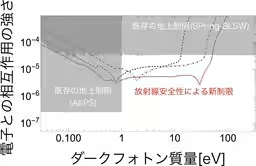
By harnessing the existing design of synchrotron systems, Dr. Yin’s research demonstrates a novel yet low-cost method for the exploration of unknown particles, achieving remarkable limits on dark photons through previously established radiation safety measurements. This represents a significant shift in particle physics, indicating that existing infrastructures can facilitate the quest for new particles without necessitating additional expenses.
The Research Methodology
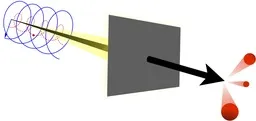
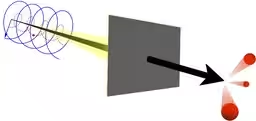
Focusing on the radiation processes within synchrotron facilities, the study theoretically analyzes how dark photons could emerge as byproducts during the generation of high-intensity X-rays from accelerated electrons. By scrutinizing the interaction of electrons and electromagnetic fields within an undulator—a key structure of synchrotron facilities—Dr. Yin proposes that weakly interacting particles like dark photons may be produced and detected. Notably, these particles can penetrate radiation shielding materials and reach areas where human activities take place, allowing for easy placement of detection instruments for new particle searches.
The groundwork laid by this study not only extends the frontiers of particle physics but also emphasizes the potential to concurrently use existing experimental setups for new societal and academic advancements. Indeed, leveraging established monitoring systems, which typically detect radiation safety levels, offers a unique opportunity to constrain the possible interaction strengths of dark photons with matter significantly.
Implications and Future Research
With the study's findings published in the esteemed journal Physical Review Letters, the implications are both profound and far-reaching. If implemented across various synchrotron facilities globally, this approach could unlock new avenues for dark photon detection under diverse conditions. There’s a considerable expectation that the deployment of more sensitive detectors will pave the way for the discovery of unknown particles, thus dramatically reshaping our understanding of particle physics.
Dr. Yin expressed, “Historically, particle searches have heavily depended on special-purpose accelerators and detectors. This research showcases a fresh approach by repurposing existing research infrastructures. Understanding the principles and structures of these facilities from a particle physics perspective was essential for facilitating these experiments, and it’s paramount that such multidisciplinary applications continue.”
In conclusion, this pioneering research not only proposes new methodologies for searching for dark photons but also lays the foundation for broadening the application of synchrotron facilities in advancing fundamental physics research. By utilizing an infrastructure originally designed for different scientific domains, the study exemplifies how interdisciplinary endeavors can foster remarkable scientific breakthroughs, encouraging future collaboration across varied fields.
Publication Details
- - Journal: Physical Review Letters
- - Title: Novel limits on dark photon mixing from radiation safety
- - Author: Wen Yin
- - DOI: 10.1103/snnn-wqxg
Topics People & Culture)






【About Using Articles】
You can freely use the title and article content by linking to the page where the article is posted.
※ Images cannot be used.
【About Links】
Links are free to use.