




The Impact of 'Kikippa' Gamma Wave Sound Speaker on Dementia Patients
Exploring the Impact of 'Kikippa' Gamma Wave Sound Speaker on Dementia Patients
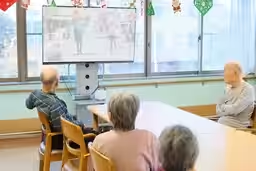
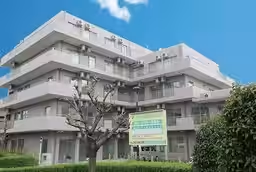
As September 21 marks World Alzheimer's Day, the National Aoyagi Institute announced the results of their study on the effects of the 'Kikippa' gamma wave sound speaker on dementia patients. The facility has witnessed significant improvements in both core and peripheral symptoms for those listening to the gamma wave sound over the past year.
Understanding 'Kikippa'
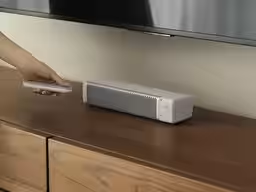
The 'Kikippa' speaker produces gamma wave sound by modulating sound at a frequency of 40Hz, creating an auditory stimulus that engages patients and can potentially enhance their cognitive functions. This method stems from MIT studies indicating that gamma waves, known to be associated with memory and concentration, diminish with conditions like Alzheimer's disease.
Results of the Study
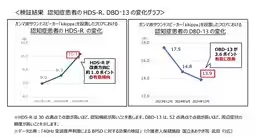
The evaluation conducted at the National Aoyagi Institute involved 15 dementia patients over a span of 12 months. Results demonstrated a notable upward trend in the HDS-R scores, indicating gradual improvement in core symptoms like memory and executive function difficulties. Peripheral symptoms, measured via the DBD-13 scale, also showed significant reduction, enhancing overall care quality and creating a more positive atmosphere for both patients and staff in the caregiving environment. Caregivers noted a remarkable uptick in patient smiles and reduced incidents of challenging behaviors, which further lessened the burden on staff.
Key Findings and Observations
The HDS-R scores improved from an initial 9.0 to 10.1 after a year, showcasing an evolving yet meaningful enhancement in cognitive function. Conversely, the DBD-13 scores dropped from 17.5 to 13.9, marking a significant improvement in behavioral and psychological symptoms of dementia (BPSD). Staff feedback highlighted how the use of 'Kikippa' not only fostered smiles among patients but also rendered the work environment less stressful, facilitating a smoother caregiving process.
Broader Implications for Dementia Care
As the prevalence of dementia rises, the adoption of innovative solutions like 'Kikippa' may prove crucial. This approach underscores the importance of integrating advanced technology into patient care, focusing not just on traditional medical interventions but also on holistic strategies that can positively impact patients’ daily lives.
Looking Ahead
As research continues, the National Aoyagi Institute is set on assessing the long-term effects of gamma wave sound integration on dementia care. While results are promising, further evaluation will aim to analyze improvements over a more extended period, aspiring to develop effective tools that will enhance the quality of life for dementia patients continuously.
With the growing recognition of 'health literacy' and 'resilience' among the population, leveraging the benefits of technology such as the 'Kikippa' gamma wave sound speaker could redefine current approaches to dementia care, emphasizing both prevention and management.

Topics Health)
【About Using Articles】
You can freely use the title and article content by linking to the page where the article is posted.
※ Images cannot be used.
【About Links】
Links are free to use.