



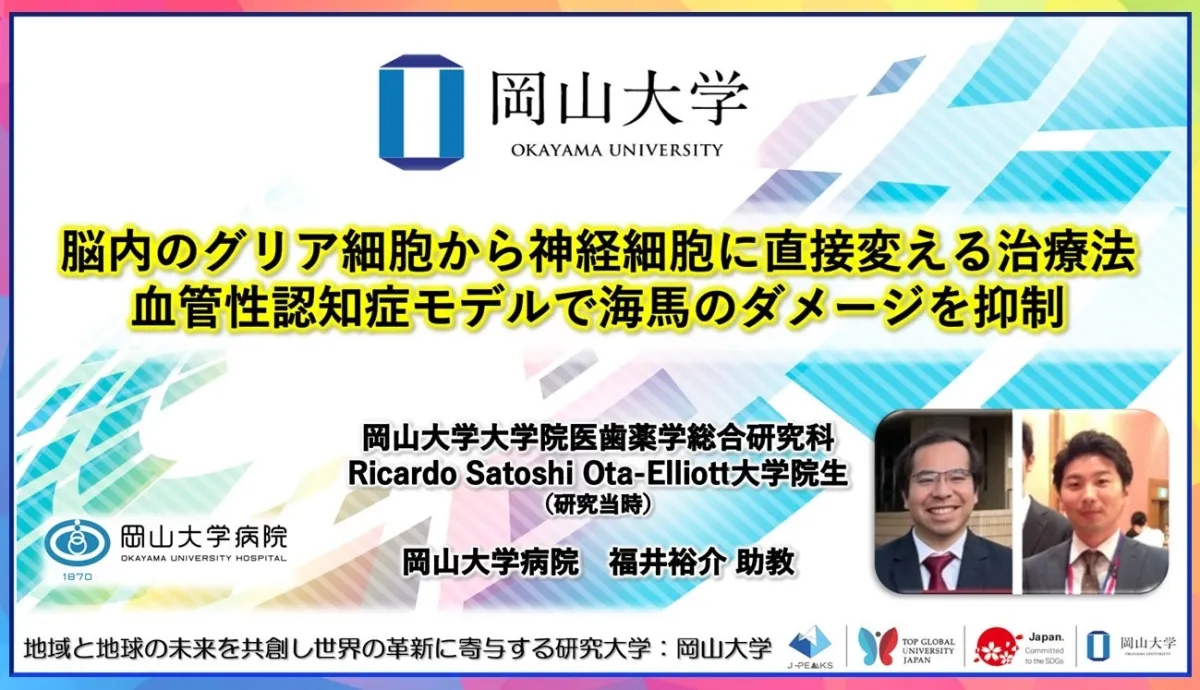
A Breakthrough Gene Therapy for Vascular Dementia: Transforming Glial Cells into Neurons
A Breakthrough in Dementia Treatment
In a significant advancement in neuroscience, a collaborative research team from Okayama University and Toyama University has successfully demonstrated a groundbreaking gene therapy technique that transforms glial cells into neurons. This promising approach addresses vascular dementia, a prevalent type of dementia that poses severe challenges worldwide.
The Research Overview
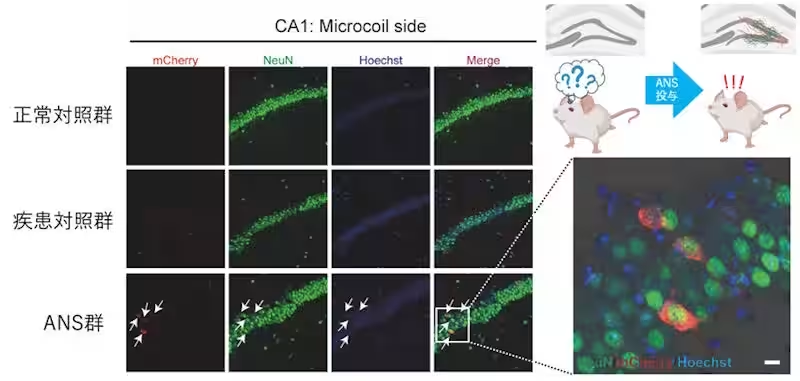
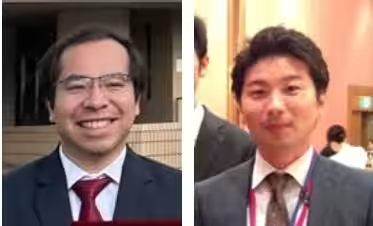
Led by graduate student Ricardo Satoshi Ota-Elliott and assistant professor Yusuke Fukui, along with professor Hiroyuki Ishiura and associate professor Toru Yamashita, the research focused on a specific category of brain cells known as glial cells, which provide essential support to neurons. The team introduced three transcription factors: Ascl1, NeuroD1, and Sox2, into glial cells in a vascular dementia mouse model. This innovative method resulted in the partial transformation of glial cells into functional neurons, significantly reducing inflammation in the hippocampus—an area crucial for memory formation.
The findings revealed that the introduction of these transcription factors not only decreased damage in the hippocampus but also promoted the generation of new neurons, indicating potential improvements in cognitive function. The team's results were published on April 16, 2026, in the journal Journal of Cerebral Blood Flow & Metabolism, highlighting the importance of their discovery in the realm of regenerative medicine.
Addressing a Global Challenge
Vascular dementia is the second most common form of dementia, making it a critical global health concern. Current treatment options often fall short, as they typically do not address the underlying cellular dysfunctions. This research paves the way for a novel approach, suggesting that it may be possible to repair damage in the brain directly by leveraging the brain's existing cells to regenerate new neurons.
The capability to rejuvenate brain function represents a significant stride towards solving long-standing challenges in dementia treatment, particularly given the declining cognitive functions experienced by many patients. The researchers expressed hope that understanding the mechanisms behind the new neuron formation will facilitate the development of innovative treatments and drugs aimed at restoring lost memory and cognitive functions due to dementia.
Future Implications and Research Directions
The success of this study signals a new era for treatment modalities concerning neurological disorders. The research indicates that gene therapy has the potential to modify glial cells within the brain directly, which could lead to new restoration therapies for other neurodegenerative diseases beyond vascular dementia.
Continuing this line of inquiry, the researchers plan to further investigate the detailed mechanisms of neuron generation from glial cells. Their ultimate goal is to develop breakthrough drugs and therapies that could revolutionize how dementia and related conditions are treated. By exploring these avenues, the team hopes to provide patients with improved quality of life and therapeutic options.
Conclusion
In summary, the collaborative efforts of Okayama University and Toyama University mark a significant contribution to the medical field, hinting at the successful application of gene therapy in regenerating neuronal populations within the brain. As research progresses, the implications could extend far into the realm of neuroregenerative medicine, potentially providing new hope for individuals suffering from disabling cognitive impairments, such as dementia.
The ongoing commitment of the research community is paramount, as continual developments in understanding brain health and functionality can lead to transformative healthcare solutions for a condition that affects millions worldwide.
Topics Health)
【About Using Articles】
You can freely use the title and article content by linking to the page where the article is posted.
※ Images cannot be used.
【About Links】
Links are free to use.