



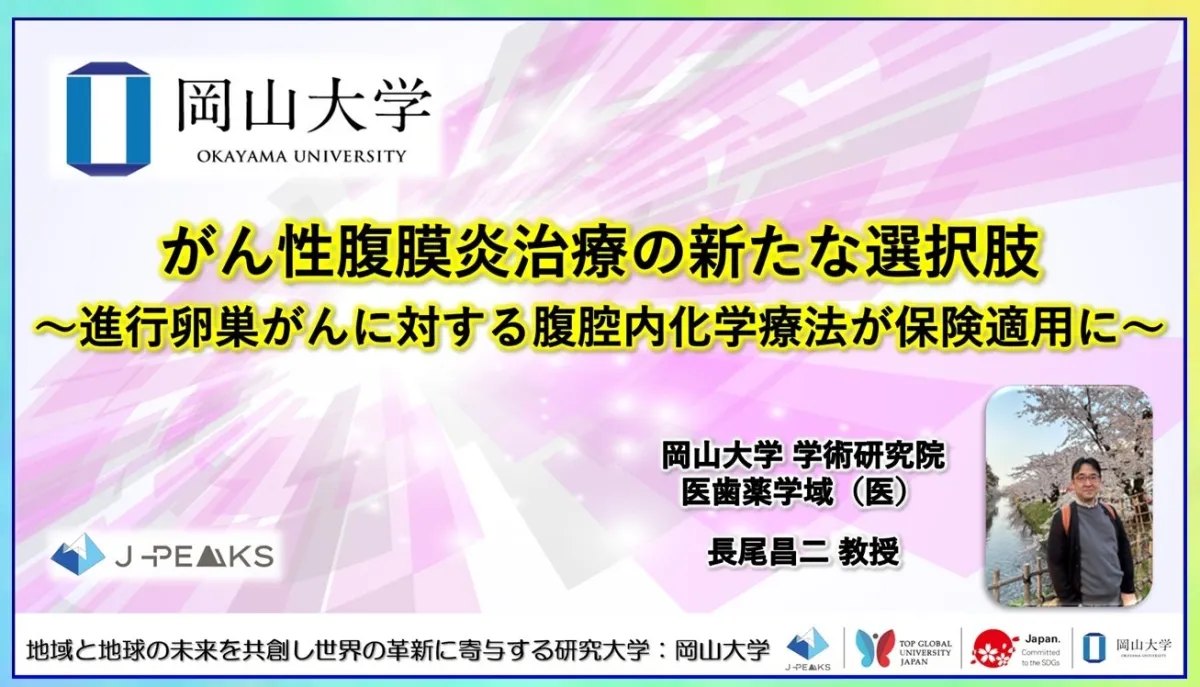
New Breakthrough in Ovarian Cancer Treatment at Okayama University
A New Hope in Ovarian Cancer Treatment
In December 2025, significant advancements in treating advanced ovarian cancer were confirmed when the intraperitoneal administration of carboplatin was approved for insurance coverage in Japan. This groundbreaking development is thanks to the research conducted by Professor Shoji Nagao and his team at Okayama University, who revealed that this new treatment strategy reduces the recurrence risk by approximately 17% compared to traditional methods.
The new protocol involves the administration of carboplatin via intraperitoneal injection and is complemented by a rigorous surgical approach known as extensive peritonectomy, which aims to remove affected areas of the peritoneum. The combination of these therapies is considered a game-changer in managing cancerous peritonitis associated with advanced ovarian cancer, including tubal and peritoneal cancers.
Beginning in May 2026, Okayama University Hospital commenced the administration of the dense-dose TCip therapy using carboplatin. To date, four patients have successfully undergone this treatment. Professor Nagao expressed his enthusiasm, stating, "It has taken three years since the publication of our findings, but we are finally able to deliver this treatment to patients."
The research findings were published in the prestigious journal, 'New England Journal of Medicine Evidence', in 2023, marking a significant milestone for oncological research in Japan. The transformation of these findings into practical application was achieved through collaborations with Viatris Healthcare and Japan Chemical Company, which played instrumental roles in the bureaucratic process resulting in the recent insurance approval.
The iPocc Study
The iPocc (Intraperitoneal Carboplatin) trial demonstrated the efficacy of this new treatment. By showcasing how intraperitoneal administration can reduce the rate of cancer recurrences, this study has paved the way for a new standard in managing advanced ovarian cancer.
The importance of this treatment strategy lies not only in its innovative delivery method but also in its supportive role alongside extensive surgical interventions. These comprehensive treatment protocols aim to enhance patient outcomes significantly.
Researchers emphasize that this form of chemotherapy could become an essential tool for oncologists, offering new hope to patients diagnosed with advanced stages of ovarian cancer, a condition that has historically posed significant treatment challenges.
Future Prospects
As Okayama University continues its commitment to advancing cancer treatment options, the institution is poised to further explore the potential of intraperitoneal therapies. With ongoing clinical implementations, there is optimism about the long-term impacts on survival rates and quality of life for patients battling advanced ovarian cancer.
Future research will likely aim to expand upon these findings and explore the use of similar intraperitoneal methods for other cancer types, following the promising outcomes observed within the ovarian cancer patient population. This initiative aligns with Okayama University's broader mission of contributing to sustainable healthcare and rigorous academic research.
Conclusion
The recent advancements at Okayama University represent a monumental step forward in cancer treatment, emphasizing the institution's reputation as a leader in medical innovation. As more patients begin to benefit from this intraperitoneal carboplatin therapy, the potential for breakthroughs in other areas of oncology remains hopeful and expansive.






Topics Health)
【About Using Articles】
You can freely use the title and article content by linking to the page where the article is posted.
※ Images cannot be used.
【About Links】
Links are free to use.