



EGS Corporation Launches Integrated Energy Proposal for Efficient Facility Upgrades
Introduction
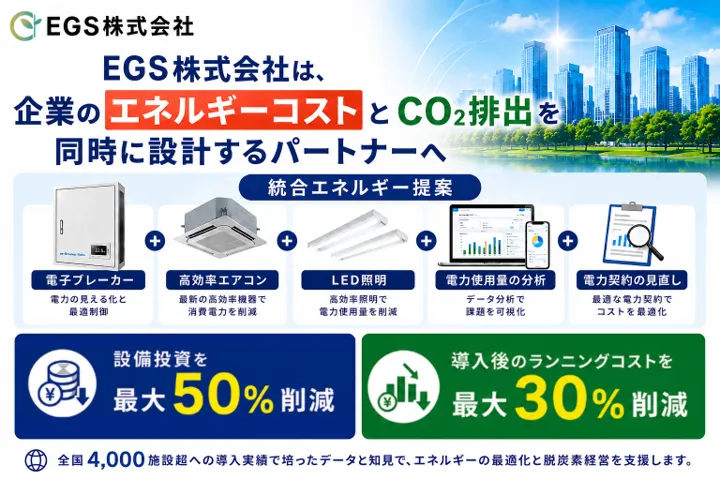
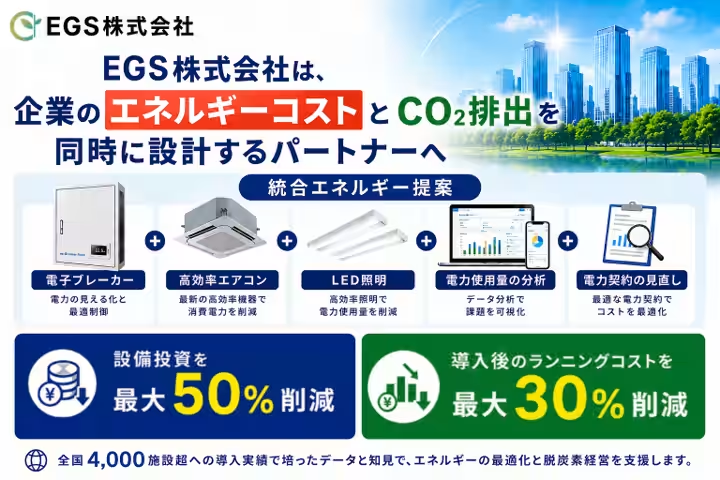
EGS Corporation, headquartered in Shibuya, Tokyo, officially launched an integrated energy proposal that combines their proprietary electronic breaker, high-efficiency commercial air conditioning, LED systems, power usage analysis, and contract reviews on August 17. The new initiative aims to reduce equipment investment by up to 50% depending on conditions and operational costs after installation by up to 30%. This evolution from merely selling products to becoming a partner in designing energy costs and CO2 emissions for enterprises marks a significant shift in their business approach.
The Growing Challenge of Energy Costs
Companies today face a multitude of energy-related challenges beyond just rising electricity prices. These include the risk of equipment failure due to aging air conditioning systems, supply chain uncertainties for repair parts, escalating material prices and installation costs, a shortage of trained technicians, the need for summer heat countermeasures, and pressure from clients for decarbonization efforts. Consequently, delaying equipment upgrades can lead to inflated electricity costs, unexpected equipment shutdowns, and decreased productivity.
Companies often struggle with partial solutions—focusing only on air conditioning, LED updates, or switching power suppliers—making it difficult to prioritize the overall investment recovery and straining coordinators who have to manage multiple suppliers. EGs brings a fresh perspective by combining contract capacity, usage, equipment efficiency, and procurement costs into a single simulation, providing a clear picture necessary for informed business decisions.
The Realization from the Electronic Breaker Experience
Through its proprietary product, the Computer Breaker, EGS has focused on reducing basic rates for various businesses, such as stores, factories, car service centers, laundromats, and care facilities. By examining simultaneous equipment usage and optimizing contract capacity, they offer significant cost savings without compromising usability.
However, mere optimization of the basic rate isn't enough if outdated air conditioning systems are still consuming excessive electricity; the total energy costs won't decrease adequately. Conversely, even with the installation of high-efficiency systems, oversizing contract capacity and power plans can leave room for further savings. EGS's extensive experience from implementing electronic breakers over 4,000 facilities led to the understanding that to genuinely reduce electricity costs, companies must design energy solutions that integrate equipment, contracts, and operations holistically.
High-Efficiency Air Conditioning as a Backbone for Business Continuity
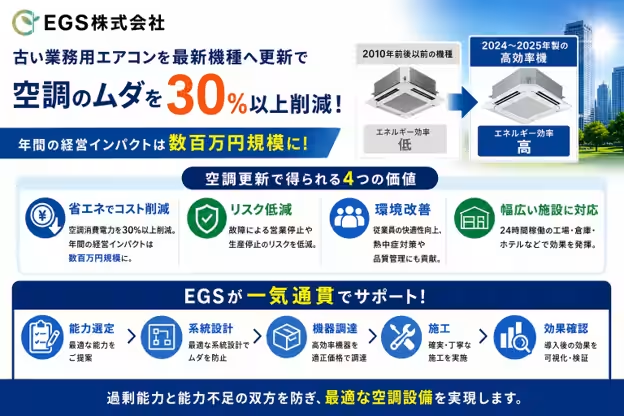
Older air conditioning systems installed around 2010 or earlier tend to have significantly lower energy efficiency compared to the latest models. Facilities like factories, warehouses, and hotels that operate continuously can see up to a 30% reduction in air conditioning power consumption when upgrading to energy-efficient models from 2024-2025. The annual impact on management can reach several million yen in these high-usage scenarios.
Moreover, the value of updating air conditioning systems extends beyond energy savings; it mitigates risks of business interruptions and enhances employee working conditions while addressing challenges like heatstroke during intense summer temperatures and quality control. EGS provides comprehensive support from capacity selection, system design, equipment procurement, to post-installation efficacy checks, preventing both excess and insufficient capacities.
Redesigning Equipment Investment from Ground Up
When it comes to significant facility upgrades, costs can vary dramatically based on manufacturer, model, construction methods, and whether piping can be reused. In one of EGS's proposals, an air conditioning update estimated at around 50 million yen was dramatically revised down to approximately 30 million yen by redesigning necessary capacity and installation conditions. This resulted in savings of about 20 million yen or 40%. Depending on the case, it is conceivable to reduce equipment investments by up to 50%.
This is not just a discount; it essentializes restructuring procurement routes, specifications, installation scope, and timing, all while ensuring necessary performance and safety. Allowing clients to reduce initial investments through EGS’s integrated energy proposal can shorten payback periods and provide options for companies that have previously struggled with budget constraints for equipment upgrades.
Incorporating LED and Power Usage Visibility into Investment Plans
With international mercury regulations affecting the supply environment for general-purpose fluorescent lamps, large facilities must adapt. Instead of continuing partial replacements for failing lights, a comprehensive review focusing on layout, illumination, and operating hours can facilitate the planned upgrade to LED, effectively reducing both energy consumption and maintenance burdens.
EGS systematically examines energy usage by application—air conditioning, lighting, and production facilities—ranking the most lucrative investment opportunities. By reallocating savings generated from basics cost reduction via electronic breakers to fund equipment upgrades, an ongoing cycle of reduced usage and subsequent investments can persist over time.
Enabling Effective Business Decision-Making for Cost and CO2 Reduction
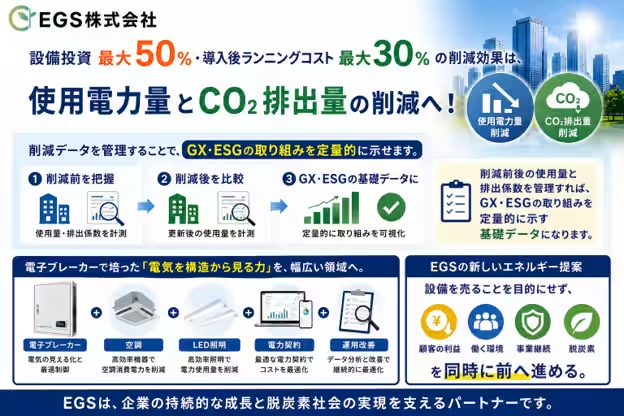
The potential effects of up to 50% in equipment investment reduction and 30% in operational costs directly correlate with reductions in energy use and CO2 emissions. Notably, emissions resulting from purchased electricity are classified as Scope 2 (indirect emissions associated with the consumption of purchased electricity), thus managing usage volumes and emission factors before and after reductions provides fundamental data for quantifying efforts in GX and ESG.
EGS aims to leverage the strength of the electronic breaker not just as a standalone product but as a necessary tool that allows a structural approach to viewing electricity while extending its applications to air conditioning, LEDs, power contracts, and operational improvements. The goal is not simply to sell equipment but rather to advance customer profits, work environments, business continuity, and decarbonization simultaneously. This marks EGS's ambitious new energy proposal.
Free Energy Diagnostics Offer
EGS now conducts energy diagnostics for factories, warehouses, stores, commercial facilities, medical institutions, and hotels, based on electric bills, equipment configurations, and operational statuses. By analyzing contract capacity, air conditioning, LED, and power companies, we individually estimate potential savings, required investment, payback periods, and CO2 reduction effects.
Company Overview
- - Company Name: EGS Corporation
- - Headquarters: 2-7-9 Sasazuka, Shibuya, Tokyo, THE CITY Sasazuka II
- - Representative Director: Goji Nozaki
- - Business Activities: Cost reduction business, alliance business, call center services, HR services, financial consulting, and food business
- - Website: EGS Corporation
Topics Consumer Products & Retail)
【About Using Articles】
You can freely use the title and article content by linking to the page where the article is posted.
※ Images cannot be used.
【About Links】
Links are free to use.