




New Employees Insight: Embracing Generative AI in 2026 Workplace
Insights on Generative AI from New Employees in 2026
A recent survey targeting 500 new hires for the fiscal year 2026, conducted by the Sanno University Research Institute, has shed light on the perceptions and expectations around generative AI in the workplace. As generative AI technologies evolve, understanding how these developments impact the new workforce is crucial.
Key Findings
1. Impact on Work Processes
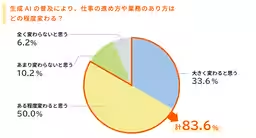
An overwhelming 83.6% of respondents believe their work processes and job nature will change due to the rise of generative AI. Among these, 50% think the changes will be moderate, while 33.6% anticipate significant transformations. Only 16.4% feel that their jobs will not be affected, suggesting a strong belief in the technology's potential to reshape work environments. Notably, 83.2% of respondents reported prior experience with generative AI in some capacity, indicating that new hires are already familiar with these tools.
2. Concerns About Job Security
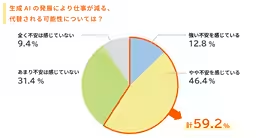
The findings also highlight a growing concern regarding job security fueled by advancements in AI. Approximately 59.2% of new employees expressed some level of anxiety about the possibility of their roles being diminished or replaced by AI technologies. Specifically, 12.8% reported feeling strong anxiety, while 46.4% said they felt somewhat anxious. In contrast, 40.8% indicated that they were either not concerned or not worried at all. This split reflects a diverse perspective among new hires about AI's impact on their future job security.
3. Trust in AI-Generated Information
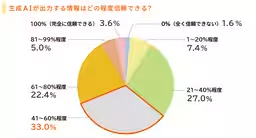
When asked about the reliability of information generated by AI, responses varied significantly. The majority, 33%, rated the reliability as being between 41%-60%. Another notable 27% rated it between 21%-40%, while 22.4% placed it at 61%-80%. A small fraction, 5% and 3.6%, felt completely trustworthy, rating it between 81%-99% and at 100%, respectively. Additionally, 36% of participants believed that AI-generated information is unreliable (1%-40%), demonstrating a divided opinion on AI's reliability in providing accurate data.
Survey Overview
- - Participants: New employees who joined in 2026
- - Survey Period: April 3 to April 9, 2026
- - Method: Conducted as an online survey via a monitoring company
- - Valid Responses: 500 individuals (253 males, 247 females)
The data highlights the pressing thoughts of 2026's workforce, as they adapt to the swift progress of generative AI. With the implementation of these technologies expected to change workplace dynamics significantly, organizations must address the anxieties of new employees while fostering an environment that leverages AI's potential benefits.
For a comprehensive overview of the research findings, including detailed demographics and methodology, you can access the full report on the Sanno University Research Institute’s website: Survey Report.
About Sanno University
Founded in 1925, Sanno University focuses on human resource development through management education. The Research Institute is part of its efforts to provide lifelong education for working adults across Japan, offering various training programs and consulting services to approximately 6,400 organizations nationwide. For more information about the university, visit the Sanno University website.

Topics People & Culture)
【About Using Articles】
You can freely use the title and article content by linking to the page where the article is posted.
※ Images cannot be used.
【About Links】
Links are free to use.