



The Connection Between High Happiness Levels and Reduced Mortality Risk in Japan
Exploring the Link Between Happiness and Mortality in Japan
Recent research conducted by a group from Aomori University of Health and Welfare and Waseda University has unveiled compelling connections between levels of happiness and overall mortality rates among Japanese adults. Utilizing a prospective cohort study design, this investigation sheds light on how heightened feelings of happiness correlate with a reduced risk of all-cause mortality, remaining significant even after adjusting for various demographic and health factors.
Background of the Study
Happiness is generally regarded as a crucial aspect of well-being, influencing health outcomes. Previous literature in positive psychology frequently highlights happiness as a key determinant of health. For instance, meta-analyses of longitudinal studies have illustrated a clear association between high happiness levels and declining mortality rates. This correlation holds true across both healthy individuals and those coping with chronic diseases. However, interpretations about whether happiness serves as a direct protective factor for longevity have encountered skepticism. Some research posits a reverse causality, where declining health negatively impacts happiness, while others suggest that low happiness levels might lead to unhealthy lifestyle choices—such as smoking and excessive drinking—that elevate mortality risk.
Yet, existing studies have often focused on Western populations, and findings regarding the happiness-mortality relationship vary significantly based on cultural and environmental factors.
New Findings from the Current Research
The goal of the recent study was to explore the link between happiness and all-cause mortality in Japanese adults while accounting for relevant health conditions and socioeconomic influences. Conducted between October 2016 and October 2023, the cohort comprised 3,187 participants, among whom 277 passed away during the follow-up.
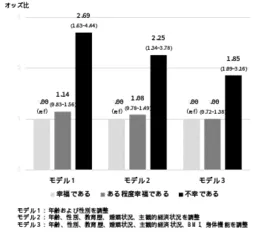
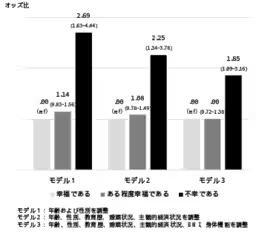
Adjustments for age and sex revealed that individuals who reported feeling unhappy had approximately 2.7 times greater all-cause mortality risk compared to their happier counterparts. Even after further adjustments for socioeconomic factors like education, marital status, and financial situation, as well as health indicators such as BMI and physical health, the mortality risk for those unhappy remained significantly elevated.
These findings underscore the importance of addressing well-being as a component of long-term health outcomes, particularly in the context of Japan, which boasts a distinctly different cultural and environmental backdrop compared to Western countries.
Implications of the Research
The results affirm that high happiness levels in Japanese adults are associated with lower mortality rates and suggest that enhancing happiness could serve as a critical indicator for long-term health. These insights may significantly inform public health strategies and policies aimed at improving mental health, indicating that interventions designed to boost positive psychological health could have beneficial long-term health results, potentially even extending life expectancy.
Efforts to enhance overall well-being—through initiatives promoting social connections, mental health programs grounded in positive psychology, and community-focused activities—could not only elevate individuals' mental health but also play a part in reducing mortality risks.
Future Directions for Research
Despite its compelling findings, the study does have limitations. Health status evaluation relied solely on self-reported BMI and physical function assessments, lacking more objective measures such as clinical diagnoses and biological markers. Future studies should aim to incorporate validated health indices that can provide a clearer picture of the relationship between happiness and mortality.
Additionally, tracking changes in happiness levels over time was not part of this analysis. Understanding how these changes interact with mortality risk could offer deeper insights into the dynamics of happiness and health.
Researchers' Perspectives
Professor Akimoto Yasunaga, Aomori University of Health and Welfare
This research reveals that higher levels of happiness correlate with lower all-cause mortality rates, persisting even after adjusting for key demographic and health variables. It suggests that happiness isn't merely a transient emotional state but instead may play a critical role in influencing long-term health and longevity.
Professor Koichiro Oka, Waseda University
The findings highlight the significance of maintaining high levels of happiness associated with lower mortality rates, using data from a cultural context starkly different from Western nations. As our study encompassed adults from rural areas, it prompts further inquiry into whether these results translate to urban populations. Nonetheless, these insights provide invaluable information for policies and initiatives aimed at enhancing well-being in the pursuit of increased healthy life expectancy.
Conclusion
In a rapidly evolving health landscape, understanding the relationship between happiness and mortality is pivotal, especially within the context of Japan. This study not only fills a gap in the current literature but also emphasizes the need for targeted public health interventions to foster a happier society and ultimately, a healthier population.
Topics Health)
【About Using Articles】
You can freely use the title and article content by linking to the page where the article is posted.
※ Images cannot be used.
【About Links】
Links are free to use.