



Kanesho and Partners Implement World-First Methane Reduction Trial for Wagyu Cattle
Pioneering Methane Reduction in Wagyu Cattle
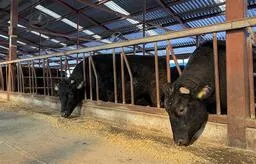
Kanesho Co., Ltd. has joined forces with Shikishima Farm and dsm-firmenich AG to conduct the world's first practical trial of a feed additive aimed at reducing methane emissions from Wagyu cattle. This initiative, focused on mitigating environmental impacts within the meat supply chain, is set to pave the way for the commercial utilization of Bovaer® in Wagyu cattle, and represents a significant advancement in sustainable livestock practices.
Understanding the Methane Challenge
Methane gas, a potent greenhouse gas emitted from the burps of ruminants like cattle, poses a substantial environmental challenge to the livestock industry. According to the National Agriculture and Food Research Organization, gastrointestinal methane is the second-largest source of methane emissions in Japan’s agriculture, trailing only rice cultivation. It is estimated to contribute approximately 5% of global greenhouse gas emissions. To address this, Japan's J-Credit System Committee approved a new methodology for using feed additives in cattle by December 2025, with preparations underway for system registration.
Bovaer®: A Game-Changer in Livestock Feed
Bovaer® is designed to maintain the flavor and quality of beef and dairy products while reducing gastrointestinal methane emissions by an average of 30% in dairy cattle and 45% in beef cattle. The product is already in use across hundreds of farms in Europe, the US, South America, and Australia, with an estimated reduction of about 600,000 tons of methane emissions equivalent to carbon dioxide, as reported by dsm-firmenich.
In July 2025, Kanesho and dsm-firmenich signed a cooperation agreement to jointly promote the environmental benefits of utilizing Bovaer® and to market livestock products that embody these values. This practical trial aims to establish optimal feeding conditions and methodologies for Wagyu cattle, while also solidifying approaches for future J-Credit creation.
Trial Details
- - Duration: 70 days starting from November 2025
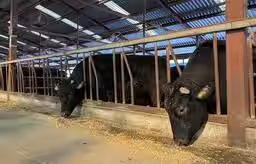
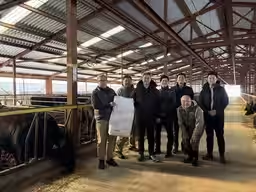
- - Location: Shikishima Farm, Shiraoi Ranch, Hokkaido
- - Subjects: 24 head of Wagyu cattle
- - Methodology: Addition of Bovaer® to conventional feed, administered at the same time daily.
Results of the Trial
The outcomes of the trial include:
1. Bovaer® could be easily integrated into existing feed without significantly increasing labor.
2. The feeding conditions remained favorable throughout the trial period, with no adverse effects on the behavior, growth, or health of the cattle observed.
3. The total amount of gastrointestinal methane reduced during the trial was estimated to be approximately 5.5 tons in terms of carbon dioxide equivalent.
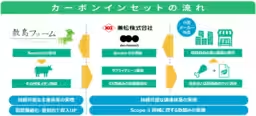
Moving forward, Kanesho, Shikishima Farm, and dsm-firmenich plan to collaborate closely with clients to push forward initiatives that provide carbon insets associated with methane reduction linked to livestock products, including Wagyu beef. This effort aims to contribute significantly to reducing Scope 1 emissions for Shikishima Farm and Scope 3 emissions (Category 1) for downstream clients, thereby working towards a sustainable food supply chain.
Carbon Inset Explained
A carbon inset refers to the integration of greenhouse gas emissions reductions or removals that occur within a supply chain itself—contrasted with carbon offsets, which are external to the supply chain.
Kanesho's Commitment to Sustainable Practices
Kanesho is dedicated to environmental responsibility and has incorporated a focus on Green Transformation (GX) within its three-year management plan initiated in April 2024. Key areas include promoting environmentally friendly food production and contributing to carbon neutrality and resource circulation in the supply chain.
About Shikishima Farm
Shikishima Farm, located in Tochigi and Hokkaido, manages approximately 10,000 head of Wagyu cattle through a fully integrated production system aiming for
Topics Other)

【About Using Articles】
You can freely use the title and article content by linking to the page where the article is posted.
※ Images cannot be used.
【About Links】
Links are free to use.