



Advancements in Remote Cardiac Rehabilitation Highlighted at 31st Annual Japanese Conference
Advancements in Remote Cardiac Rehabilitation
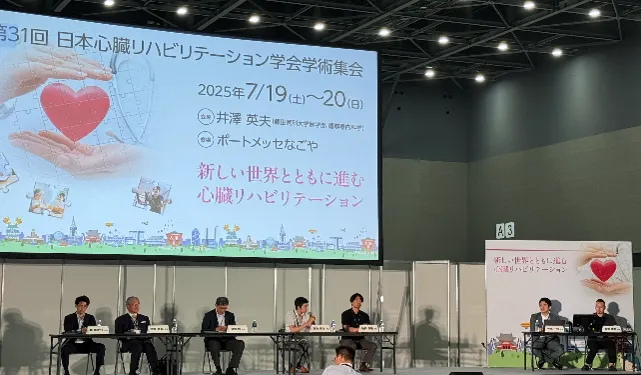
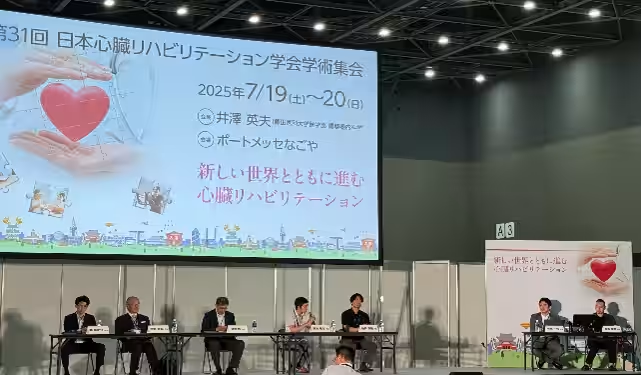
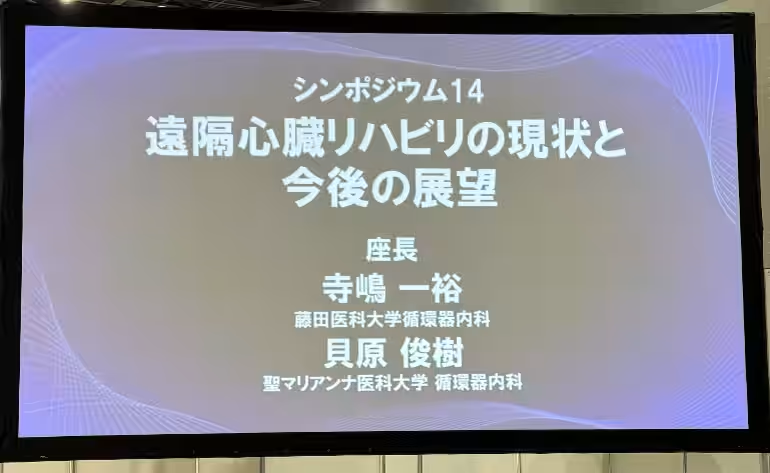
The 31st Annual Japanese Society of Cardiac Rehabilitation Conference, held on July 19-20, 2025, showcased significant developments in the realm of remote cardiac rehabilitation (RCR). Leading the discussions was Kazuhiro Terashima, the CEO of CaTe Inc. and a notable assistant professor at Fujita Medical University’s Department of Cardiology. He served as a chairperson in the symposium titled “Current Status and Future Prospects of Remote Cardiac Rehabilitation” alongside Dr. Toshiki Kaibara, a senior physician at St. Marianna University School of Medicine Hospital, Department of Cardiology.
During this symposium, participants explored the evolving landscape of cardiac rehabilitation, particularly focusing on technological advancements facilitating remote care. The significance of RCR has never been more pronounced, especially post-COVID-19, as it allows healthcare providers to deliver essential rehabilitation services while minimizing patient exposure in traditional settings.
Kazuhiro Terashima emphasized the critical need for adaptive strategies in rehabilitation practices, noting that remote engagement not only enhances accessibility but also significantly improves patient compliance and outcomes. During his presentation, he highlighted various case studies demonstrating the successful implementation of remote rehabilitation programs, potentially serving as a blueprint for future practices in Japan and beyond.
One transformative aspect discussed was the role of digital health technologies, such as wearable devices and mobile health applications, in tracking patient progress and outcomes. These innovations allow for real-time monitoring and feedback, fostering a more personalized rehabilitation experience that meets the unique needs of each patient.
The conference did not solely focus on technicalities but also addressed the psychological components of remote rehabilitation. Dr. Terashima pointed out that the emotional and mental health of patients undergoing cardiac rehabilitation could be greatly affected by a lack of face-to-face interaction. Therefore, it is crucial to integrate aspects of telehealth that promote not only physical health but also emotional well-being to create a holistic rehabilitation approach.
Moreover, the conference served as a platform for clinicians to voice their experiences and challenges in implementing remote rehabilitation programs. The collaborative discussions about best practices, patient engagement strategies, and technological integration aimed to refine the delivery of cardiac rehabilitation services across various healthcare systems.
In addition to leading the panel discussions, Kazuhiro Terashima was also recognized for his significant contributions to the field by receiving the Young Investigator Award at the same conference for his impactful research. This award highlights the promising future of young researchers in the realm of cardiac rehabilitation and reinforces the importance of innovative thinking in this specialized medical field.
Overall, the 31st Annual Japanese Society of Cardiac Rehabilitation Conference marked a pivotal moment in advancing remote cardiac rehabilitation practices, bringing together thought leaders and innovators to share insights, research findings, and experiences that shape the future of cardiac care in a digital age. As Kazuhiro Terashima and his colleagues look forward to implementing these strategies effectively, there lies great optimism for improving the quality of life for cardiac patients in Japan and beyond.
For more information about CaTe Inc. and their initiatives in the field of cardiac rehabilitation, you can visit their official website.
Topics Health)
【About Using Articles】
You can freely use the title and article content by linking to the page where the article is posted.
※ Images cannot be used.
【About Links】
Links are free to use.