



Launching a Comprehensive Program for Workplace Health Improvement Based on Health Checkup Data
A New Initiative for Workplace Health Improvement
Fractal Workout Inc., headquartered in Shibuya, Tokyo, has launched a new program targeted at corporate clients through its health support service, BODY PALETTE. This program aims to help organizations with a tendency towards higher BMI identify and design actionable strategies based on health checkup data. In this article, we will explore how a combination of health exercise instructors and registered dietitians can help create a sustainable approach to improving daily habits in the workplace.
Key Highlights of the Initiative
- - The program organizes themes and priorities based on health checkup data, focusing on trends in BMI.
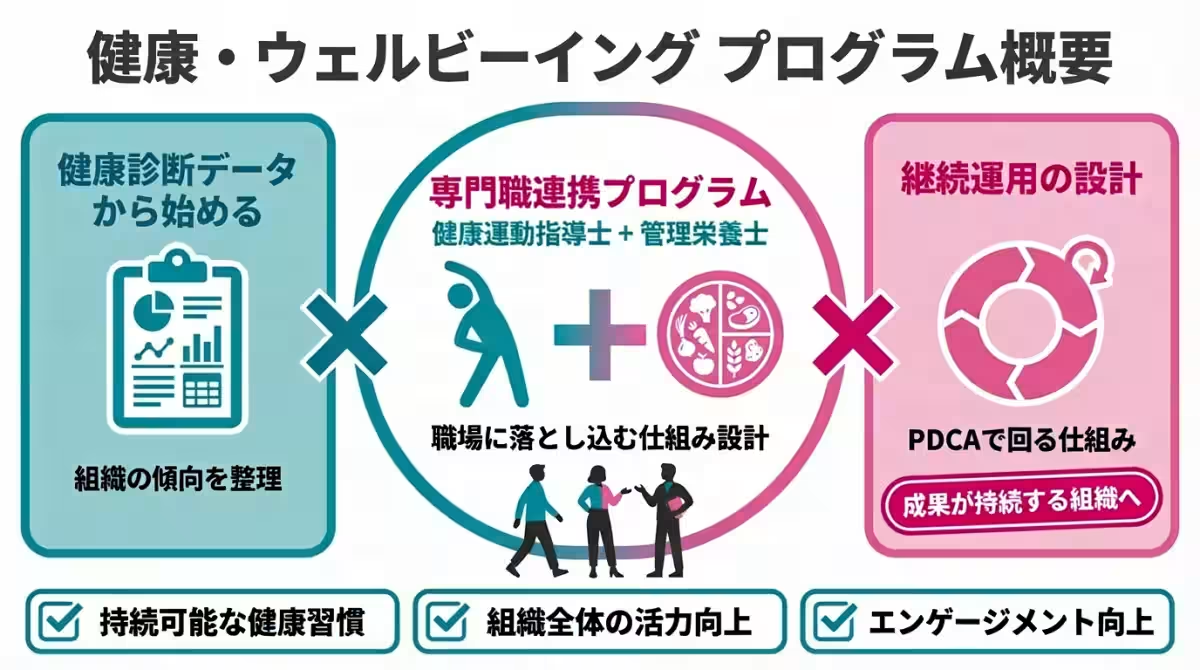
- - Collaboration between health exercise instructors and registered dietitians ensures designs that are easy to implement in the office setting.
- - Unlike one-off programs, this initiative aims for continuity within the organization, establishing rules for ongoing operation.
Understanding the Terminology
- - Health Checkup Data: Refers to the health examination results held by companies, used to understand organizational health trends.
- - BMI: A key health report item used to gauge body composition trends.
- - Professional Collaboration Program: A framework where professionals work together to design and operationalize strategies derived from health checkup data.
- - BODY PALETTE: The corporate health support service by Fractal Workout Inc.
Background of the Initiative
Often, initiatives aimed at promoting workplace health begin with institutional compliance, information dissemination, or single events. However, over time, challenges may arise, such as ineffectual integration of practices into daily routines, stagnation due to a lack of fresh approaches, and increased burden on program coordinators.
In organizations where body shape is a growing concern, there is a diverging lifestyle among individuals, making it difficult for blanket approaches to yield results. For this reason, it’s vital to redesign conditions to operate seamlessly as part of the company’s workflow rather than relying on individual efforts.
Challenges in Organizations with Higher BMI
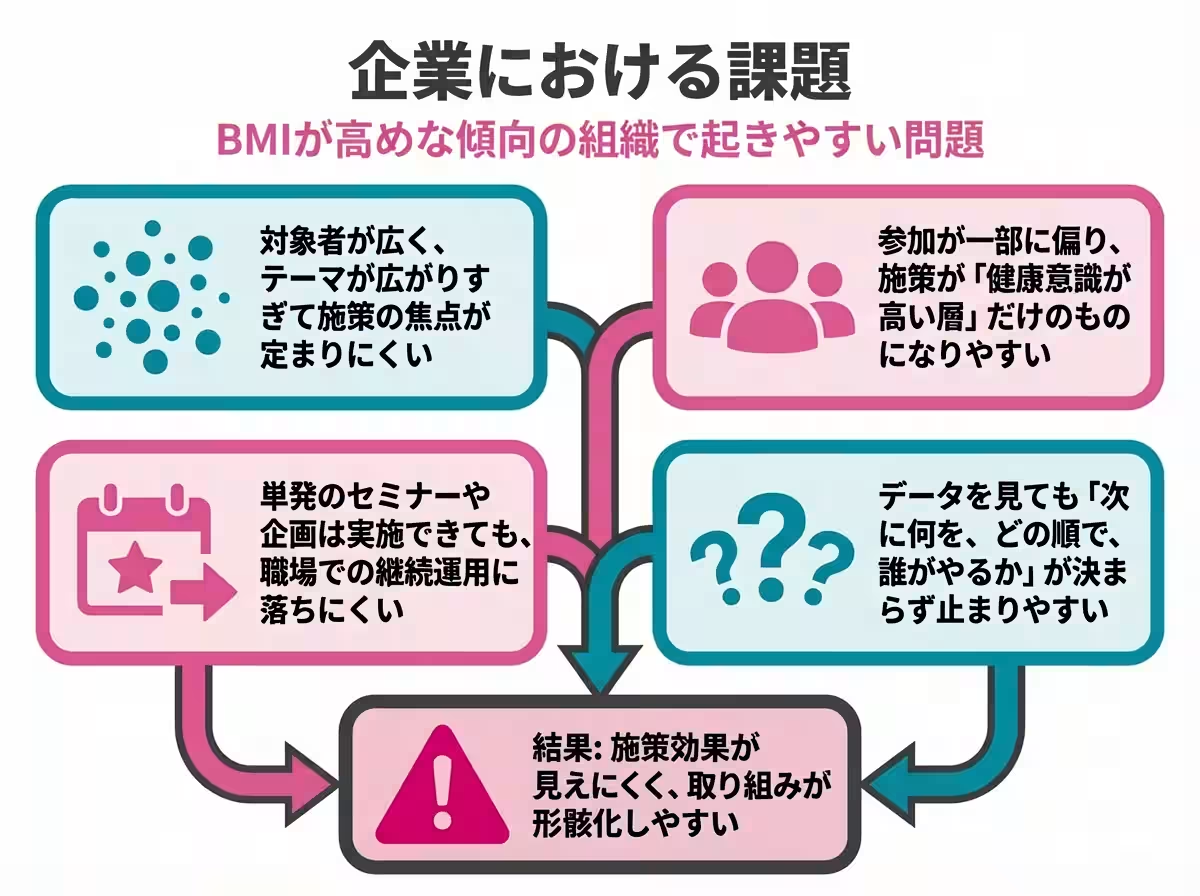
Organizations showing tendencies for elevated BMI often face several challenges:
- - Broad target demographics can lead to unfocused initiatives and generalized information dissemination.
- - Participation may skew towards individuals already health-conscious, leaving others behind.
- - While single workshops or initiatives may be feasible, sustaining practices within the workplace is often problematic.
- - Data often remains underutilized, with uncertainty around next steps, order of execution, and responsible parties.
Overview of the Professional Collaboration Program
For organizations with elevated BMI tendencies, this program focuses on two core axes:
1. Embedding Daily Actions into Workplace Operations
To ensure actions are integrated into the workplace:
- The program looks to avoid disruptions in workflow while introducing manageable actions.
- Designs include awareness strategies, pathways to participation, and frequency of interventions.
- Establishes a common language within the organization rather than individualized instructions.
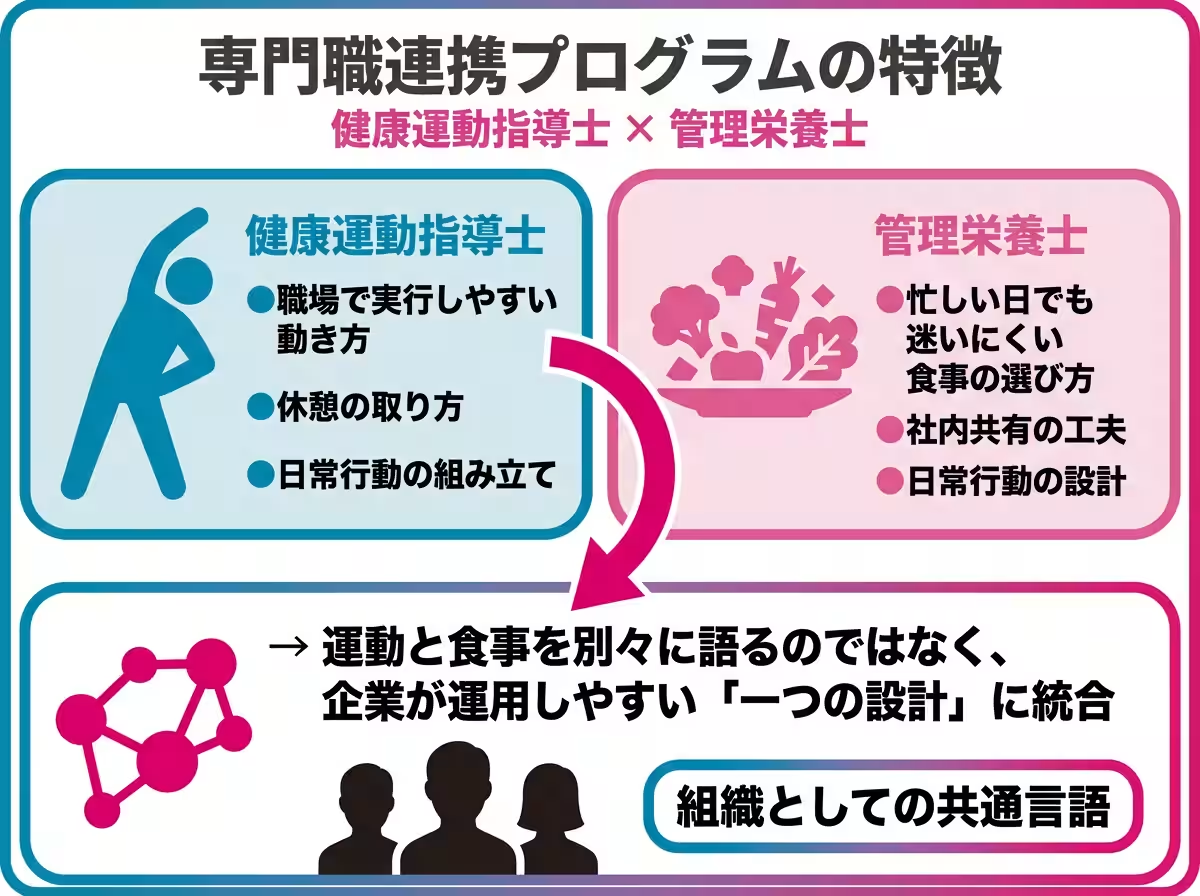
2. Aligning Communication and Execution through Professional Collaboration
- Health exercise instructors help organize movement patterns, rest periods, and daily activity frameworks.
- Registered dietitians provide easily applicable dietary choices and share useful tips within the workplace.
This program uniquely blends exercise and nutrition into a single coherent plan, making it more manageable for businesses.
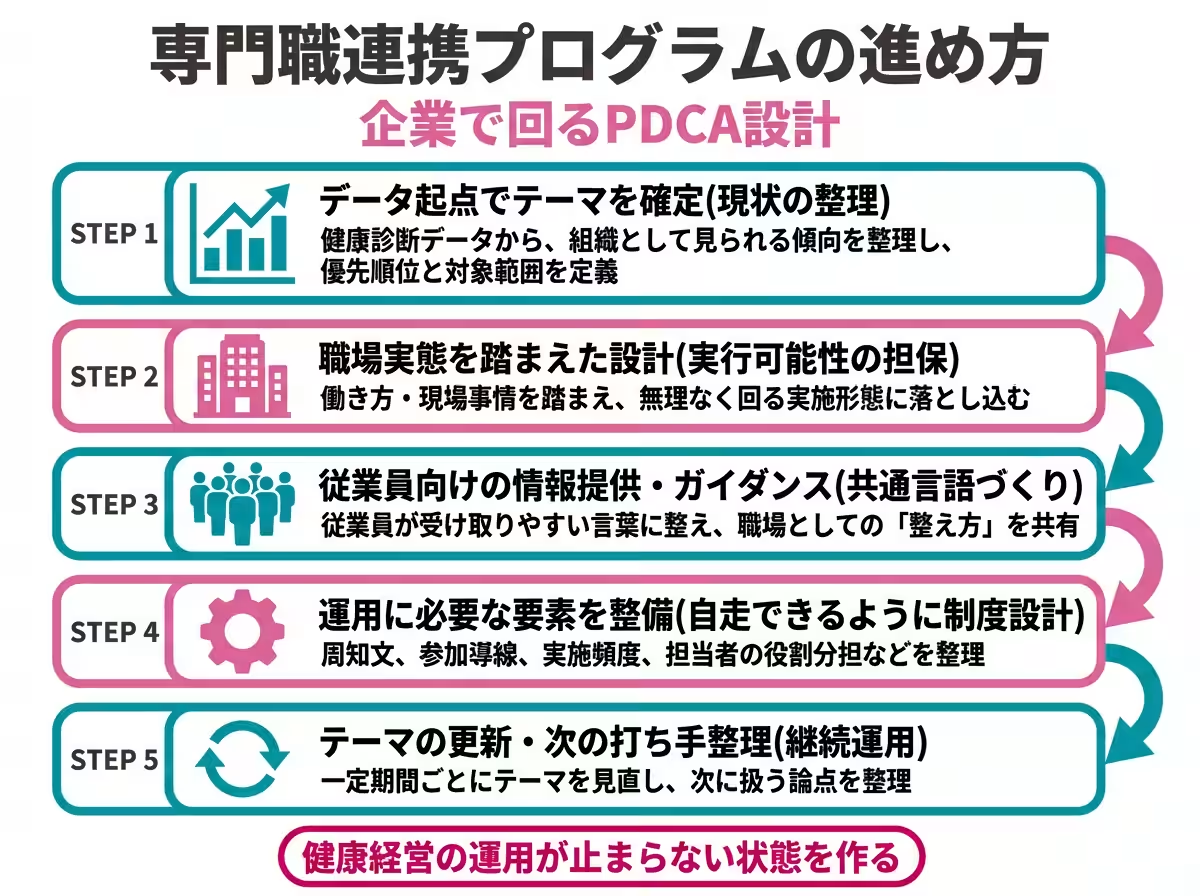
Execution of the Professional Collaboration Program (PDCA Model)
To prevent one-off efforts and ensure sustainability, the program will follow this structure:
- - Step 1: Theme confirmation based on data (Current Condition Review)
- - Step 2: Design considering workplace reality (Implementation Feasibility)
- - Step 3: Providing guidance and information to employees (Establishing Common Language)
- - Step 4: Structuring elements necessary for operation (Building Self-sufficient Systems)
- - Step 5: Updating themes and generating subsequent actions (Sustaining Operations)
A Call to Action for Employers
Concerns over body shape should not be left as a personal issue but treated as a collective workplace challenge. The key is to utilize health checkup data to set the agenda, prioritize actions and share responsibilities among professionals to make these efforts sustainable.
This article aims to assist in re-evaluating your workplace health initiatives not just based on their implementation but how well these programs foster ongoing engagement.
For those interested in the program, please reach out through the inquiry form on our website and mention “BMI (High Value) Article” for immediate assistance.
Note: This initiative is not a substitute for individual medical judgment or treatment but aims to provide education and create foundational habits within organizations to promote health management in a manageable manner.
Company Overview
- - Company Name: Fractal Workout Inc.
- - Location: 4F Harajuku Jingu no Mori, 1-14-34 Jingumae, Shibuya, Tokyo
- - Representative: Masahiro Takase
- - Established: April 1, 2020
- - Capital: 500 million yen
- - Business Activities: Fitness services
- - Website: Fractal Workout
- - Associations: PHR Service Business Association, Health Management Alliance, Cancer Prevention Company Actions, Smart Life Project, Sport in Life
Topics Health)
【About Using Articles】
You can freely use the title and article content by linking to the page where the article is posted.
※ Images cannot be used.
【About Links】
Links are free to use.