




New Standards for Allergen Labeling in B2B Platforms Set for July 2026
New Allergen Labeling Standards Coming in 2026
The digital transformation spearheaded by Infomart, a Tokyo-based company, is about to take a significant leap forward with updates to its product specification cloud service, "BtoB Platform Specifications." These updates are necessary to comply with new food labeling standards coming into effect on April 1, 2026. One of the most notable aspects of these new regulations is the mandatory labeling of cashew nuts and the recommended addition of pistachios, driven by an alarming increase in tree nut allergies.
Rising Tree Nut Allergies
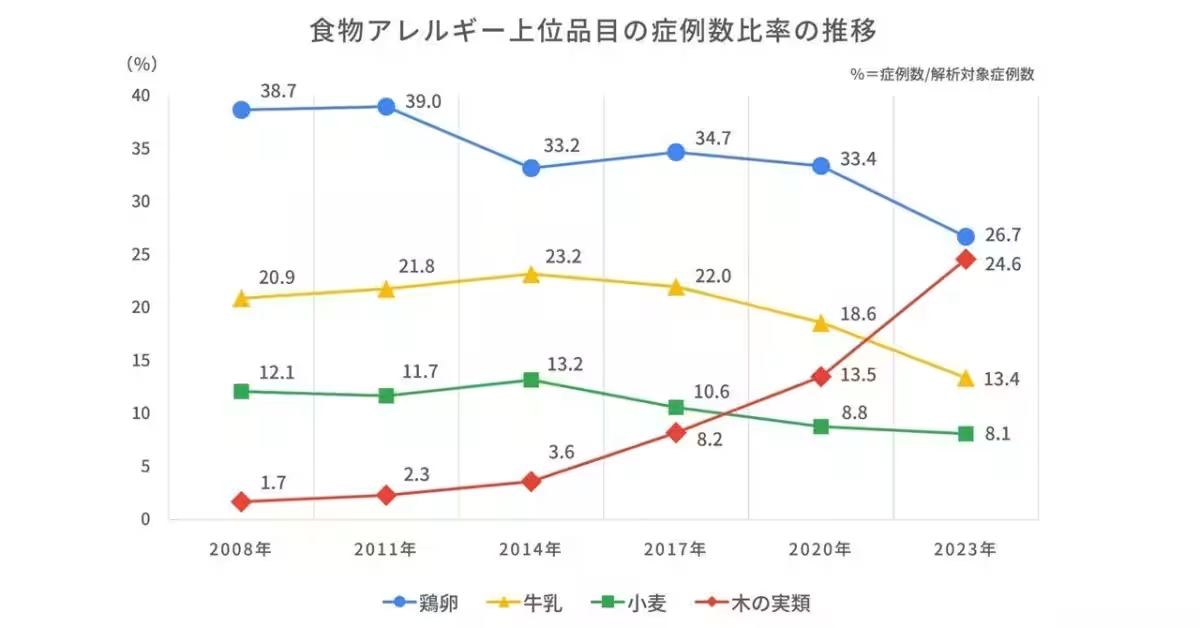
Statistics indicate that tree nut allergies have drastically risen over the past decade. As per the Consumer Affairs Agency's findings, the proportion of cases related to tree nut allergies in 2023 reached 24.6%. This alarming trend places them on the verge of overtaking traditional allergens such as eggs. Tree nut allergies are particularly dangerous due to their resistance to natural remission and their potential to cause severe reactions even in small amounts. As such, enhanced management and information transparency is not merely beneficial—it's essential.
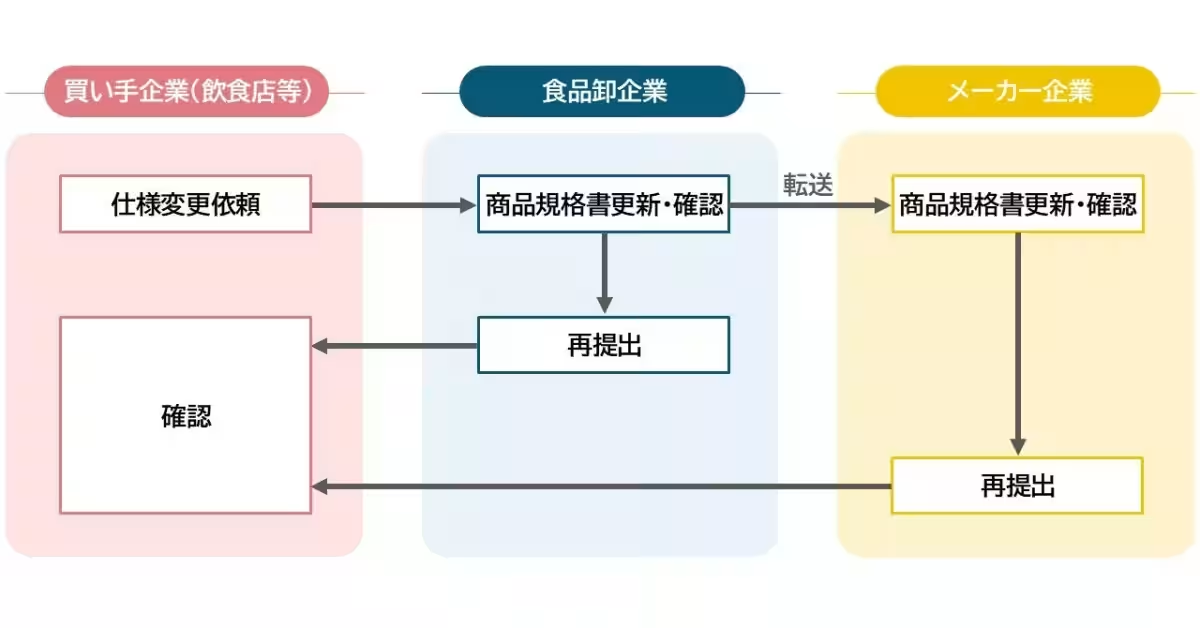
The update to the BtoB Platform Specifications aims to provide a robust and efficient mechanism to adapt swiftly to these new labeling requirements. With the deadline set for July 29, 2026, businesses across the supply chain, including food wholesalers and manufacturers, will face significant burdens in updating and verifying an estimated thousands to tens of thousands of product specifications.
New Features of BtoB Platform Specifications Update
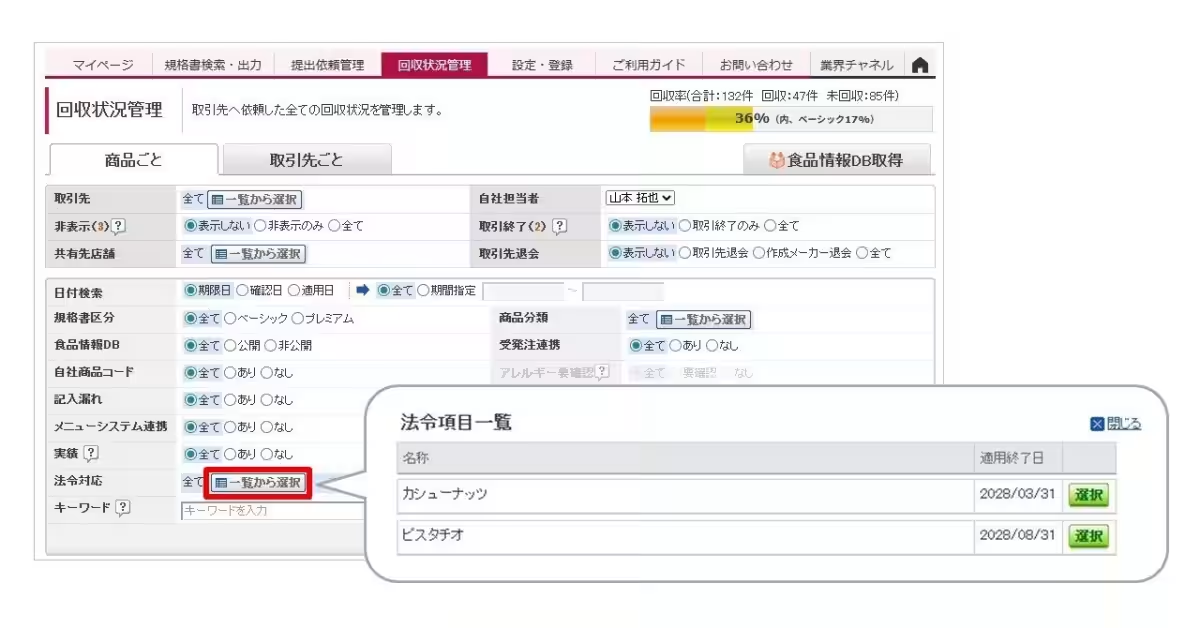
To alleviate the operational strain introduced by this regulatory change, the BtoB Platform is set to introduce a Bulk Update Function. This new feature will drastically streamline the aforementioned update processes, allowing users to manage the daunting task of updating allergen information with increased speed and accuracy. The time savings from this new functionality could be substantial, enabling companies to align swiftly with the updated food safety regulations without compromising on food quality and consumer safety.
The planned functionalities include:
1. Addition of allergen labeling for cashew nuts and pistachios. Cashew nuts will transition from a recommended to a mandatory label, while pistachios will enter the recommended section.
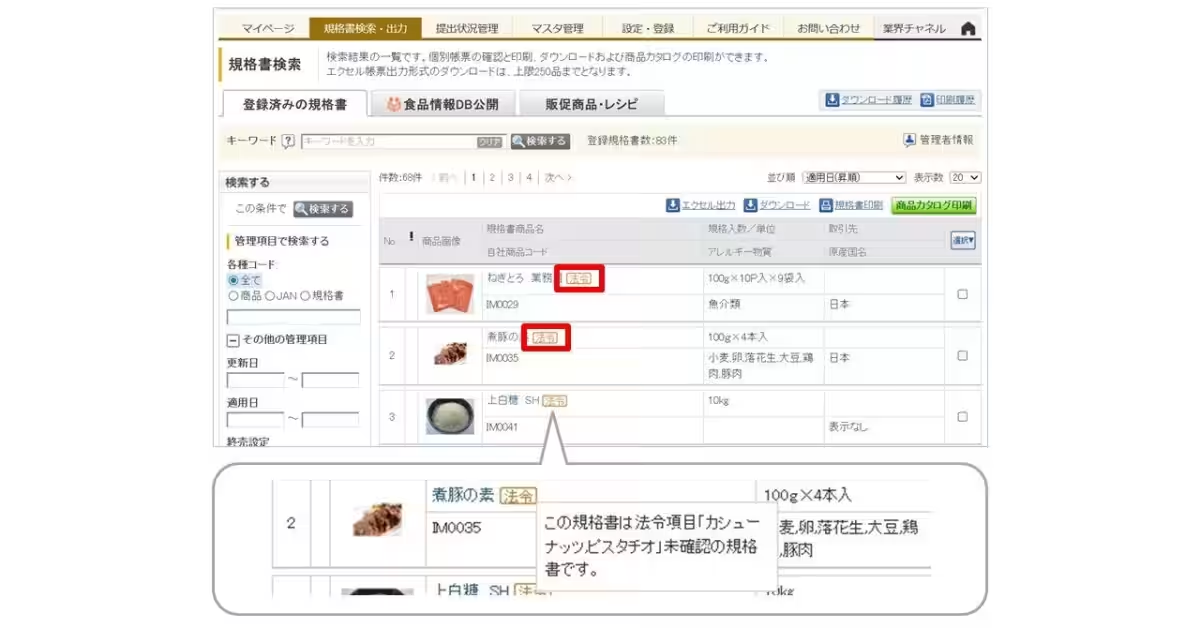
2. Visible alerts for non-compliant products. The platform will introduce an icon system to highlight items that require modification, helping prevent oversights during the update process.
3. Streamlined bulk updates. Users will be able to upload CSV files for bulk processing of numerous product specifications, simplifying the tedious previous manual labor involved in compliance management.
This comprehensive update aligns with Infomart's goals of enhancing digital operations in the food service sector while maintaining a commitment to safety and quality in food product information management.
Infomart continues to refine its services to not only keep pace with regulations but to set new standards in the industry as a solution provider committed to aiding in the sector's digital transformation.
Future of Food Safety Management
Kenji Kashima, the head of the sales strategy planning division at Infomart, emphasizes the weighty responsibility of food labeling, stating, "This is not merely an efficiency opportunity but a critical need to eliminate human error. The industry must adopt 'systematic safety management' as a best practice rather than rely solely on individual efforts at the ground level."
The Consumer Affairs Agency is also stepping up efforts to educate stakeholders about these allergy-related regulations by providing valuable video content for business operators in the food industry. This content will support better understanding and management practices necessary to comply with the new labeling regulations, enhancing consumer protection and trust in food safety.
Conclusion
The BtoB Platform Specifications is designed as a comprehensive resource for food specification management across wholesalers, manufacturers, and food service businesses. By transitioning to a unified digital ecosystem, Infomart enables organizations to eliminate redundancy and drive efficiency, ultimately enhancing food safety standards in the industry. As of April 2026, over 10,000 businesses are projected to rely on this platform.
For more details, visit Infomart's BtoB Platform.




Topics Consumer Products & Retail)





【About Using Articles】
You can freely use the title and article content by linking to the page where the article is posted.
※ Images cannot be used.
【About Links】
Links are free to use.