




Significant Surge in New Medical Facilities Across Japan: 1,642 Openings Recorded
Surge of New Medical Facilities in Japan
In a unique study conducted by Review Co., Ltd., a data provider based in Osaka, it has been revealed that from April to June 2025, a remarkable total of 1,642 new hospitals and clinics opened across Japan. This report delves into the patterns and dynamics of these openings, highlighting a significant trend in healthcare business development nationwide.
Overview of New Openings
During the three-month period, April stood out with 673 openings, marking nearly 40% of the total number. This phenomenon aligns with the usual 'opening season' observed at the beginning of the fiscal year, indicating a surge in healthcare facility establishment. Our data illustrates a distinct divergence in opening strategies between urban and rural areas, based on local demand and supply.
Top Five Prefectures for New Openings
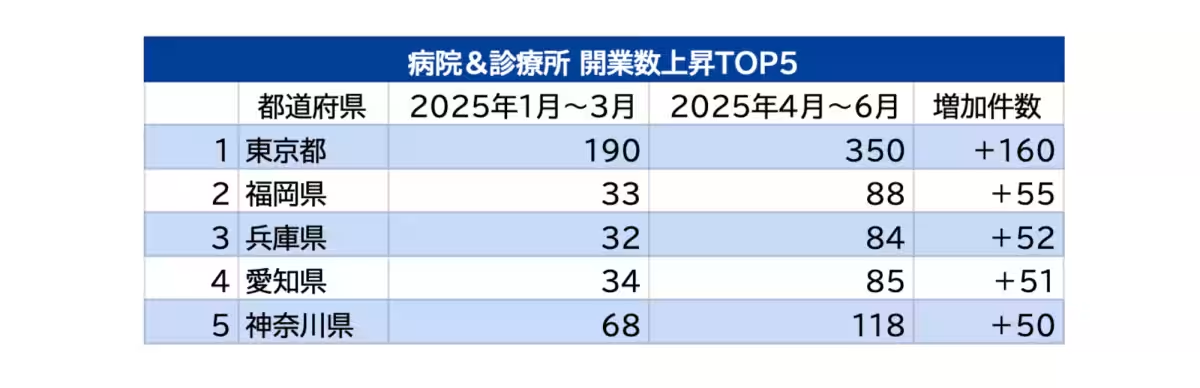
Preliminary rankings reveal that Tokyo leads the way with 350 new facilities, followed by Osaka with 144, Kanagawa with 118, Fukuoka with 88, and Aichi with 85. These regions, characterized by large populations and robust economic activity, tend to attract more healthcare businesses due to the high patient demand.
The ease of securing a patient base, combined with the diversity in medical needs such as aesthetic and psychosomatic treatments, fuels this trend further. Even in a competitive marketplace, the substantial market size still allows for growth and new entries into the healthcare sector.
The Seasonal Surge of New Facilities
The period of April to June 2025 witnessed a notable increase of over 50 new facilities in five major prefectures compared to the previous quarter. This rise can be attributed to several industry-specific factors perfectly aligned with the broader societal rhythms. The various administrative procedures and insurance billing processes commonly align with the onset of the fiscal year, facilitating smoother transitions from preparation to opening.
Additionally, many healthcare professionals, including nurses and administrative staff, often commence employment in April, which aids in organizing cohesive teams. Furthermore, the seasonal shift promotes an increase in individuals seeking new primary care providers due to relocations associated with school or workplace changes, thereby offering new healthcare facilities valuable opportunities to connect with potential patients.
Why Spring is Optimal for New Openings
The concentration of new healthcare facilities during spring can be explained by several interconnected reasons:
- - Physician Movement and Human Resource Cycles: Many healthcare professionals shift positions or relocate.
- - Timing for Loans and Subsidy Applications: These factors often hinge on the fiscal calendar.
- - Strategic Acquisition of Patients: Spring serves as an optimal time for acquiring new patients.
- - Operational and Climate Considerations: Favorable conditions for initial operational phases.
To gain deeper insights, refer to the full report.
The Importance of General Practitioner Clinics
A detailed examination of the new facilities reveals that internal medicine clinics led the charge with 533 establishments, surpassing dental practices which tallied 405. The increasing prevalence of chronic conditions and lifestyle diseases amongst the aging population underlines the indispensable role of internal medicine as a community's healthcare 'gateway.' As the landscape evolves, it becomes apparent that foundational healthcare continues to be a preferred choice.
Conversely, urban settings are witnessing a rise in private practices catering to emerging demands in areas such as aesthetic medicine and psychotherapy, suggesting a bifurcation where rural areas gravitate towards essential healthcare and cities diversify into specialized care.
Challenges and Opportunities
The challenges posed by an aging society and increasing chronic diseases are critical in shaping the healthcare infrastructure needs within communities. This pressing demand stands in stark contrast to the regional disparities seen in healthcare accessibility and availability.
Future of Healthcare
Reflecting on the data from April to June 2025, we see that the formation of 1,642 new medical facilities holds promise for addressing diverse health needs that have emerged, particularly focusing on preventive care, mental health, and quality of life enhancement.
The contrast between urban diversification and rural foundational healthcare highlights a growing demand for varied medical disciplines. Both trends signify a commitment to providing necessary healthcare resources and developing treatment options that are more tailored to patients’ needs. Healthcare professionals are indeed pursuing their vision of ideal patient care while facing substantial risks, proving to be the backbone of a sustainable healthcare future.
These ongoing efforts create a ripple of hope and innovation, further bridging gaps within the medical community and ensuring a robust generation of healthcare services for the future.




Topics Health)

【About Using Articles】
You can freely use the title and article content by linking to the page where the article is posted.
※ Images cannot be used.
【About Links】
Links are free to use.