


The Impact of Rest Intervals on Lipid Metabolism in Resistance Training
Understanding the Effects of Rest Intervals During Resistance Training on Lipid Metabolism
Recent research has examined whether the length of rest intervals during resistance training influences lipid metabolism, particularly postprandial triglyceride levels. Initially, it was established that different rest times between sets can lead to varying physiological responses, notably in lactate levels. However, the direct impact of rest interval duration on lipid metabolism had not been explored in detail until now.
Key Findings from the Study
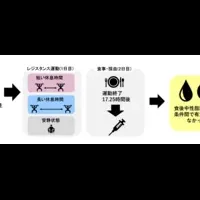
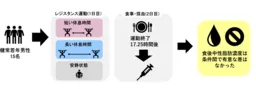
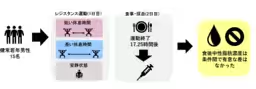
A team of researchers from Waseda University, led by Professor Masashi Miyashita, investigated this question by enlisting 15 healthy young male participants who regularly engage in resistance training. They compared three exercise conditions: one with a short rest interval of 30 seconds, another with a longer interval of 180 seconds, and a control condition in which no exercise was performed.
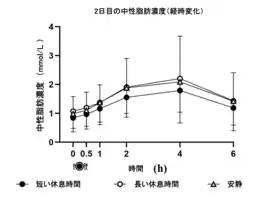
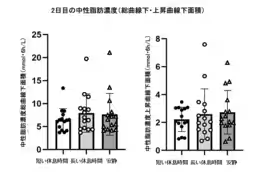
The results were surprising. The study found no significant differences in postprandial triglyceride levels the day after exercising, regardless of whether participants had short or long rest periods. This outcome suggests that rest duration during resistance training does not significantly affect triglyceride metabolism the following day.
Study Methodology and Execution
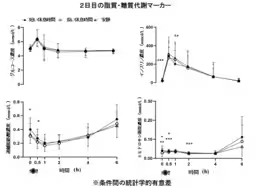
Conducted over multiple sessions, the research maintained consistency by ensuring that participants performed the same types of resistance exercises with equal intensity and volume in both exercise conditions. Following a 10-hour fast the day after the workouts, blood samples were taken after participants consumed the same breakfast. Researchers then monitored triglyceride levels among other metabolic markers over the next six hours.
Surprisingly, results indicated consistent triglyceride levels across all conditions, including variations in the total area under the triglyceride curve, which further reaffirmed the finding that varying rest intervals did not influence these levels significantly. However, glucose and insulin levels exhibited interesting trends: longer rest intervals were associated with lower fasting glucose and insulin levels compared to the control condition.
Implications of the Research
This study illuminates how the metabolic effects of resistance training may be more complex than merely adjusting rest intervals. While it appears that shorter rest periods do not enhance the obesity-related triglyceride response, they do impact other metabolic markers like insulin and glucose levels. This realization underscores the importance of considering multiple variables, including total energy expended during workouts, when evaluating the usability of different resistance training protocols.
Moreover, this research allows fitness trainers and health professionals to better design resistance training programs that prioritize efficiency without compromising lipid metabolism.
Future Directions and Limitations
Given the preliminary nature of these findings, the researchers acknowledge limitations related to the study's demographics – specifically, it only involved East Asian young males who already had established resistance training habits. The applicability of the results to other ethnic groups or to women is unknown. Future research should broaden participant diversity to verify these outcomes across different demographics while also considering energy expenditure differences during various rest interval lengths.
Until more data can provide further validation, fitness professionals should still emphasize a comprehensive approach when assessing exercise effects on lipid metabolism.
Conclusion
This groundbreaking study offers new insights into how resistance training rest intervals might not significantly affect postprandial triglyceride levels while still impacting glucose and insulin metabolism. As the world continues to seek optimal health and fitness solutions, understanding the nuances behind training protocols will become increasingly critical.
- ---
Reference
- - Miyashita, M., Pereira, E., Yamada, Y. et al. (2026). Effect of rest interval time during resistance exercise on postprandial triglyceride concentrations in resistance-trained young men. European Journal of Clinical Nutrition. DOI: 10.1038/s41430-026-01819-x.
Topics Health)

【About Using Articles】
You can freely use the title and article content by linking to the page where the article is posted.
※ Images cannot be used.
【About Links】
Links are free to use.