


Top Strategies for Employee Retention Among Major Firms Revealed in Recent Survey
Effective Employee Retention Strategies Uncovered in Major Industry Survey
In a recent study conducted by IKUSA Inc., a Tokyo-based company specializing in experiential events, 200 employees from large organizations were surveyed to uncover current trends and effective strategies for employee retention. The survey focused on firms with at least 1,000 employees and yearly sales exceeding 10 billion yen, providing a comprehensive look into the corporate landscape around employee engagement and retention.
Key Findings
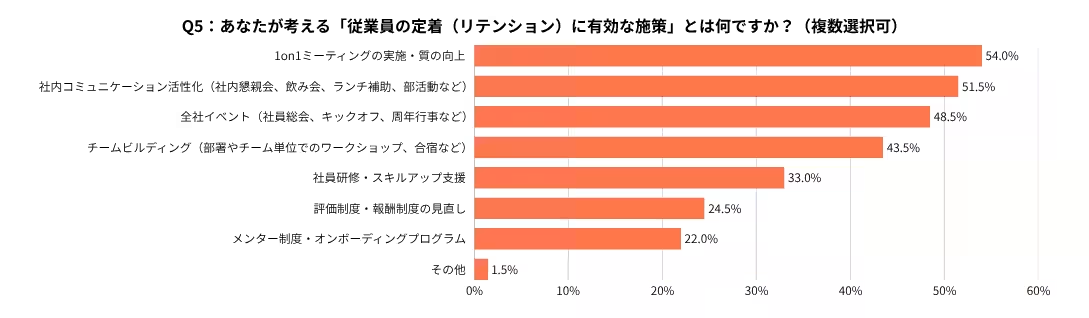
The results illustrated that the most recognized and effective strategies for retention included:
- - 1-on-1 Meetings: 54.0%
- - Enhancing Internal Communication: 51.5%
- - Company Events: 48.5%
- - Team Building Activities: 43.5%
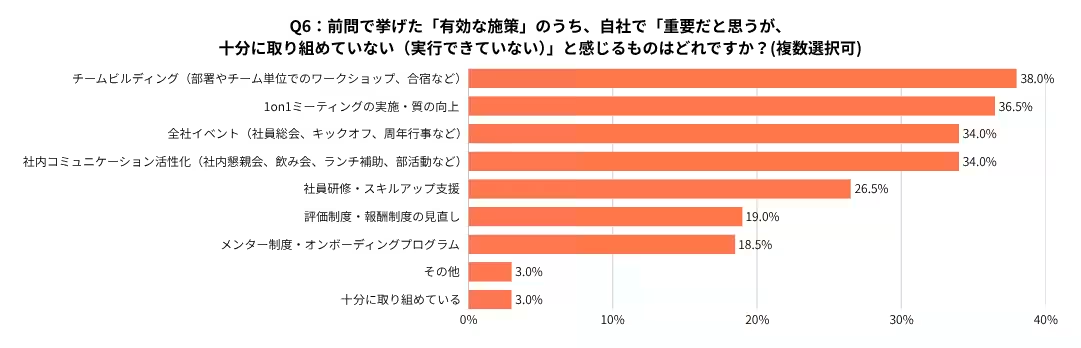
Interestingly, while these strategies were acknowledged for their effectiveness, a significant gap emerged between recognition and implementation. Most notably, 38.0% of respondents highlighted team building as a crucial initiative that was not sufficiently acted upon, with concerns about aligning corporate priorities leading the list of barriers to effective implementation.
The Barriers to Implementation
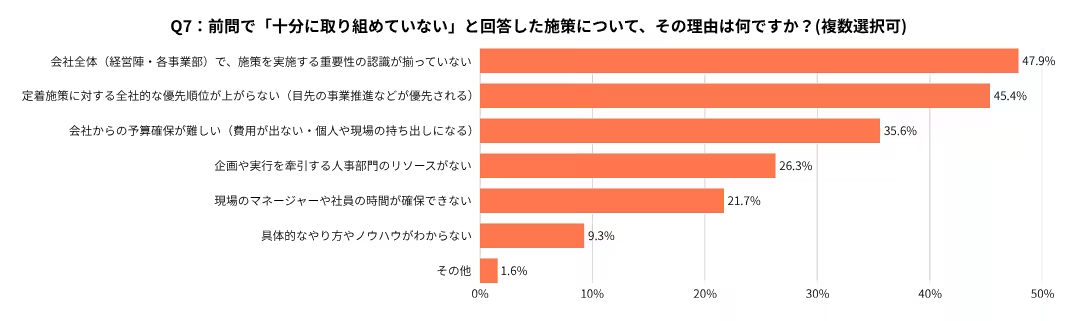
The leading obstruction to executing these retention strategies appeared to be a lack of unified understanding of their importance across the organization. Around 47.9% of executives acknowledged this issue, overshadowing budgetary constraints, which accounted for 35.6% of the challenges faced. This insight underscores the need for organizations to foster a common awareness and commitment to employee retention strategies.
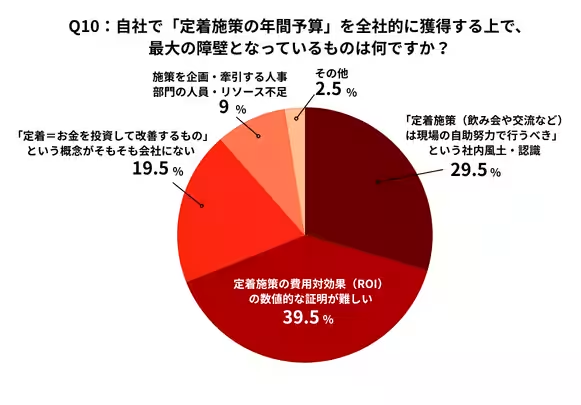
Further complicating the budget acquisition process, 39.5% of participants stated that demonstrating the return on investment (ROI) for these strategies was difficult, making it challenging to secure funding for retention initiatives.
The Financial Divide
While 52.5% of firms have identified and allocated a distinct budget for employee retention and recruiting, more than three-quarters (76.5%) believe that an ideal retention budget is over 30,000 yen per employee per year. There's a growing consensus that having dedicated departments responsible for retention strategies and yearly budgets should be considered standard practice as 89.5% of executives expressed this sentiment.
Importance of Internal Solidarity
The survey further emphasizes the need for collaboration in establishing effective retention strategies. As noted, approaches like team-building activities and company-wide events hold massive potential for boosting employee morale and engagement, but success largely relies on the organization’s shared commitment to these endeavors.
Real-World Applications
An exemplary case of a successful internal event facilitated by IKUSA was the 2023 Meiko Group “Chambara Battle” held to celebrate the company's 40th anniversary. Over 1,000 employees participated in this innovative event, which was met with significant enthusiasm. The success of the event was underlined by approximately 90% satisfaction, with the findings demonstrating an impressive NPS of +23.7.
Moving Forward
For companies looking to improve employee retention, experiential events like those orchestrated by IKUSA serve not only as a team-building mechanism but also leverage tangible metrics to illustrate ROI on such initiatives. As firms strategize around enhancing employee engagement, fostering a unified approach across all levels of management will be essential in prioritizing these strategies. Companies are encouraged to view retention strategies as an integrated part of their organizational culture rather than isolated initiatives.
In conclusion, organizations that can effectively gather consensus around the importance of employee retention strategies and visualize their impact will likely find themselves on a stronger footing in the current competitive landscape. As employees are an organization's greatest asset, keeping them engaged is paramount to long-term success.
Topics People & Culture)


【About Using Articles】
You can freely use the title and article content by linking to the page where the article is posted.
※ Images cannot be used.
【About Links】
Links are free to use.