


Engagement Gap Analysis Revealed in the 2026 National Survey of Workforce by Industry
Engagement Gap Analysis in Japan's Workforce
The 2026 National Employee Engagement Survey, developed collaboratively by Agile HR and Intage, together with Tokyo University of Science, reveals significant trends and disparities in employee engagement across 16 industries. This report is a continuation from the previous two releases, bringing to light critical observations based on the data collected from over 10,576 working individuals aged 15-79 throughout Japan.
Overview of the Survey and Trends
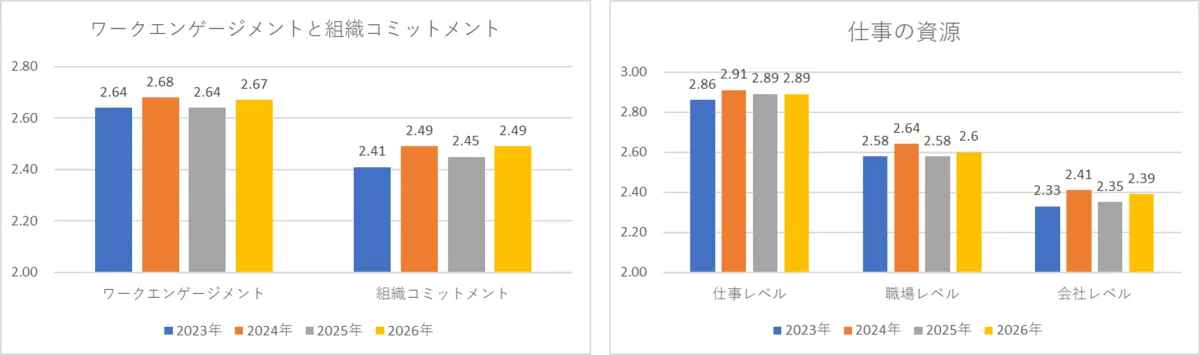
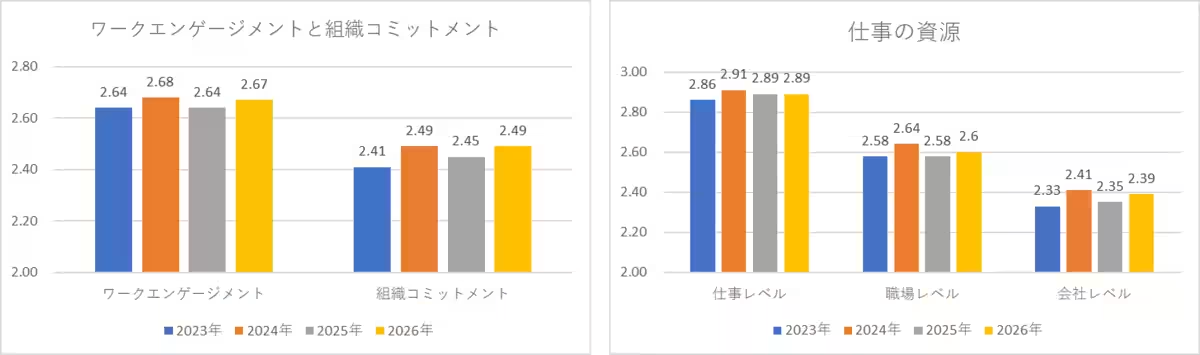
The survey investigates employee engagement, focusing on work engagement and organizational commitment, which have remained stagnant in the post-COVID-19 era. Engagement levels between 2023 and 2026 have displayed only minor fluctuations, indicating a critical need for companies to address the underlying issues affecting their workforce's motivation.
Key Findings
- - In 2023, the average engagement score was calculated at 2.52, only increasing slightly to 2.58 in 2026. This stagnant trend highlights the ongoing challenges in motivating employees amid the current labor shortage.
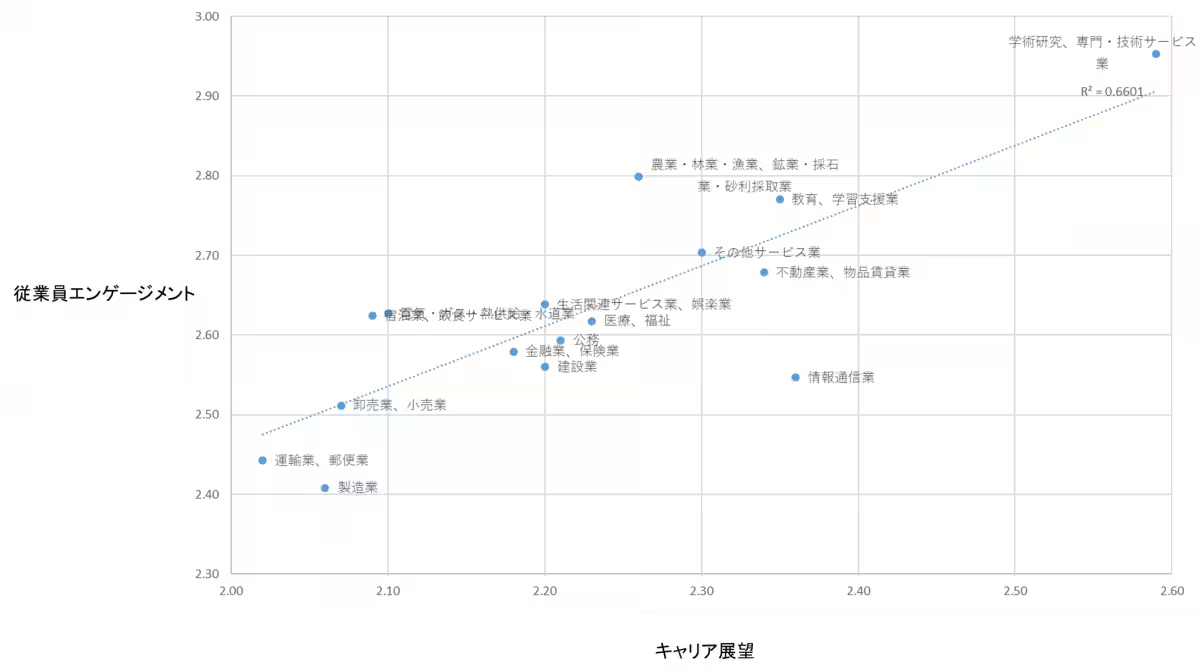
- - Industries such as Academic Research, Professional, and Technical Services ranked highest, showcasing an upward climb in engagement driven by enhanced job autonomy and professional support.
Categorizing the Industries
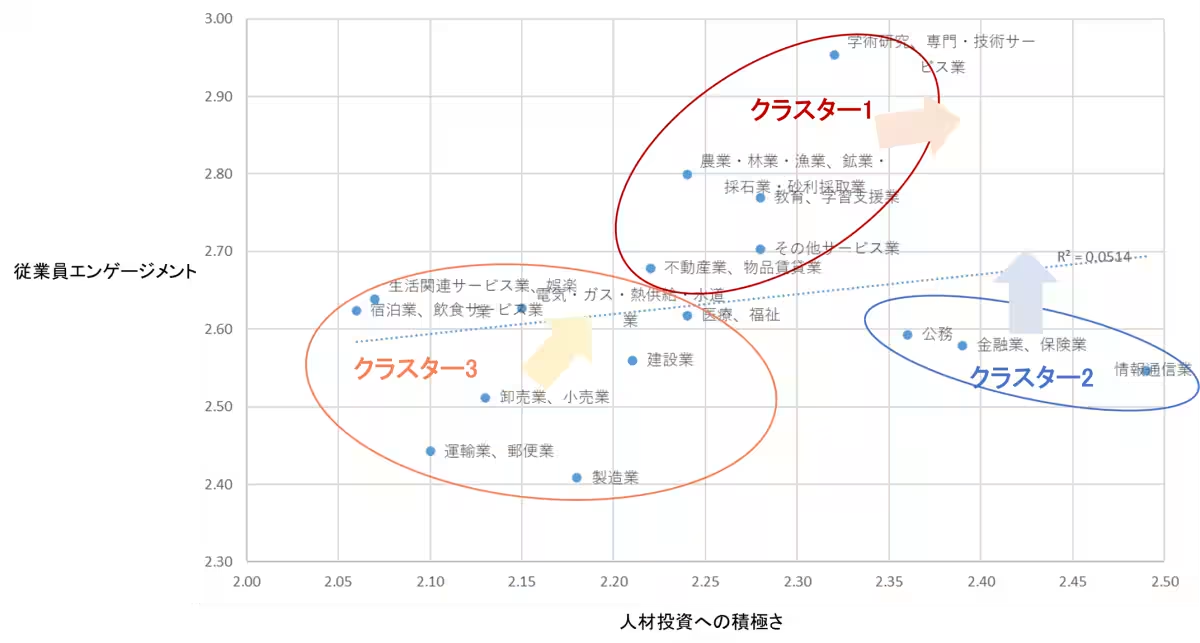
In this 2026 survey, new questions were introduced, focusing on psychological safety, career outlook, investment in human resources, and opportunities for AI tool usage. Clustering analysis identified three distinct groupings among the industries:
Cluster 1: High Engagement and Autonomy
- - Academic Research and Professional Services lead this cluster with a score of 2.95. Their success stems from their substantial autonomy and career support.
- - The Agriculture and Forestry sector follows strong progress (score of 2.80) through initiatives aimed at improving working conditions and practices.
Cluster 2: High Investment but Low Engagement
- - This cluster includes Public Administration and Financial Services, where substantial investments in resources have not translated into high engagement. The bureaucratic nature of these sectors often stifles psychological safety, thus hampering overall employee satisfaction.
Cluster 3: Low Engagement with Institutional Challenges
- - Industries like Manufacturing and Logistics face significant engagement issues, ranking at the bottom. The influence of external economic shifts exacerbates the challenges workers encounter, resulting in high turnover rates and diminished workforce morale.
Detailed Outcomes by Cluster
- - Cluster 1 demonstrates how self-managed work environments lead to increased feelings of ownership and success among employees. For instance, Academic Research has a commanding grasp of its engagement scores due to its autonomous work culture.
- - Cluster 2, despite its high investments, shows a lower vision and commitment to its employees, leading to apathy in engagement scores. Public Administration holds high resource levels but lacks flexibility and encouragement at managerial levels.
- - Cluster 3 highlights industries battling against structural challenges that directly affect engagement, such as decreasing wages and inconsistent work environments.
Conclusion
As the findings from the 2026 survey illustrate, understanding the facets influencing employee engagement at industry and organizational levels is vital for growth and improvement. The results emphasize that investment in human capital must reflect in managerial strategies aimed at boosting engagement rather than solely improving infrastructure.
For more detailed insights and statistics, download the full report from the A&I Engagement website or explore previous reports linked above. Join us in our upcoming seminars for a comprehensive understanding of these findings and strategies for implementation.
Associated Resources
For more about Agile HR and the engagement survey, visit our website.
Contact Information:
Agile HR,
Minato-ku, Tokyo,
Phone: 03-6452-6115

Topics People & Culture)

【About Using Articles】
You can freely use the title and article content by linking to the page where the article is posted.
※ Images cannot be used.
【About Links】
Links are free to use.