



Survey Reveals Burdens of AI-Generated Code on Reviewers Among IT Engineers
Understanding the Impact of AI-Generated Code on IT Engineers
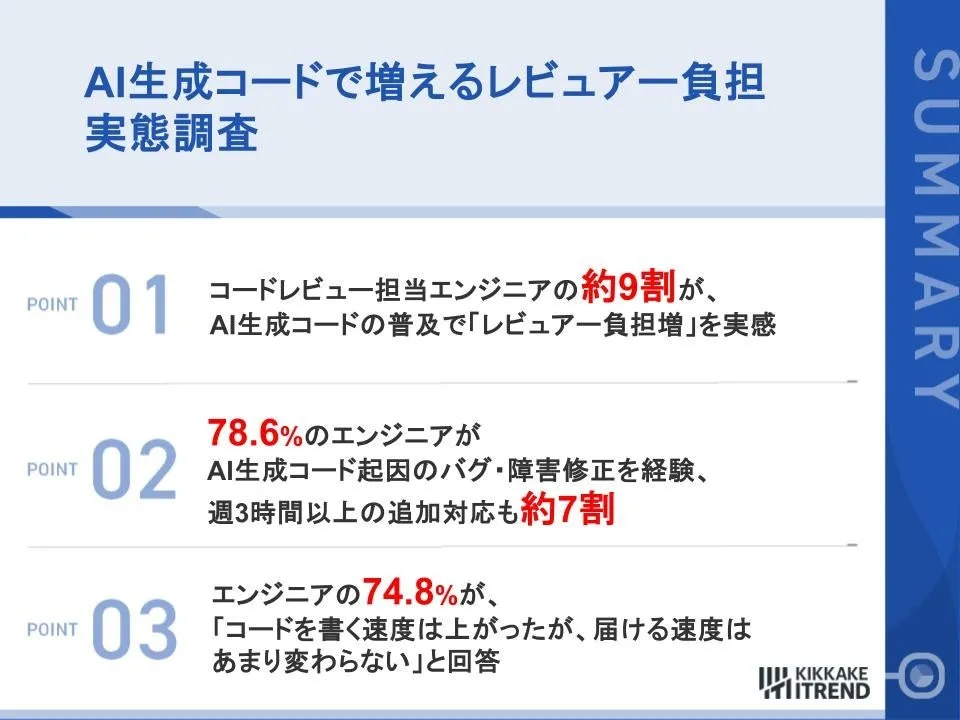
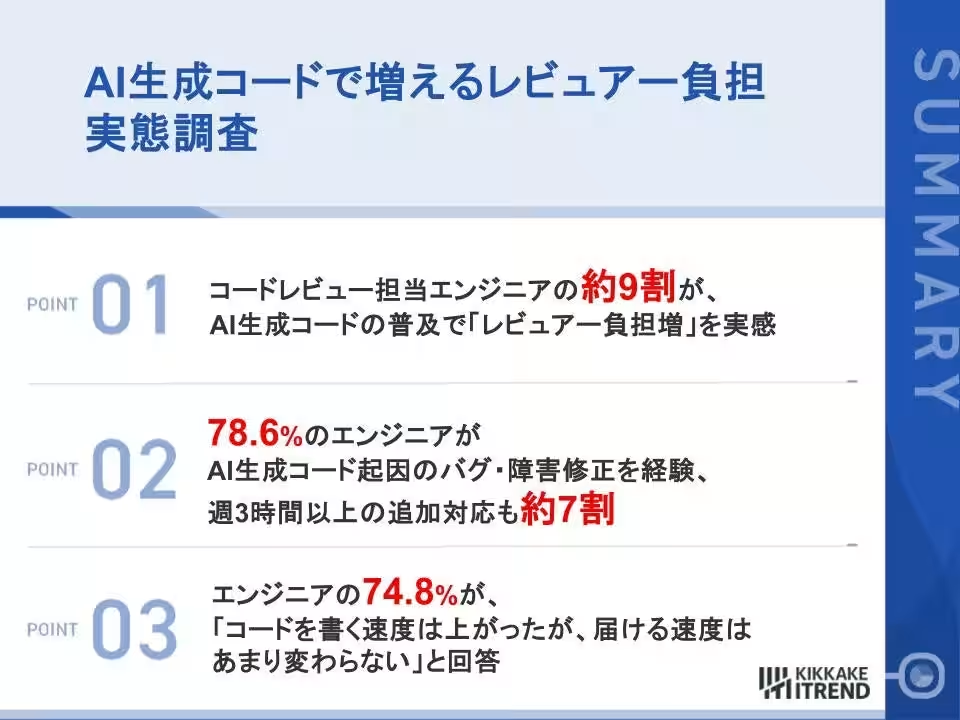
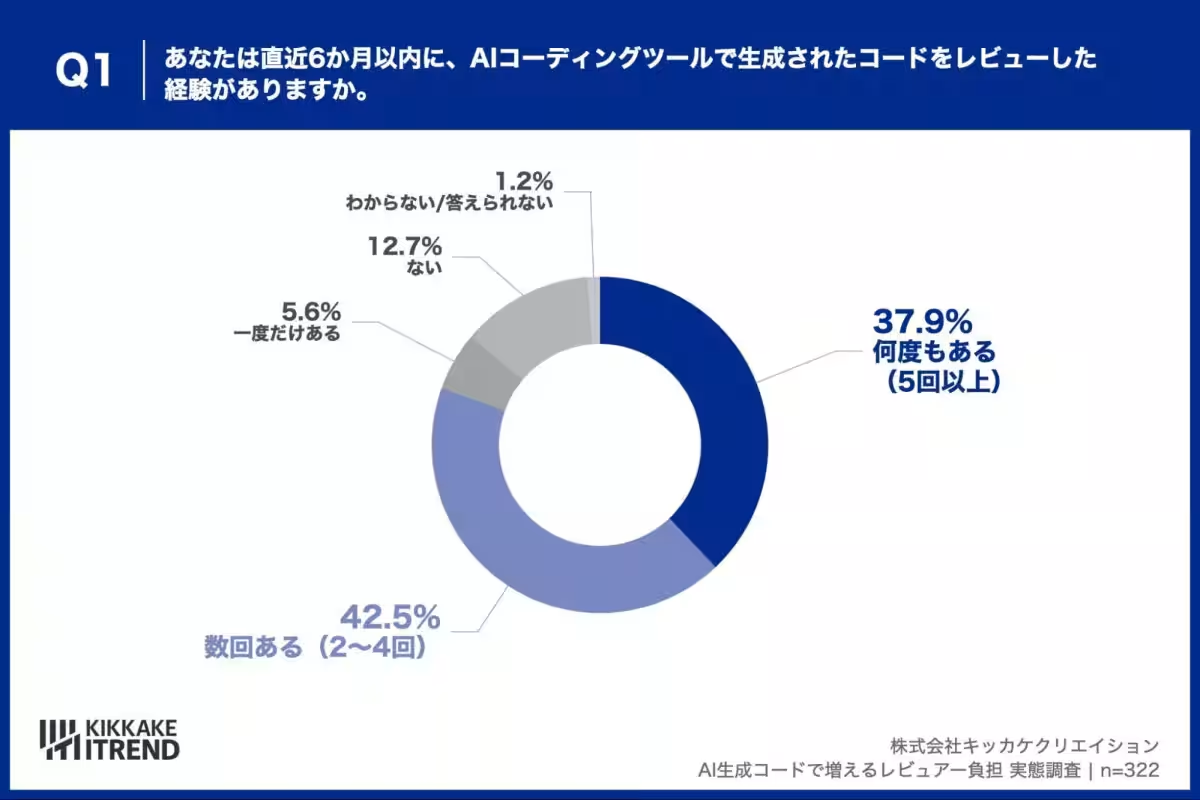
A recent survey conducted by KIKKAKE CREATION has shed light on the increasing burden faced by IT engineers regarding the review of AI-generated code. With a sample size of 322 engineers involved in coding reviews, the findings reveal significant insights into the challenges and experiences surrounding this modern coding practice.
Significant Increase in Reviewer Workload
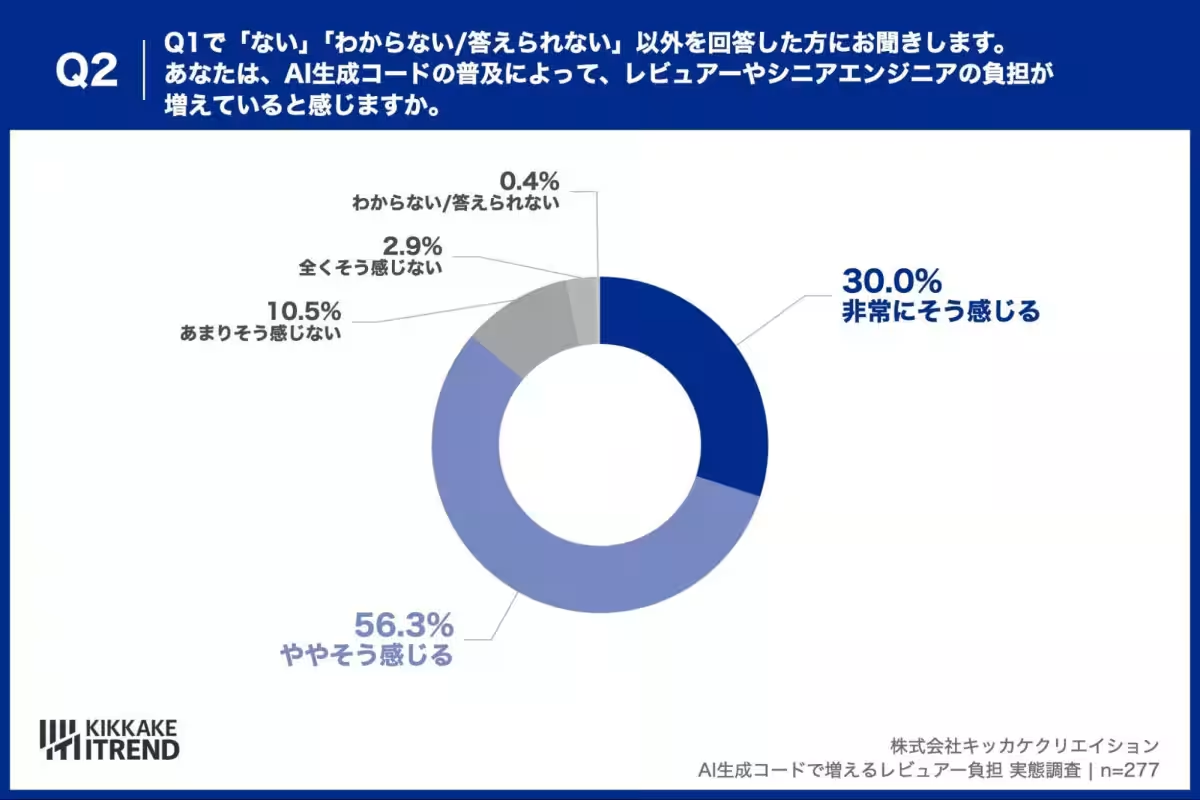
According to the survey, nearly 90% of the respondents have felt an increased burden since the advent of AI-generated code. Specifically, 86.3% confirmed that their workload had gone up due to a rise in AI code reviews. This transition seems to have shifted the dynamics of coding practices within tech companies, prompting engineers to adapt to new challenges that have surfaced as a byproduct of AI integration.
Experience with AI-Generated Code Bugs
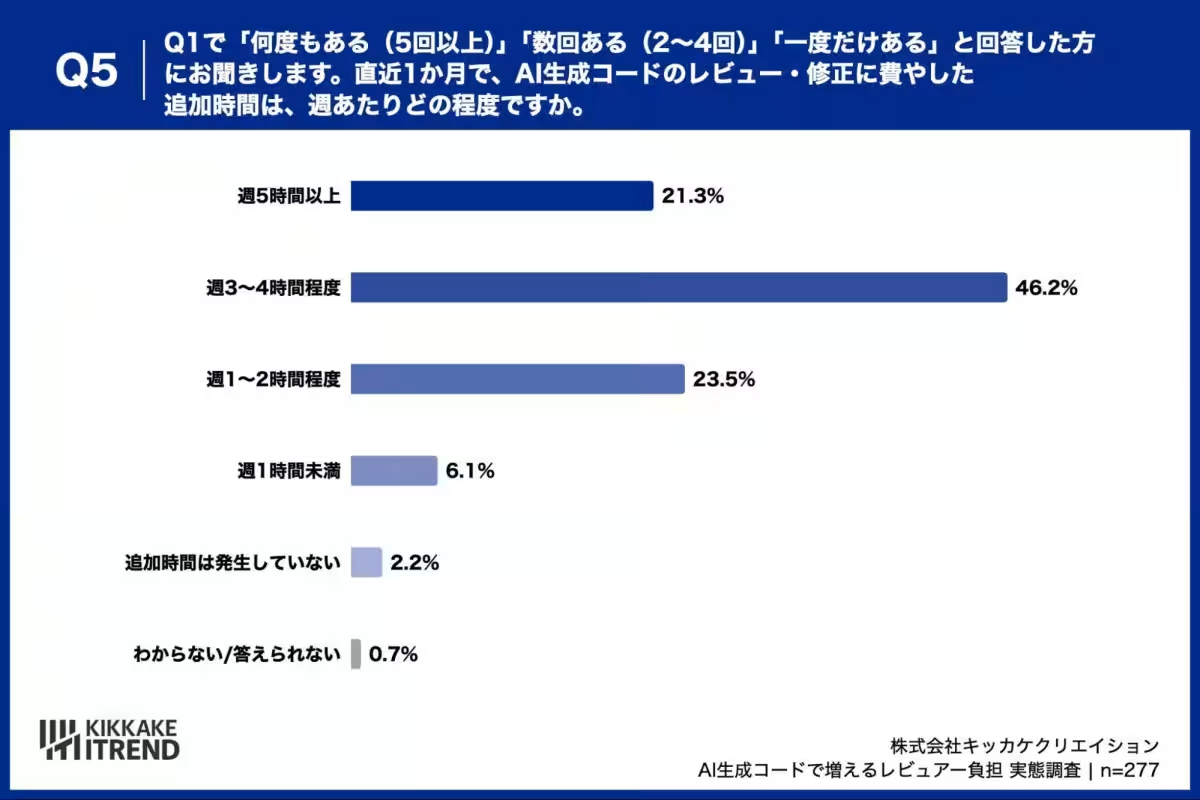
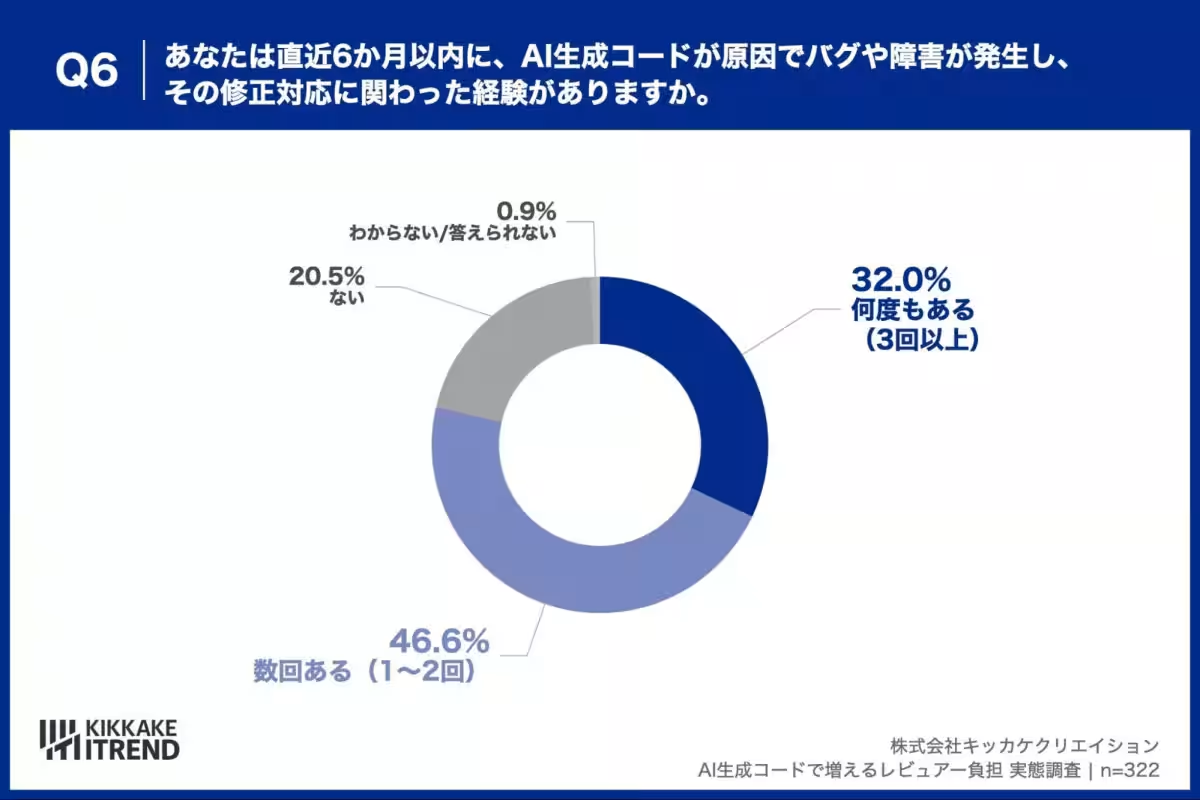
The data indicates that 78.6% of engineers have dealt with bugs or issues stemming from AI-generated code during the past six months, with 32% having encountered such problems multiple times. This situation has led to an added effort of at least three hours per week for roughly 67.5% of reviewers. The demand for more thorough reviews and corrections emanates from the complexity and often opaque nature of the AI-generated code.
Speed of Code Writing Versus Delivery
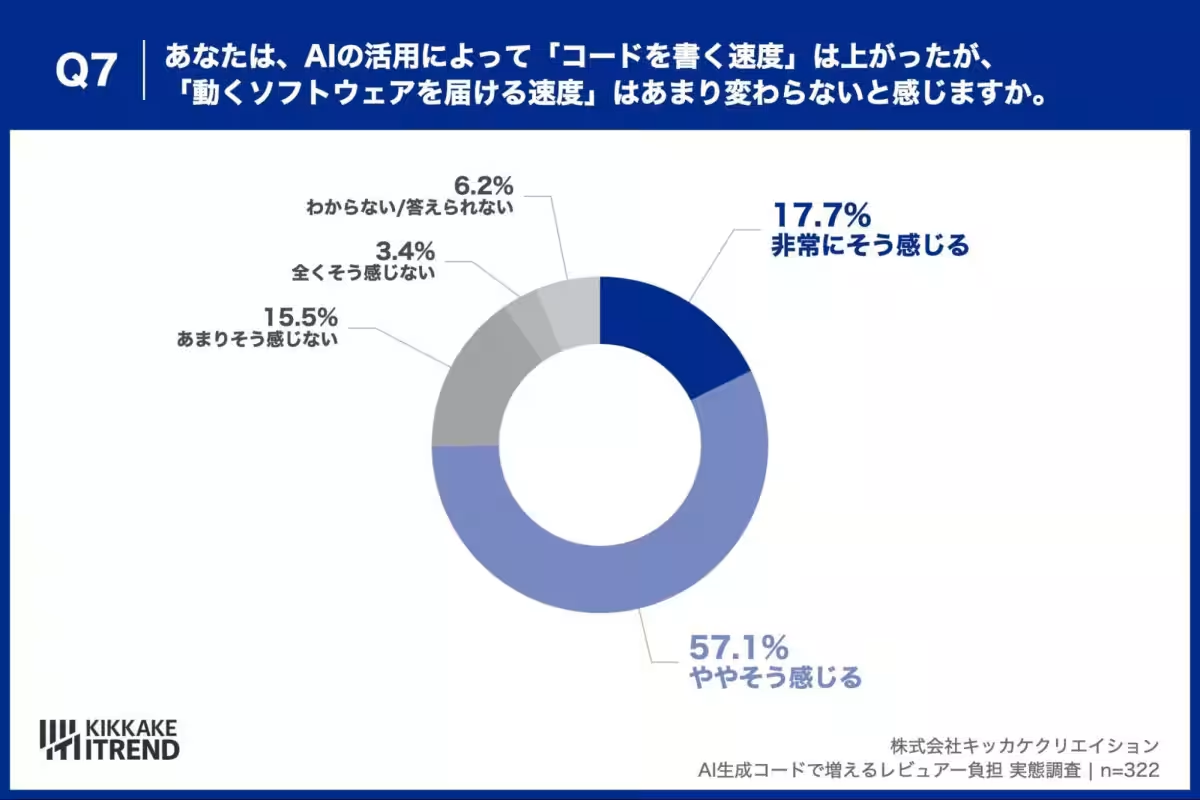
When asked about the speed of code writing versus delivery of functioning software, nearly 75% of the engineers felt that while the speed of writing code had improved, the overall speed of delivering functional software remained largely unchanged. This paradox raises questions about the efficacy of AI tools in enhancing productivity, suggesting that while the tools assist in creating code rapidly, they may not necessarily expedite the software development life cycle as a whole.
Key Challenges in Reviewing AI Code
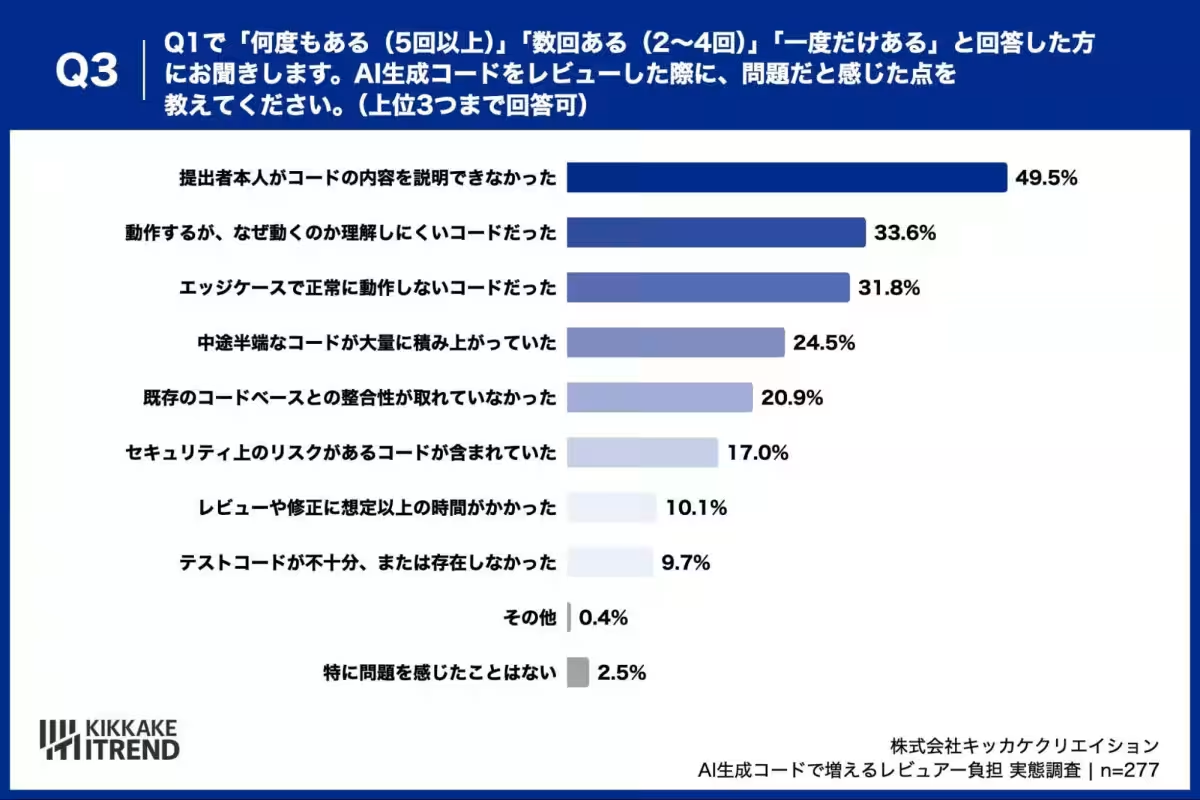
The survey pointed out specific challenges faced during the review of AI-generated code. A substantial 49.5% of respondents noted that a significant issue is that the original authors of the code often cannot adequately explain the logic behind their creations. This limits the effectiveness of traditional code review processes, where comprehension of code logic is pivotal.
Moreover, 33.6% of engineers expressed issues with code that functions correctly but is difficult to understand, indicating a potential flaw in AI algorithms in generating clear and comprehensible code. Furthermore, concerns regarding edge cases where the code fails to operate as expected were cited by 31.8% of participants.
The Need for Robust Review Guidelines
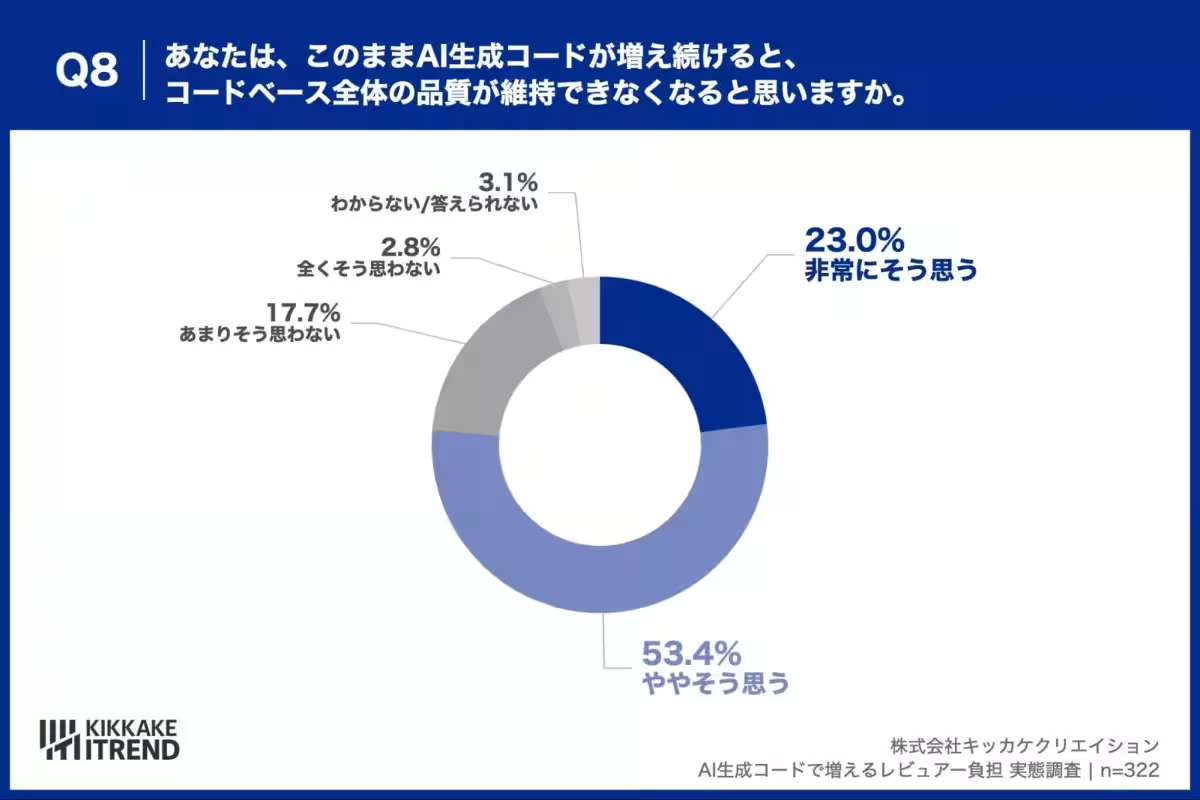
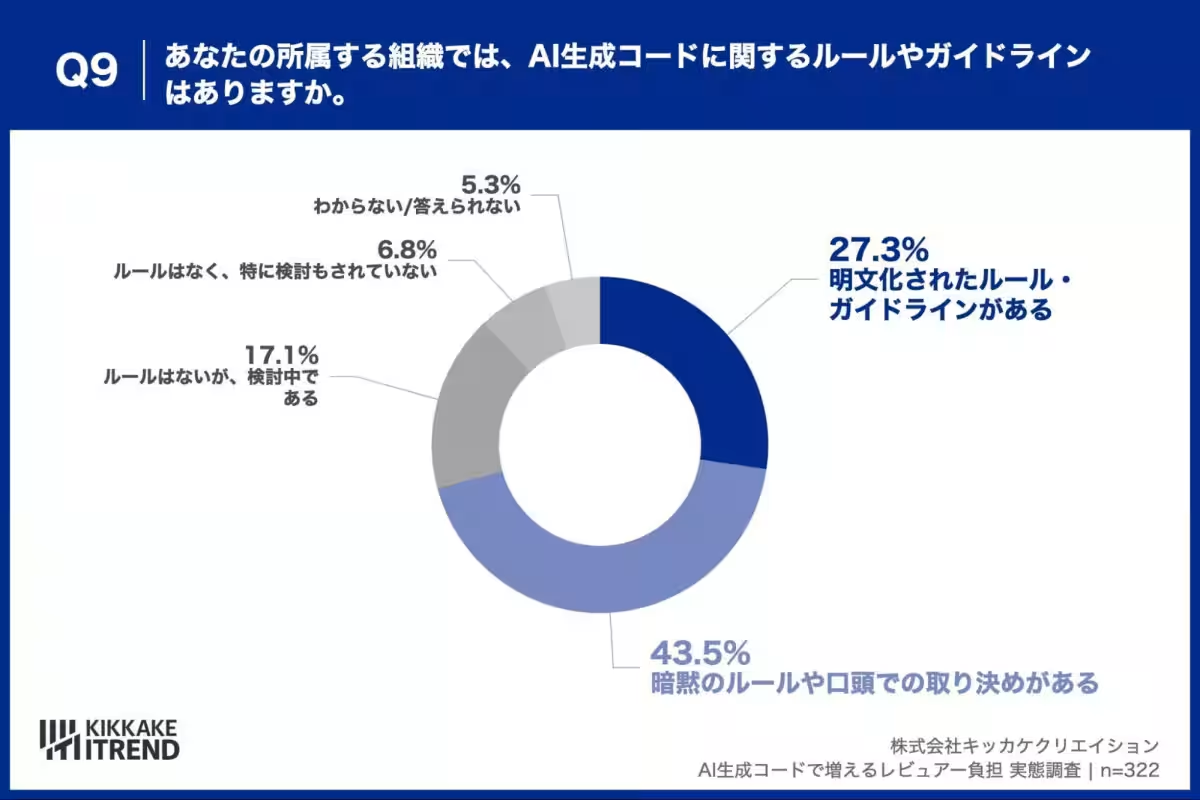
Interestingly, only 27.3% of organizations reported having clearly defined rules or guidelines for reviewing AI-generated code, while 43.5% rely on informal or oral agreements. This lack of formalization could exacerbate the difficulties in maintaining code quality, leading to fears that the overall quality of the codebase might degrade with the reliance on AI-generated code.
Skills Required in the AI Era
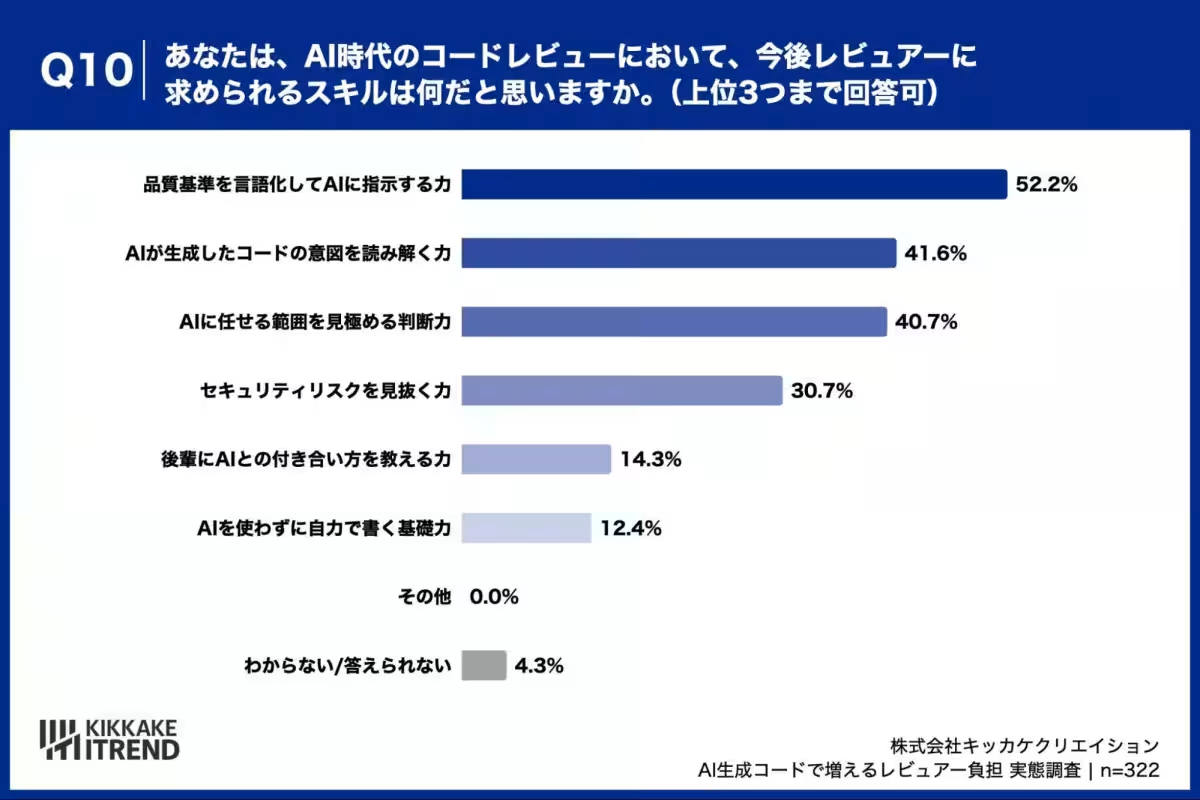
As AI becomes a staple in software development, the skill set required of code reviewers is also evolving. The survey results indicate that the most sought-after skills include the ability to articulate quality standards to AI tools (52.2%) and the capacity to decipher the intent of code generated by AI (41.6%). This evolution emphasizes the ongoing need for engineers to enhance both their technical and critical thinking skills to adapt to changes in their work environment.
Conclusion
This survey by KIKKAKE CREATION highlights the transformative impact of AI on coding practices and the associated challenges that come with it. As AI tools become more integrated into the development process, IT engineers face evolving responsibilities, marked by increased workloads and the necessity to develop new skills for effective code reviews. The maintenance of code quality in the age of AI is not only a challenge, but it also signifies a crucial opportunity for further professional development and refinement of engineering practices. The pressing need for structured guidelines and skills development initiatives underlines the importance of a balanced approach to leveraging AI technologies in software development, aiming to enhance productivity without compromising the integrity of the codebase.

Topics Consumer Technology)
【About Using Articles】
You can freely use the title and article content by linking to the page where the article is posted.
※ Images cannot be used.
【About Links】
Links are free to use.