




Exploring Heat Fluctuations in Magnetic Materials Using AI for Energy Loss Analysis
Understanding Heat Fluctuations in Magnetic Materials
In a significant developmental milestone, researchers from Tokyo University of Science and various collaborating institutions have introduced an advanced AI model known as the Extended Free Energy Model. This model integrates the concept of entropy to quantitatively decipher the mechanisms driving energy loss in magnetic materials, particularly under thermal fluctuations. This innovation marks the first instance where the origins of entropy increase have been visualized directly on magnetic domain images.
The study highlights the critical relationship between energy loss in electric vehicle (EV) motors, attributed to a phenomenon termed 'iron loss,' and the intricate dynamics of magnetic domain structures influenced by changes in temperature. As the temperature escalates, these structures become increasingly complex, contributing to thermal dissipation and posing a challenge for energy-efficient designs. Understanding these processes has been a pressing issue for researchers aiming to enhance the performance of EV motors.
A Novel Approach to Materials Science
The research team's efforts culminated in the establishment of this new model, which aims to unravel the complex interplay between magnetic properties and entropy. Previous attempts to analyze how temperature variations impact the fluctuations in magnetic domains lacked a comprehensive framework. The newly proposed method successfully incorporates entropy as a variable, thus paving the way for detailed observations of energy loss patterns.
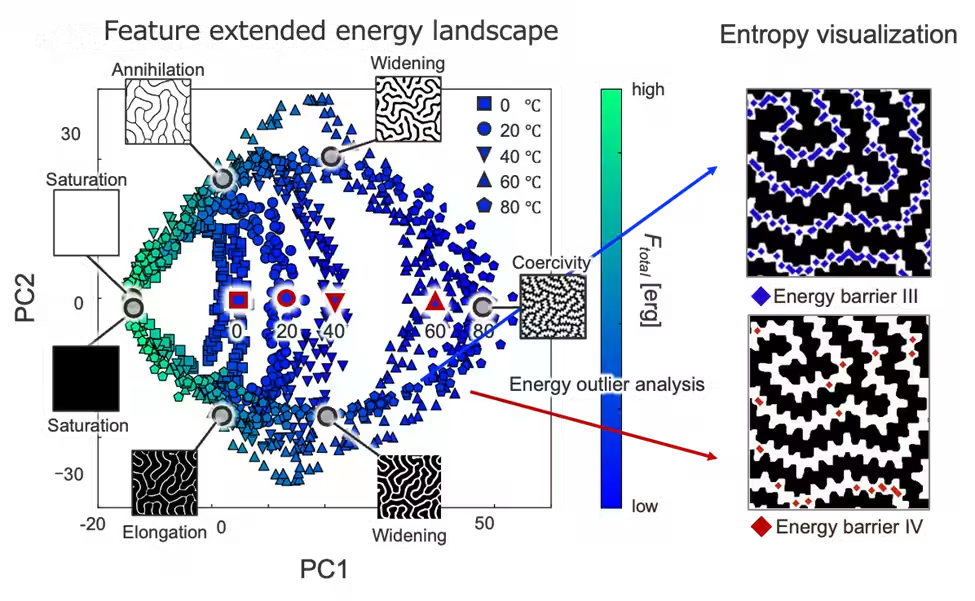
Employing Rare-earth Iron Garnet (RIG) as a model material, the study involved comprehensive data collection through magneto-optical microscopy under varied temperature conditions ranging from 0°C to 80°C. By manipulating external magnetic fields, researchers captured approximately 2,000 images documenting the process of magnetic inversion. They utilized concepts from topology to extract quantitative features of the complex magnetic domain structure. This innovative approach establishes a robust connection between microscopic magnetic configurations and the associated macroscopic energy dissipation.
Key Findings and Implications
One of the notable achievements was the capability to visually represent the entropy increase's origins on the original microscopy images. This groundbreaking visualization enabled scientists to identify regions where the zigzag patterns of magnetic walls become complex, directly linked to entropy elevation. Such insights were previously obscured and are crucial for understanding thermal fluctuation effects on material performance.
The research established that as temperatures rise, magnetic walls tend to elongate, which concurrently results in an increase in entropy—a relationship now quantifiably explained through the model. Consequently, these findings not only enhance theoretical understanding but also offer practical guidelines for designing future energy-efficient magnetic materials.
This study serves as a timely reminder of the potential of integrated methodologies that combine physics, mathematics, and data science to unveil hidden materials knowledge. The Extended Free Energy Model's versatility can extend beyond magnetic materials to areas such as semiconductors and battery materials, enriching ongoing advancements in materials innovation.
Future Directions
The establishment of a quantitative analysis method regarding magnetic materials' energy loss mechanisms signifies a pivotal step towards mitigating 'iron loss' in EV motors and industrial applications. By recognizing and mapping previously elusive mechanisms, this research proposes tangible pathways towards more sustainable energy solutions, resonating with global efforts to foster a more energy-efficient society. Given the model's inherent adaptability, it stands to significantly influence the landscape of next-generation materials science, contributing substantially to the realization of AI4Science initiatives across varied applications.
This research has been publicly shared in the renowned journal Scientific Reports on February 11, 2026, marking a key contribution to the ongoing discourse in advanced materials and energy efficiency. The advancements pioneered here not only reflect the collaborative spirit of cutting-edge science but also set the stage for meaningful innovations in the quest for sustainable technology.
Conclusion
The integration of entropy into the Extended Free Energy Model represents a significant evolution in the analytical capability concerning magnetic materials. Its implications for energy-efficient design herald a promising future for scientific and industrial advancements, ultimately supporting the global endeavor towards a more sustainable and energy-conscious future.

Topics Consumer Technology)
【About Using Articles】
You can freely use the title and article content by linking to the page where the article is posted.
※ Images cannot be used.
【About Links】
Links are free to use.