



Navigating the 2026 High School Graduate Recruitment Landscape: A Comparative Analysis of Trends and Strategies
Overview of High School Graduate Recruitment for 2026
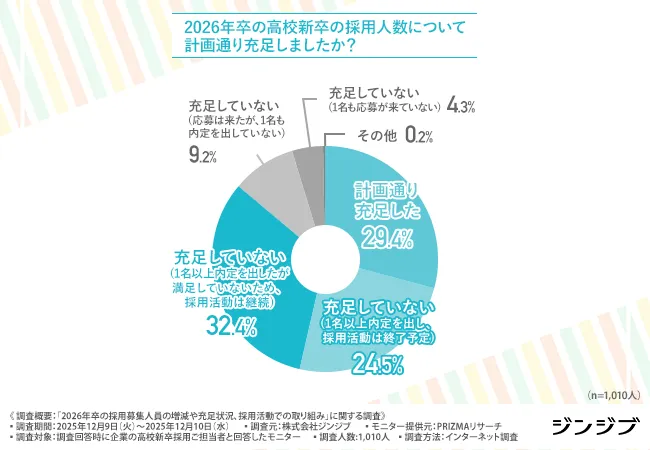
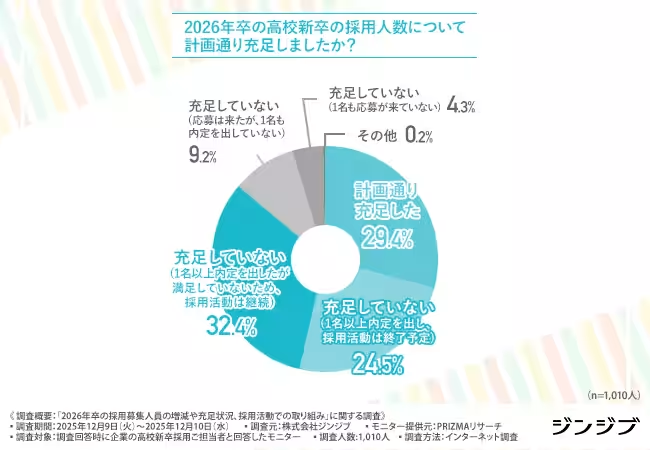
As the 2026 graduation season approaches, companies are grappling with the realities of high school graduate recruitment amidst a challenging labor market. A recent survey by JinjiB, aimed at companies hiring high school graduates, revealed that only about 29.4% of responding companies successfully fulfilled their recruitment goals for the 2026 cohort. This article delves into the findings of this survey, emphasizing strategic adjustments that enterprises need to adopt to thrive in the rapidly changing recruitment landscape.
Background of the Survey
The survey was prompted by Japan's declining birth rate and aging population, which continue to shrink the pool of available young talent. Over time, the traditional methods of recruitment, particularly centered around job postings, are becoming less effective. Factors such as digital transformation and evolving career perceptions among students have made it more difficult for businesses to attract suitable candidates.
Given these challenges, the study commissioned by JinjiB was not only timely but essential in guiding companies to rethink their recruitment strategies for high school graduates, who are now considered a crucial segment of the workforce.
Key Findings from the Survey
Recruitment Fulfillment Rates
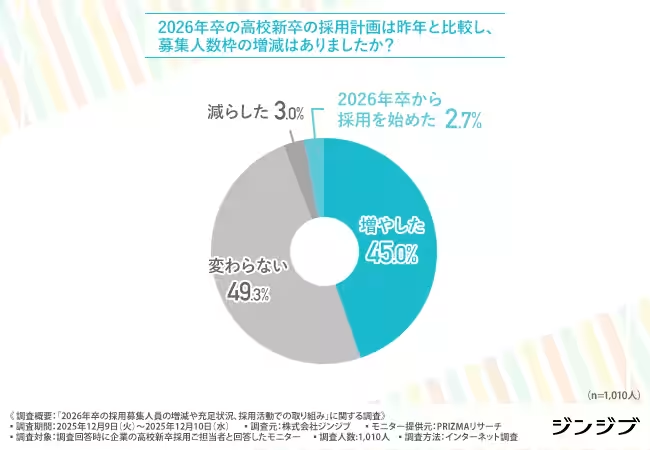
According to the survey results, approximately 70% of companies reported that they could not hire the number of graduates they had planned. Specifically, 32.4% indicated they would continue their recruitment efforts even after extending offers, as they were not satisfied with the outcomes. Moreover, while a significant portion (49.3%) of companies maintained their recruitment plans from the previous year, 45.0% opted to expand their hiring goals, signaling confidence in the potential of high school graduates to contribute to their growth.
Identifying Applicants
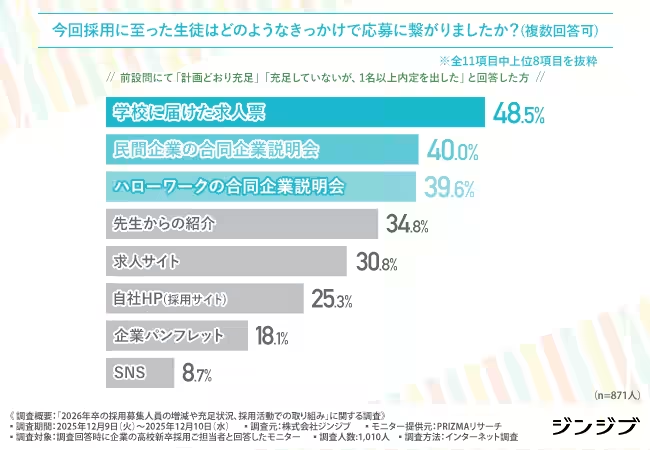
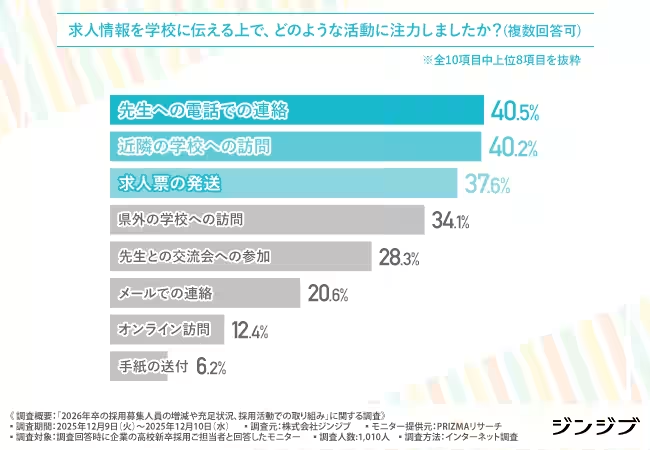
The survey shed light on where the successful applicants came from, highlighting that 48.5% were referred through school job postings, with participation in job fairs also playing a substantial role (40.0% for private sector fairs and 39.6% for public job fairs). Despite the primary reliance on traditional job postings, the data indicates an essential shift towards more direct communication between companies and prospective candidates through events, showcasing the evolving dynamics of recruitment strategies.
Recruitment Timing
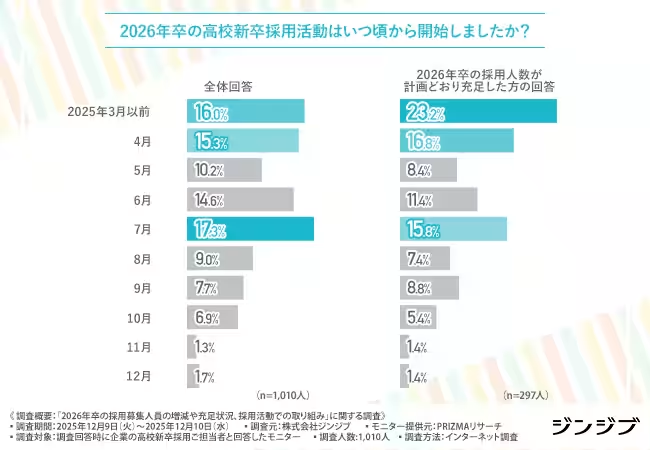
Interestingly, while many companies began their recruitment campaigns around July coinciding with the official job listing date, those that started earlier—with some initiating campaigns as early as March—reported better satisfaction regarding their recruitment processes. This underscores the importance of proactive recruitment approaches in securing desired talent.
Mitigating Mismatches
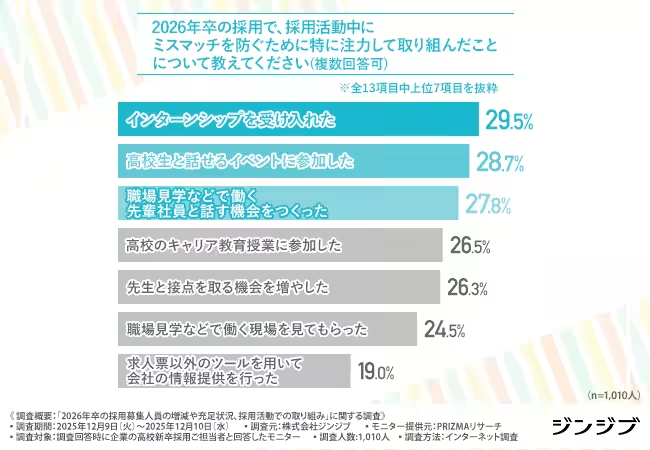
To combat the prevalent issue of mismatches between companies and graduates, a significant number of firms invested in internships and engagement activities, highlighting the necessity for direct interactions with students, which aid in bridging understanding and expectations. The collaboration with existing employees and creating platforms for students to directly converse with staff members were also part of the successful strategies employed by businesses.
Evolving Recruitment Tools
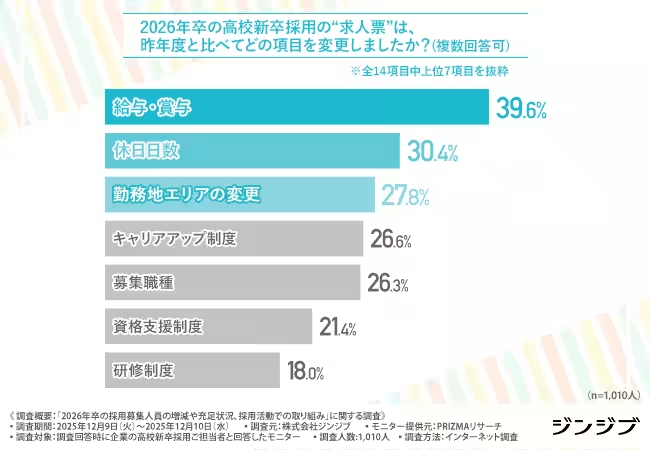
Employers are not only revising job postings but also enhancing their recruitment tools. Notably, changes were observed in terms of salaries, benefits, and working conditions, aiming to improve overall attractiveness to prospective hires. Companies reporting recruitment success tended to make more adjustments to their job postings, reflecting a growing trend towards improving work-life balance features to appeal to the incoming graduate class.
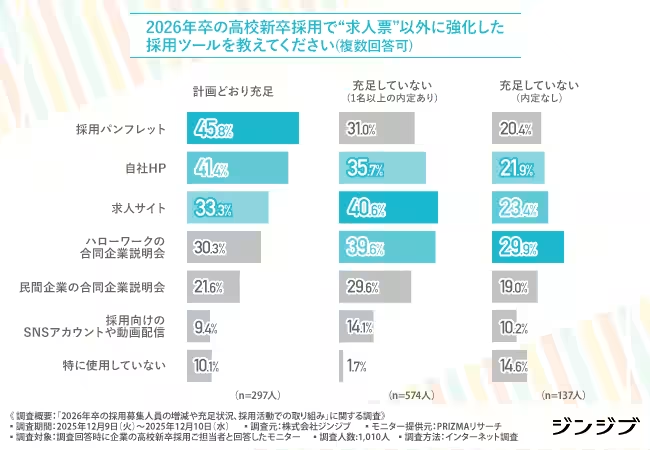
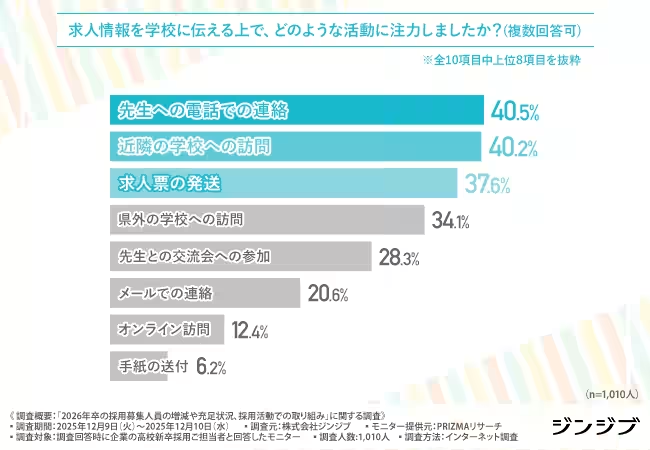
Additionally, there was a marked emphasis on advancing both physical advertising mediums (like brochures) and digital platforms (company websites and recruitment websites) to better attract candidates. This dual strategy showcases a balanced approach between traditional outreach and embracing modern digital trends, a necessary adaptation in today's recruitment climate.
Conclusion
In light of these findings, the path forward for companies in high school graduate recruitment involves a multifaceted approach: enhancing conditions that appeal to candidates, initiating recruitment activities earlier, and strengthening direct engagement with potential hires through personal interactions and modern technology. The intricacies of this recruitment challenge suggest that a blend of traditional methods and innovative strategies will be crucial in overcoming the current hiring difficulties, catalyzing a successful influx of fresh talent into the workforce.
By adopting these insights, businesses can enhance their recruitment process, ensuring alignment with the evolving landscape of high school graduate hiring. As the 2026 recruitment campaign unfolds, companies that proactively adapt to these trends and strategies will likely emerge as leaders in attracting the next generation of talent.

Topics Business Technology)
【About Using Articles】
You can freely use the title and article content by linking to the page where the article is posted.
※ Images cannot be used.
【About Links】
Links are free to use.