



Revolutionizing Cancer Research: CureCode's PHRONTIER Platform in Action
Transforming Lung Cancer Research with PHRONTIER
CureCode Inc., a company dedicated to developing innovative applications and web systems in the medical and healthcare sectors, has made significant strides in clinical research management. Their latest platform, PHRONTIER, has been adopted in a multi-institutional clinical study led by the Shizuoka Cancer Center, focusing on monitoring post-operative lung cancer patients through wearable technology. The main aim of this study is to gather extensive data on patients’ health post-surgery, facilitating a move towards personalized medicine by closely analyzing how individuals recover over time.
Study Background
Recently, there has been a growing emphasis on utilizing digital biomarkers to evaluate life activities and illness processes objectively in healthcare. This need is particularly pronounced in the post-treatment monitoring of cancer patients. Traditional evaluations conducted during hospital visits are no longer sufficient; continuous collection and analysis of objective data—such as daily activity levels and sleep quality—are expected to enhance surgical techniques and predict patient outcomes more accurately.
The importance of effectively monitoring the daily well-being of lung cancer patients after surgery cannot be overstated. However, one of the significant challenges in multi-site clinical research is the efficient and standardized collection and management of data from various medical institutions. The adoption of a reliable system that minimizes burden for both patients and researchers has become essential.
Overview of the Clinical Study and the Adoption of PHRONTIER
The recent clinical study comprises a collaborative trial conducted by the Japan Clinical Oncology Group (JCOG) involving 30 medical institutions nationwide. This multi-site trial designated as JCOG2217A1, led by Dr. Yasuhisa Oide and coordinated by Dr. Nobuya Katsumata from the Shizuoka Cancer Center's Department of Respiratory Surgery, aims to explore the post-operative recovery of lung cancer patients.
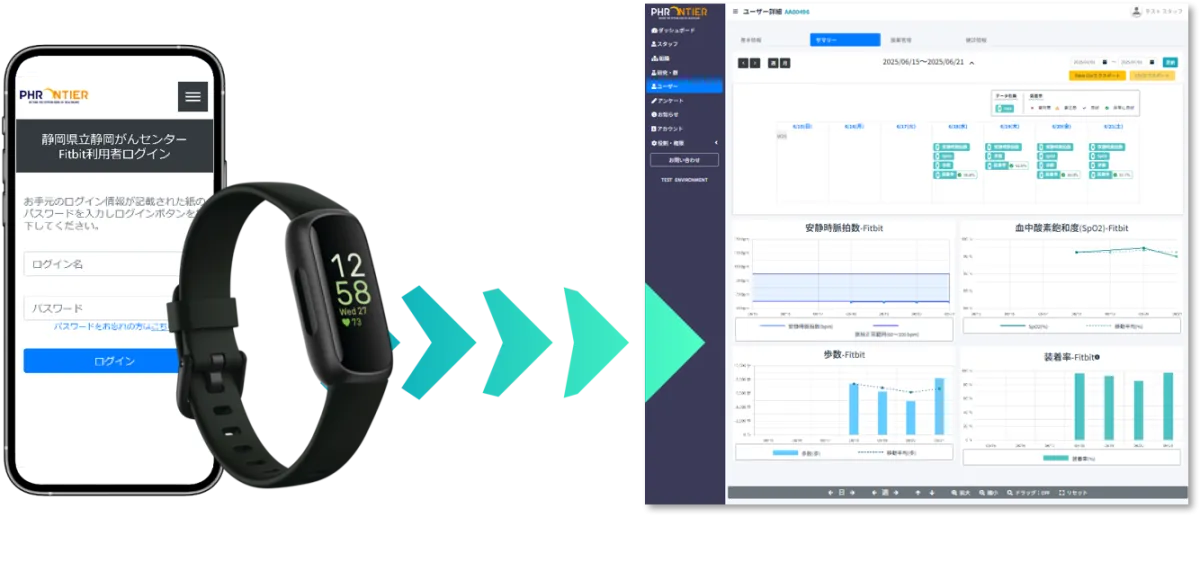
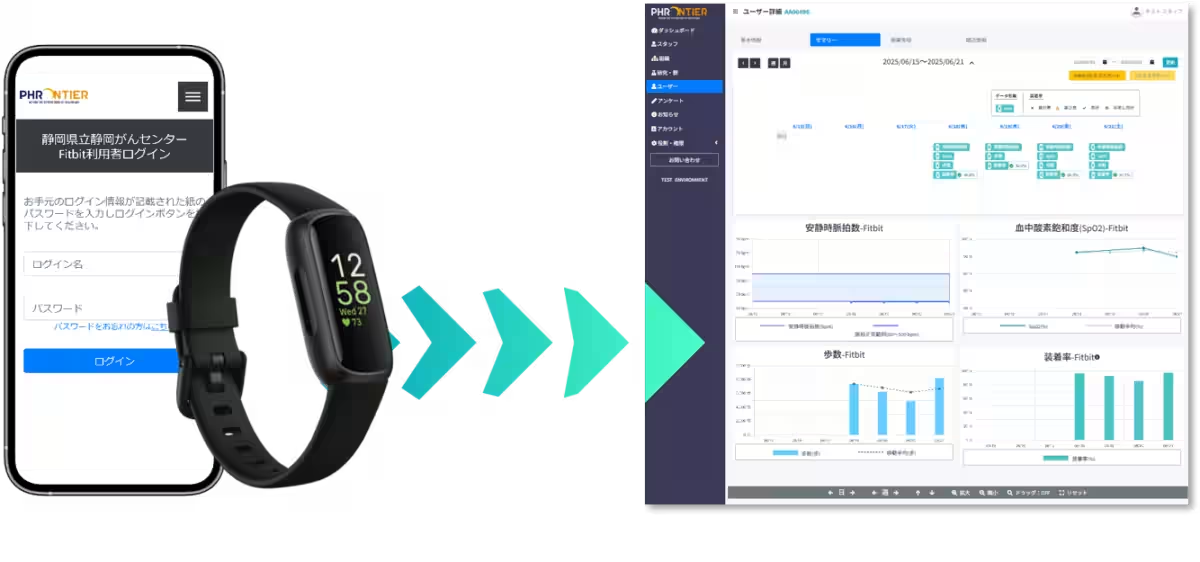
In this study, patients who have undergone lung cancer surgery will wear the Fitbit Inspire 3. This device will capture long-term data on critical health metrics such as cardiorespiratory function, daily activity levels, heart rate variability (HRV), and sleep patterns. The goal is to uncover the impacts of these factors on long-term survival rates and post-surgery complications through objective data assessment.
To efficiently drive this research forward, all participating facilities will employ PHRONTIER for managing the collected data, with the Shizuoka Cancer Center overseeing data coordination. The platform's capability to automatically collect and integrate data from various IoT devices, including wearables, has been highly praised. Its intuitive interface makes it user-friendly for both researchers and participants, facilitating smoother operations across multiple research sites.
Comments from Key Stakeholders
CureCode’s CEO, Fumitaka Tsuchida, expressed enthusiasm over the collaboration, stating, “It is a great honor to have PHRONTIER adopted in such an essential clinical study by a leading institution like the Shizuoka Cancer Center. This research exemplifies the possibilities of next-generation healthcare powered by digital biomarkers. We are fully committed to supporting this study to enhance data quality and ultimately improve the quality of life for lung cancer patients.”
Dr. Nobuya Katsumata shared insights on the significance of the research: “This study represents a pivotal step towards providing higher-quality post-operative care tailored to patients' daily lives. The objective data obtained from wearable devices can unveil aspects of patient health that were previously obscured, helping us understand the long-term impacts on survival and post-operative complications from a fresh perspective.”
Future Outlook
By integrating wearable devices with advanced IT platforms like PHRONTIER, this study is poised to break new ground in clinical research methodologies. The continuous acquisition of objective biometric data can expedite the discovery of new digital biomarkers, further contributing to early disease detection and enhanced prognostic accuracy.
Moreover, the utilization of systems such as PHRONTIER greatly enhances the efficiency of data collection and management, thereby fostering greater IT integration in clinical research. This shift is anticipated to accelerate advancements in medicine, allowing more patients to benefit from the results of ongoing research in the future.
CureCode also envisions this initiative contributing to the rise of Personal Health Records (PHR), allowing patients to manage and utilize their health information effectively in their daily lives. The company remains resolute in its mission to promote data-driven healthcare solutions through this groundbreaking research.
What is PHRONTIER?
PHRONTIER is an application package designed to assist in clinical research and medical practice leveraging PHR data. Traditionally, developing systems and databases for each disease or service was necessary, leading to high development and operational costs. However, with PHRONTIER, the integration of individual health data is possible, reducing expenses while enhancing patient support.
This research aims to limit initial costs associated with implementing PHRONTIER at the Shizuoka Cancer Center. Furthermore, it anticipates providing more useful data and application support.
Through ongoing partnerships with research institutions and local governments, CureCode aims to implement its solutions across Japan, significantly cutting healthcare expenditures while fostering the creation and provision of services that promote both physical and mental well-being for a broader population.
For more information regarding PHRONTIER, visit https://phrontier.jp/.
About CureCode Inc.
Founded in 2011, CureCode is a health tech startup focused on IT advancements in the fields of healthcare, nursing, and health. The company comprehensively handles the research and development of medical and healthcare applications, system planning, design, operational administration, and customer support while promoting public-private partnerships with local agencies and research facilities.



Topics Health)
【About Using Articles】
You can freely use the title and article content by linking to the page where the article is posted.
※ Images cannot be used.
【About Links】
Links are free to use.