



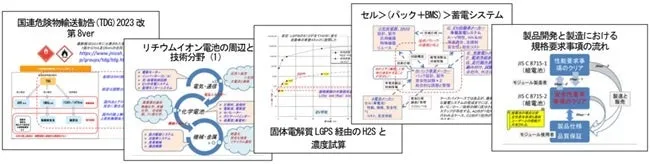
Revised Edition on Ensuring Safety of Lithium-Ion Batteries in 2026
The Revised Edition of Ensuring Lithium-Ion Battery Safety in 2026
The safety of lithium-ion batteries has increasingly become a crucial topic as their applications expand in various sectors, particularly with the rise of electric vehicles (EVs), energy storage, and medical devices. On January 20, 2026, CMC Research will release a new edition titled "Ensuring the Safety of Lithium-Ion Batteries 2026: Addressing Safety from the Perspective of Battery Use." This comprehensive guide, authored by Hidetaka Sugawara, is an essential resource for understanding safety measures from the user's perspective as well as regulatory changes in the field.
The guide emphasizes key principles regarding battery safety, affirming that adherence to the fundamentals of electrochemistry is critical. Additionally, the responsibility for ensuring the safe production of batteries largely depends on the policies set forth by manufacturers. As market dynamics shift, particularly towards cost reduction, it becomes increasingly evident that affordability should not compromise safety, a concern that this publication addresses thoroughly.
Importance of Safety Standards
Safety cannot be ensured merely through stringent regulations, and this is a lesson that has become apparent in recent developments. The new edition will cover updates on national regulations and standards pertaining to lithium-ion batteries from 2023 to 2025. It will highlight the ongoing deliberations around domestic fire safety regulations and transportation guidelines that are yet to be finalized over the next year, urging stakeholders to remain vigilant.
In 2024, changes in standards applicable to solid-state batteries are expected, especially those that utilize sulfide electrolytes. Although advancements in technology are reassuring, the management of hydrogen sulfide risks associated with these materials still presents challenges that require careful attention.
Core Themes
The book will delve deep into various aspects of lithium-ion battery safety:
1. Understanding Basic Composition and Safety: The first chapters will cover the essential structure of lithium-ion batteries and essential safety measures that must be adopted during their design and application phases.
2. Overview of Safety Regulations and Testing: It includes insights into the regulatory landscape, discussing both domestic Japanese standards and international guidelines.
3. Applicability across Products: It categorizes safety testing based on application products, ensuring relevant compliance.
4. Practical Guidelines for Users: Directly addressing the needs of professionals in the field, the guide stresses the importance of understanding safety measures from the standpoint of battery users, not just manufacturers.
5. Updates on Regulations: The latter chapters will overview amendments to significant safety regulations by the end of 2025, giving readers a clear picture of what lies ahead.
A Shift in Perspective
The subtitle of the book emphasizes 'Addressing Safety from the Perspective of Battery Use.' This perspective stems from Sugawara's experiences, providing critical insight into the practical issues faced by engineers and technicians. With major shifts in the EV market and the recycling needs of renewable energy systems, this edition reflects on the intricate balance of evolving technology and regulatory frameworks.
The author asserts that while updates to safety standards like JIS (Japanese Industrial Standards) or UL (Underwriters Laboratories) may not be fundamentally altering testing protocols, understanding these regulations is paramount as they continue to affect the production and recycling of batteries.
Conclusion
With the comprehensive details provided in this revised edition, professionals will find themselves better equipped to navigate the complexities of lithium-ion battery safety. The latest guidelines aim to instill confidence among manufacturers, regulators, and users alike, ensuring that safety remains a top priority as technology progresses. As the industry moves forward, staying informed about these changes is vital for anyone involved in the battery sector. This book stands as a crucial resource in achieving success and ensuring safety in lithium-ion battery applications.
Topics Consumer Products & Retail)

【About Using Articles】
You can freely use the title and article content by linking to the page where the article is posted.
※ Images cannot be used.
【About Links】
Links are free to use.