




Innovative 24/7 Support for Elderly Care Facilities in Japan
Innovative 24/7 Support for Elderly Care Facilities in Japan
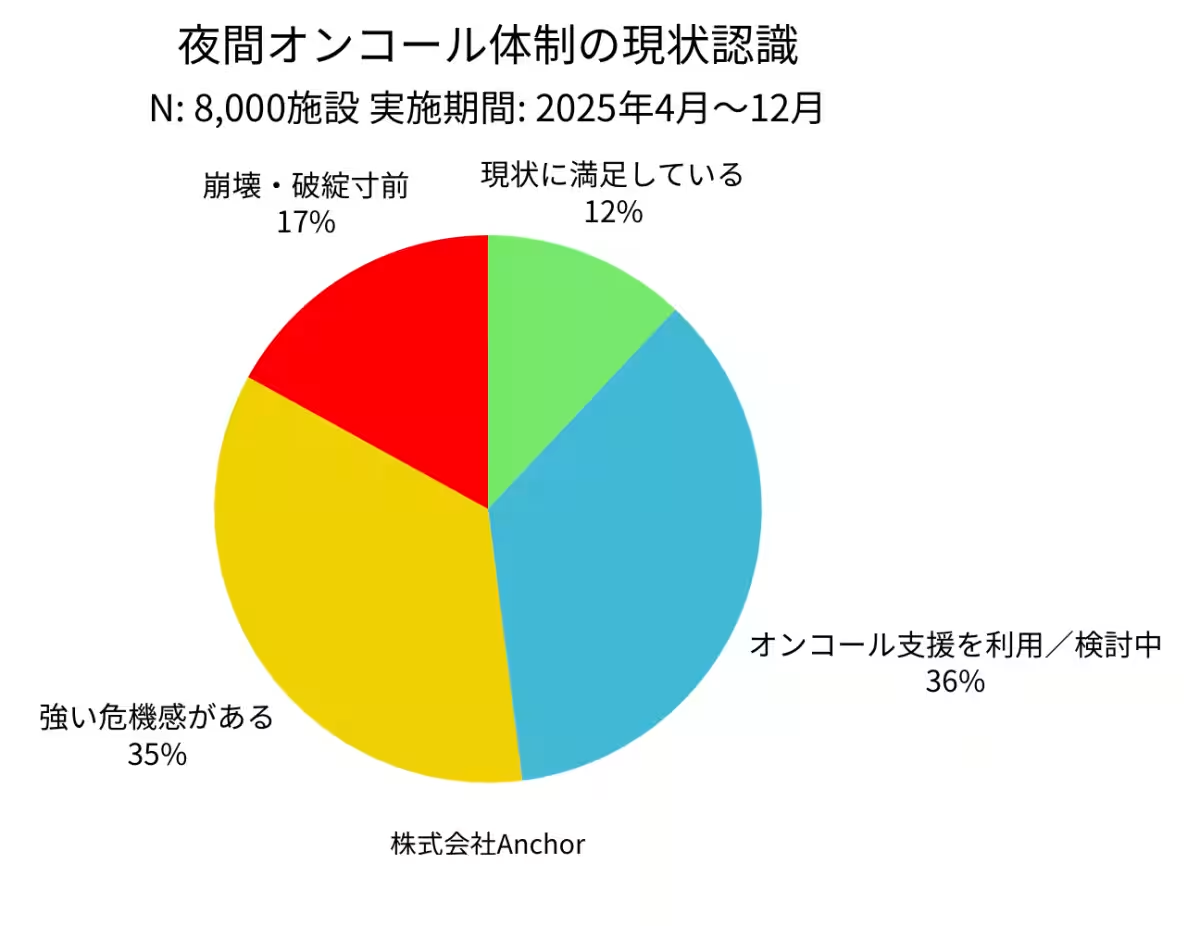
Elderly care facilities in Japan are facing increasing challenges, particularly during nighttime when medical professionals are often unavailable. A recent survey conducted by Anchor Co., Ltd. revealed alarming statistics, indicating that 17% of care facilities are on the brink of breakdown regarding their night-time support systems. This situation has prompted Anchor to redesign its on-call support service specifically for nighttime operations.
Anchor Co., Ltd., headquartered in Minato, Tokyo, has recently updated its service designed for care facilities, which serves as a crucial support system during hours when physicians and nurses are not usually present. The core feature of this new on-call support service revolves around the immediate documentation and sharing of decisions and records during nighttime interactions. This innovation emerges from the founder’s awareness of the structural issues hampering the elderly care sector.
Understanding the Need for Immediate Reporting
The pressing need for immediate reporting stems from several recurring issues identified in the emergency transportation sphere:
- - Lack of documented instructions and history for physicians during emergency transport.
- - Uncertainty regarding who made decisions and what action was taken, leading to delays after arriving at hospitals.
- - Existing gaps in communication during nighttime – a critical period when staffing is minimal.
Root Problems in Home Healthcare and Elderly Care
Nighttime creates some of the most challenging situations for caregivers, often placing critical decisions in the hands of individual experience rather than a structured support system. Such a setup contributes to increased burdens on caregivers, confusion in emergency care, and possibly unnecessary hospitalizations. Recognizing these shortcomings, Anchor has taken steps to improve the recording and sharing processes during nighttime operations. Dr. Yasuhiro Nakamura, founder of Anchor, has witnessed the struggle faced by elderly patients being transported to hospitals and the stress placed on caregivers who are left to make daunting decisions without adequate support.
Findings from Anchor’s Independent Survey
In an extensive survey of 8,000 elderly care facilities conducted between April and December 2025, it was revealed that:
- - Only 12% of the facilities expressed satisfaction with their nighttime operations.
- - 36% utilized or considered utilizing on-call support services, while 35% reported feeling strong concerns regarding their current systems.
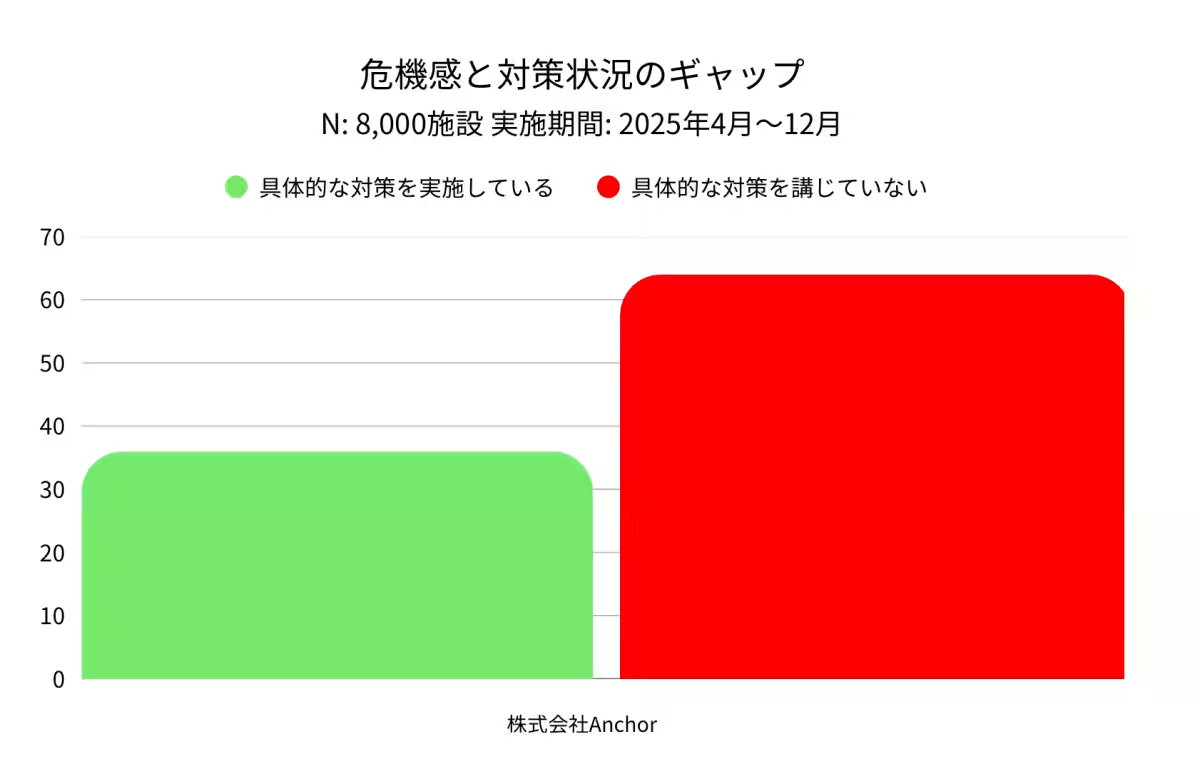
- - Moreover, around 50% indicated they had no concrete countermeasures in place, highlighting a significant gap between the recognition of the issue and actual organizational response.
Interestingly, more facilities indicated that the constraints stemmed not from a lack of personnel, but rather from a lack of capacity to make informed decisions under pressure, reflecting the extent of the systemic challenges faced in nighttime operations.
A Redesigned On-Call Support for Nighttime Operations
What sets Anchor’s service apart is that it is not merely a telephone answer service; it represents a complete redesign of nighttime support. Implemented strategies successful in medical settings for safeguarding hundreds of patients during nighttime hours have been tailored and adapted for the elderly care sector. Since launching the service, Anchor has experienced tremendous growth, with the number of consultations increasing tenfold compared to the previous year.
One of the service's breakthroughs is the newly introduced immediate reporting feature, which shifts from a reactive documentation process into an integrated setting where decisions and records are simultaneously logged in real-time. This transformation enhances the efficacy of overnight support operations significantly.
Enhancements and Changes Post-Update
The improvements brought about by the immediate reporting system include:
- - Efficiently shared information regarding consultations and decisions made during nighttime.
- - Adaptable communication means incorporating FAX, phone calls, and emails to suit the facility's requirements.
- - Direct involvement of physicians in decision-making processes as a fallback when necessary.
The immediate reporting framework facilitates clear and accessible communication, ensuring that all relevant information is available for follow-up procedures or emergency transitions to medical facilities, thereby fostering significant improvements in patient care quality.
Delivering Value to Care Staff, Patients, and Management
The changes brought about by this new service contribute to increased confidence among staff, reduced turnover risks for nurses, heightened trust for residents and their families, and proactive risk management for facility management. In addition, optimizing nighttime operations can help alleviate unnecessary emergency transports, reduce hospitalization rates, and ensure a better allocation of medical resources, contributing toward the sustainable design of social care costs.
A Sustainable Approach to Societal Welfare Costs
Anchor's endeavor represents an innovative solution not only for operational improvements within care facilities but also reflects a response to the broader discussions around the sustainability of social welfare costs at a time when the financial constraints are continually mounting.
Future Prospects
Anchor aims to eliminate reactive measures by fostering a proactive culture within care facilities regarding nighttime support systems. The goal is to cease thinking about solutions only post-crisis. With this supportive infrastructure in place, Anchor is committed to demonstrating that there is a viable and bright future for elderly care services in Japan, as they strive towards better systems and sustainable solutions that align with societal needs.
The initiatives tackled by Anchor are closely related to the growing issues of emergency care demands and medical expenses, and they plan to make these data-driven findings available for follow-up studies and comprehensive discussions.

Topics Health)
【About Using Articles】
You can freely use the title and article content by linking to the page where the article is posted.
※ Images cannot be used.
【About Links】
Links are free to use.