



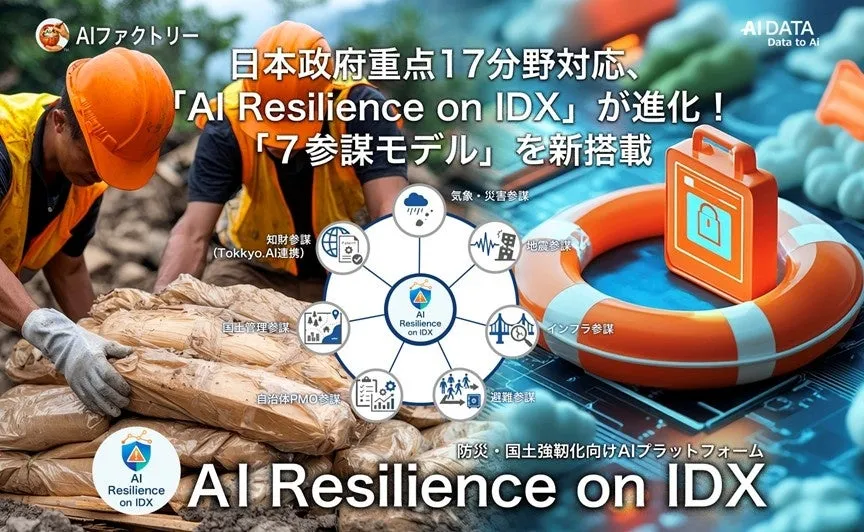
AI Resilience on IDX: Revolutionizing Disaster Preparedness with the 7 Strategists Model
AI Resilience on IDX: Enhancing Japan's Disaster Preparedness
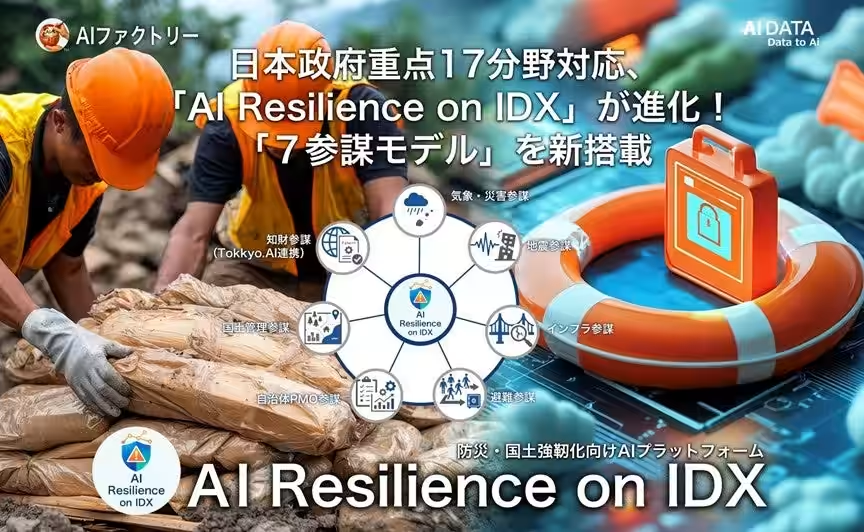
In a groundbreaking development, AI Data Corporation, headquartered in Minato, Tokyo, has introduced the “7 Strategists Model” to its advanced disaster management AI platform, “AI Resilience on IDX.” This model is designed specifically for enhancing disaster preparedness and national resilience against devastating natural events.
Background: The Necessity for Enhanced Disaster Response
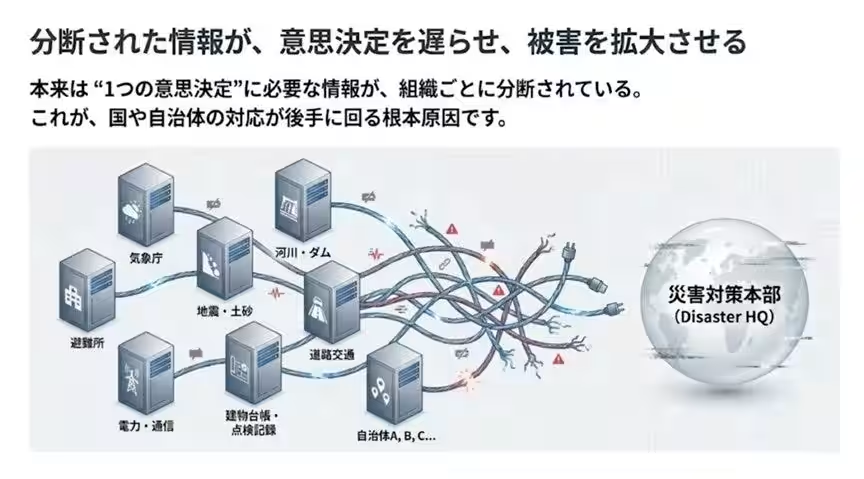
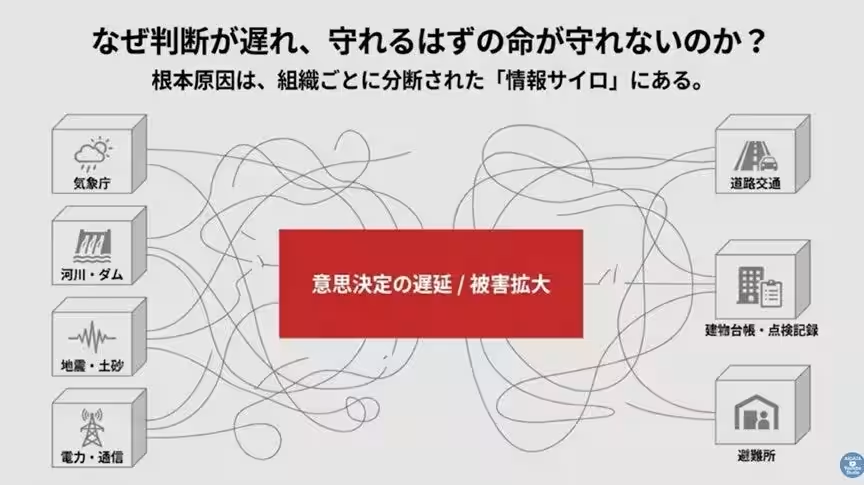
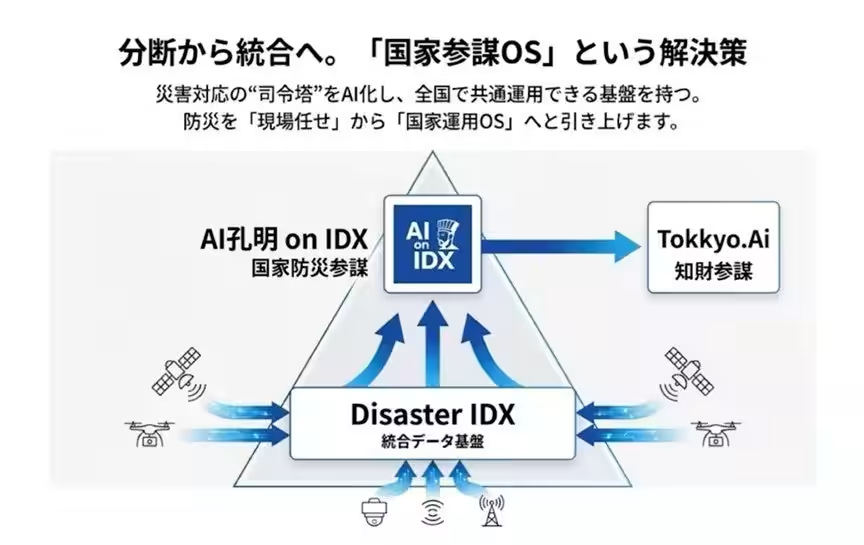
When Japan faces disasters, quick and effective response is vital. The first iteration of “AI Resilience on IDX” transformed disaster knowledge by integrating response manuals, incident reports, training records, and recovery histories into an AI-supported knowledge base. Still, significant challenges persist: fragmented information hinders timely decision-making, while reliance on veteran staff leads to inconsistencies across regions.
These issues highlight the critical need for a unified AI solution that bridges the information gaps, automates decision support, and simplifies collaboration across municipalities. Moreover, understanding the investment priorities for aging infrastructure is crucial for effective disaster response. The introduction of the “7 Strategists Model” aims to tackle these various challenges through comprehensive AI support.
Introducing the 7 Strategists Model
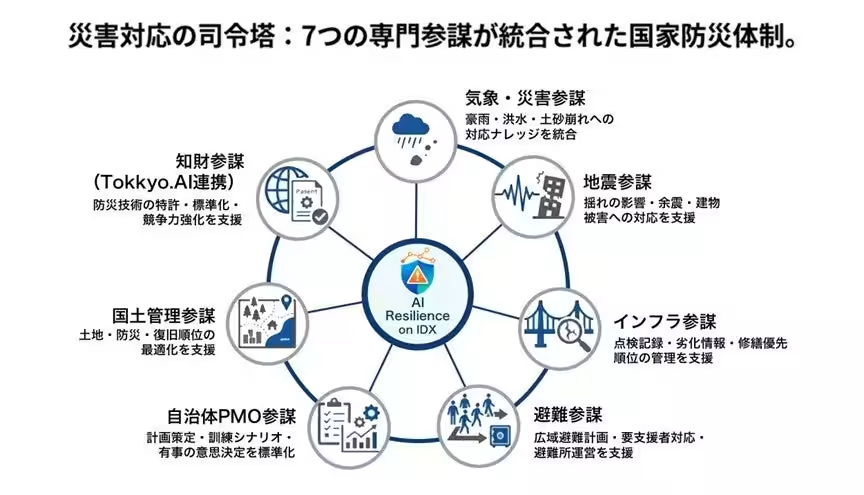
The “7 Strategists Model” is essentially a robust set of seven unique AI functions specialized in different areas of disaster management and national resilience. Each strategist is designed to support specific knowledge and response guidance while working together to ensure continuous support from pre-disaster planning to post-disaster recovery. Here’s a closer look at each of these strategists:
1. Meteorological and Disaster Strategist
This component integrates knowledge on heavy rains, floods, and landslides. Staff in the field can use AI chat interfaces to quickly receive guidance on current situations, ensuring rapid response times through automated generation of action plans tailored to specific disaster characteristics.
2. Earthquake Strategist
AI supports initial response activities, aftershock risk management, and building damage evaluations following earthquakes. Armed with historical best practices for earthquake responses, personnel can acquire standardized checklists for on-ground operations.
3. Infrastructure Strategist
Dedicated to managing inspection records, deterioration information, and repair prioritization for various infrastructures, this strategist aids decision-making by analyzing data on structural health and provides concrete recommendations on where to allocate repair resources first.
4. Evacuation Strategist
This strategist assists in developing evacuation plans, managing shelters, and responding to individuals needing extra assistance. The integration of specialized checklists and manuals ensures that each evacuation procedure is executed uniformly and swiftly.
5. Municipal PMO Strategist
Focused on rationalizing disaster prevention plans, training scenarios, and emergency decision-making within municipalities, this component ensures that support systems are standardized across various local administrations, thus enhancing overall emergency preparedness.
6. Land Management Strategist
AI supports decision-making by validating revival priorities post-disaster, helping to determine which sectors—medical, logistical, or industrial—must be restored first based on past incident analyses.
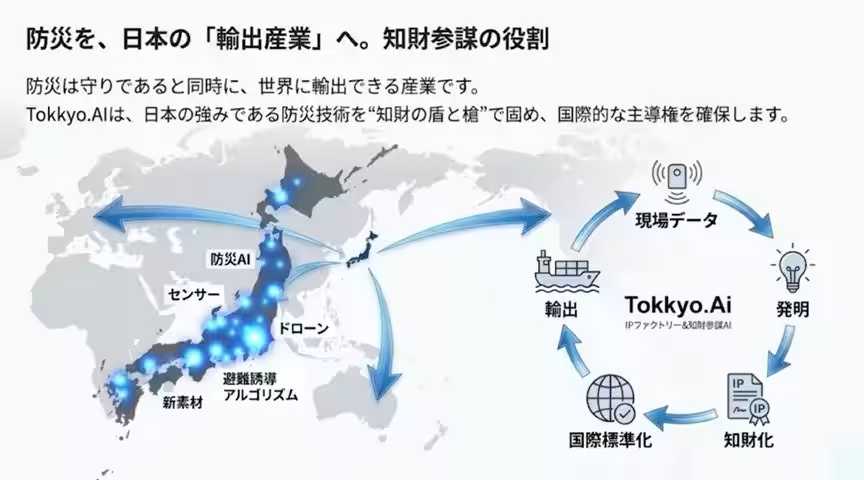
7. Intellectual Property Strategist (in partnership with Tokkyo.AI)
This function concentrates on patent information related to disaster prevention technologies, enhancing competitive-edge knowledge, and facilitating the consolidation of technological resources within the scope of disaster response.
Key Features of the 7 Strategists Model
- - Comprehensive Knowledge Database: All disaster-related documents, manuals, and case studies are structured in a user-friendly format on the IDX platform.
- - Conversational AI Q&A: Personnel can query in natural language and retrieve optimal guidance in real-time.
- - Automated Generation of Action Plans: Tailored documents based on disaster type and region will be produced instantaneously by the AI.
- - Training Support: The AI will assist in knowledge transfer from veteran staff to newcomers by centralizing critical know-how.
- - Integration with Existing Documents: Support for various document formats to facilitate seamless integration of pre-existing resources.
- - Advanced Security Compliance: The platform adheres to stringent security protocols, ensuring the protection of sensitive information.
Use Cases for the 7 Strategists Model
- - Municipalities: Enhancing disaster prevention plans, generating training scenarios, and effectively managing emergency response systems.
- - Infrastructure Companies: Streamlining repair prioritization and knowledge integration for enhanced crisis management.
- - Construction Firms: Standardizing safety measures and addressing land risk and infrastructure concerns.
- - Disaster Tech Companies: Establishing a standard model for disaster simulation and AI deployments.
- - Research Institutions: Supporting practical disaster education and utilizing case study knowledge effectively.
Future Directions
AI Data Corporation aims to further strengthen Japan's disaster preparedness through the continued enhancement of the “7 Strategists Model.” The future roadmap includes: expanding knowledge integration with hazard maps and weather data; enhancing connections with shelter management systems; and amplifying capabilities for public communication in emergencies.
Through the “AI Resilience on IDX,” AI Data Corporation is taking significant strides towards bolstering Japan's resilience against natural disasters, ensuring the safety and security of its citizens. For more details, visit AI Resilience on IDX or watch our promotional video.
Topics Policy & Public Interest)
【About Using Articles】
You can freely use the title and article content by linking to the page where the article is posted.
※ Images cannot be used.
【About Links】
Links are free to use.