



The Importance of Stress Check in Small Organizations Under 50 Employees
Introduction
Stress management in the workplace has become a pressing issue, particularly for smaller organizations. Following the introduction of mandatory annual stress checks for companies with over 50 employees in 2015, many smaller businesses with fewer than 50 employees are now facing new obligations as well. The 2028 implementation deadline for these smaller organizations puts them in the spotlight regarding their mental health management practices. The research conducted by Dr. Trust sheds light on various aspects of stress checks, particularly emphasizing the unique challenges faced by smaller businesses.
Analysis of Stress Check Data
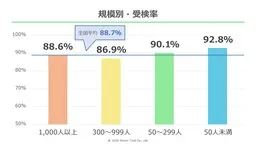
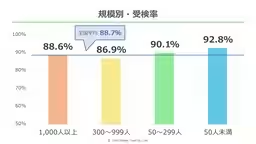
Dr. Trust's Stress Check Research Institute has compiled an extensive dataset from 7,779 organizations with over 2.67 million participants. This report focuses on the data of approximately 560,000 stress check participants from 1,777 organizations for the 2024 fiscal year. One of the most significant findings is that organizations with fewer than 50 employees had the highest participation rate of 92.8%. This is a noteworthy statistic, considering that participation in stress checks is currently a 'best effort' measure for these organizations.
Key Findings
1. Highest Participation Rate: The data indicates that small organizations have a higher engagement in stress check participation—suggesting a proactive approach to mental health.
2. High Stress Levels: Conversely, the same group also reported the highest proportions of high-stress individuals, indicating that while they participate more, they also face heightened stress.
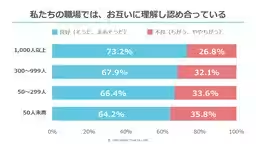
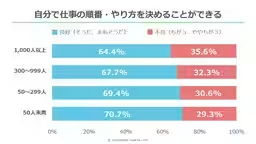
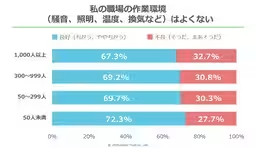
3. Areas Needing Improvement: Smaller organizations revealed poorer responses related to career development, workplace cohesion, and stable compensation, contrasting with their strengths in communication, job autonomy, and favorable work environments.
Organized Findings
The findings are categorized into several crucial indicators:
- - Participation Rate: With an average participation rate of 88.7% for all participating organizations, small businesses stand out with their nearly universal participation.
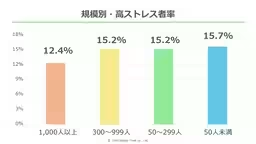
- - High Stress Rate: The analysis also showed 15.7% of participants in organizations with fewer than 50 employees were identified as high-stress individuals, a significant number compared to just 12.4% in organizations with over 1,000 employees. This disparity underlines the vulnerability of smaller teams and the potential impact of a single employee’s stress on overall morale.
Comparative Analysis of Feedback Trends
To understand the various responses from smaller organizations, Dr. Trust conducted comparative analyses of the positive and negative points highlighted by employees.
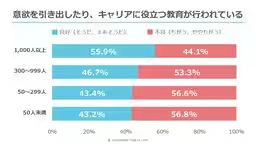
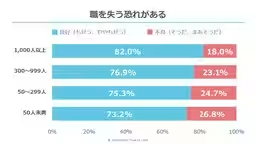
1. Negative Responses: Employees expressed concerns regarding their career development opportunities, workplace camaraderie, and job security. In particular, the gap in responses between smaller organizations and those with 1,000 or more employees revealed a troubling 12.7-point difference in career development support.
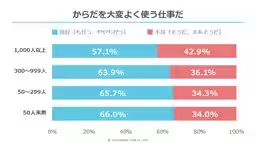
2. Positive Responses: Conversely, areas such as physical workload, job control, and workplace conditions received more favorable feedback from the same group, indicating that smaller businesses can foster a supportive environment despite the stress challenges they face.
Conclusion
The analysis illustrates a complex picture of small organizations as they prepare for mandatory stress checks. On one hand, they demonstrate an admirable commitment to mental health via high participation rates. On the other hand, they grapple with significant challenges, including high stress levels and limited career support, which may lead to high employee turnover and dissatisfaction. It is clear that small organizations must improve their support systems to enhance employee satisfaction.
As the deadline for mandatory stress checks for these smaller organizations approaches in 2028, it is essential for leadership to leverage both internal strengths and external resources for enhancing employee well-being. Daily communication and building a culture of support can foster a more cohesive and resilient workplace atmosphere—an essential step towards continuity in operations and employee retention.

Topics Health)
【About Using Articles】
You can freely use the title and article content by linking to the page where the article is posted.
※ Images cannot be used.
【About Links】
Links are free to use.