



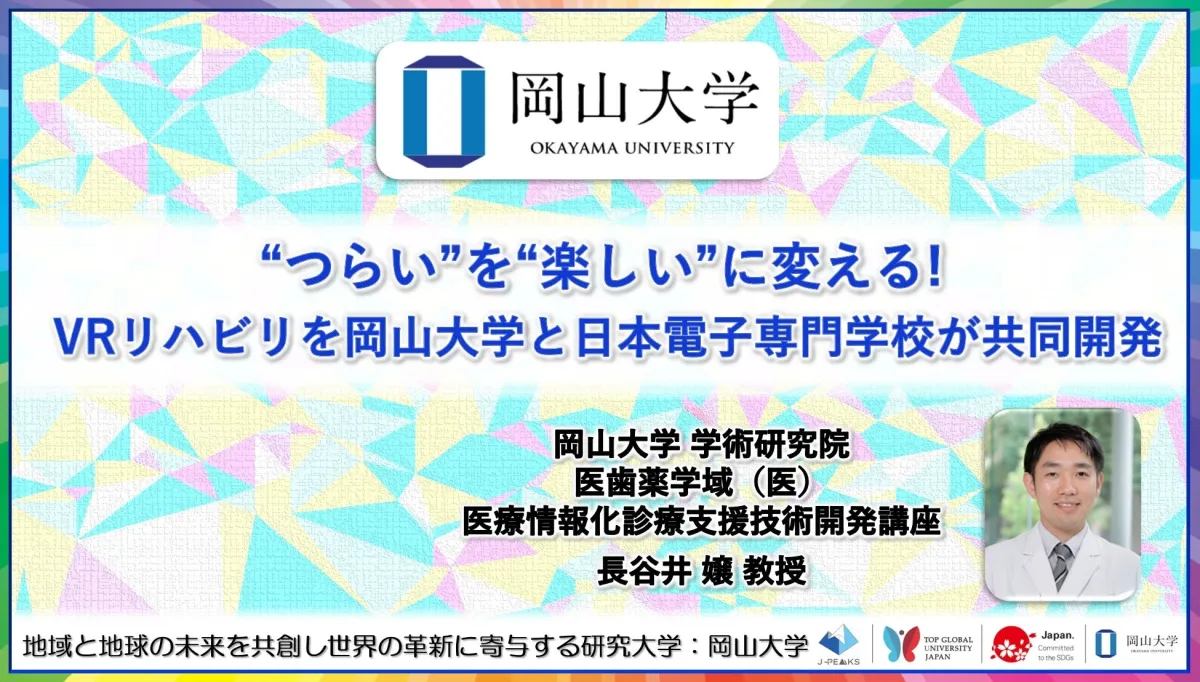
Transforming Rehabilitation: Virtual Reality Developed by Okayama University and Japan Electronic College
Transforming Rehabilitation with VR
In a remarkable collaboration, Okayama University and Japan Electronic College have developed an innovative virtual reality (VR) rehabilitation program designed specifically for children battling cancer. This program addresses the significant challenges faced during rehabilitation, including both physical and psychological discomfort. By infusing elements of fun and personalization into the rehabilitation process, this VR initiative aims to greatly enhance the experience and efficiency of recovery for pediatric patients.
The Need for Innovative Solutions
Rehabilitation for pediatric cancer patients presents unique difficulties. Extended hospital stays often lead to muscle weakness and heightened psychological stress, making it hard for young patients to stay motivated during rehabilitation exercises. Recognizing these challenges, the team at Okayama University, led by Professor Masayoshi Hasei, set out to create a solution that would engage patients and encourage them to pursue their rehabilitation goals.
Integrating Fun with Therapy
Utilizing the latest advancements in VR technology, the researchers designed two distinct experiences:
1. Wizard Content: This interactive experience allows children to cast spells by performing arm-raising motions, turning a standard exercise into an exciting gaming experience.
2. Bicycle Content: This element integrates a stationary bike with a virtual environment where patients can race through different landscapes, adding a sense of adventure to their physical activities.
The core concept is simple yet powerful: by transforming monotonous rehabilitation exercises into thrilling gameplay, children are more likely to engage voluntarily and consistently in their recovery journey. The balance between physical therapy and gaming is meticulously designed to suit the unique needs of each child, enabling safe and effective rehabilitation tailored to their capabilities.
Looking Ahead: Showcasing at Tokyo Game Show 2025
The groundbreaking results of this collaboration will be showcased at the Tokyo Game Show 2025, scheduled for September 25 to 28. Here, in the newly established “All Accessibility Corner,” participants can see firsthand how this innovative program integrates gaming into therapeutic contexts for children with disabilities and other challenging situations.
Professor Hasei emphasizes the dual struggles that children with cancer endure—not only confronting their illness but also dealing with the arduous treatments and extended hospital stays. This VR rehabilitation program is not just about enhancing physical function; it represents a hopeful way to alleviate mental stress and fears associated with rehabilitation.
By combining Okayama University's strong clinical focus and Japan Electronic College's expertise in game development, they have cultivated a partnership that paves the way for new avenues in patient care. The aim is to transform the hospital experience into an uplifting adventure, where patients can wear their VR headsets and immediately begin a fantastical journey, making the challenging movements required in rehabilitation feel like thrilling gameplay.
A Vision for Future Treatment
Professor Hasei expresses a hopeful vision for the future. He believes that this VR rehabilitation program can restore smiles and hope to young patients, easing their journey through recovery. The fusion of medical practice and entertainment opens up amazing new possibilities, showcasing the potential for technological innovations to improve the rehabilitation landscape.
As the team prepares to present their work at one of the largest gaming conventions in the world, they aim not only to demonstrate their achievement but also to inspire a broader conversation on the intersection of healthcare and gaming—ultimately advocating for innovative solutions that prioritize patient comfort and engagement in recovery processes.
Conclusion
In essence, the collaboration between Okayama University and Japan Electronic College stands as a testament to the potential of virtual reality as a transformative tool in rehabilitation therapies. As they prepare for their upcoming showcase, both institutions remain committed to highlighting how integrating technology into patient care can lead to remarkable benefits, especially for vulnerable populations like children battling cancer. This initiative represents a significant leap towards redefining rehabilitation techniques, making them more enjoyable, accessible, and patient-centered.
For further details on this project, please visit: Okayama University Press Release.



Topics Health)
【About Using Articles】
You can freely use the title and article content by linking to the page where the article is posted.
※ Images cannot be used.
【About Links】
Links are free to use.