



Does Higher Educational Attainment of Women Really Lead to Decreased Birth Rates? Insights from 60 Years of Data.
Unraveling the Myth: Does Higher Education Decrease Birth Rates?
As we approach the year 2026, a significant event marks its return: the year of Hinoeuma, which occurs every 60 years in the Chinese zodiac. This article delves into academic research led by a team from Waseda University, examining the correlation between women’s educational attainment and changes in birth rates, particularly in the context of this 2026 milestone. Utilizing the birth rate fluctuations observed during the previous Hinoeuma year in 1966 as a natural experiment, researchers have provided compelling evidence that challenges long-held beliefs about female education and declining birth rates.
Key Findings of the Study
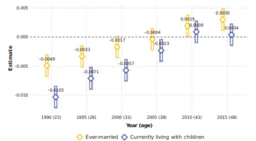
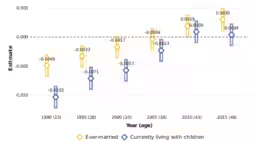
1. Minimal Delays in Family Formation: The study confirmed that women who pursue higher education do experience slight delays in marriage and childbirth, averaging a delay of approximately two weeks for marriage and about 40 days for childbirth. However, these delays are temporary, with women ultimately achieving similar family formation rates as those without higher education by their mid-40s.
2. Education's Impact Is Limited: The research conclusively revealed that while higher educational attainment may result in slightly delayed family formation, it does not significantly decrease the overall likelihood of marriage or childbirth in the long run. This suggests that education affects the timing rather than the outcomes of family formation.
3. Economic Independence without Shifting Norms: Higher-educated women tend to marry later but are more financially independent before marriage. Interestingly, traditional marriage practices remain largely unchanged despite these shifts in educational attainment, indicating that societal norms continue to exert strong influences over family formation.
This comprehensive study's results have critical implications for discussions around Japan's declining birth rate, particularly in East Asia, which has faced similar challenges due to shifting societal norms and economic conditions.
The Context of Hinoeuma's Influence
Historically, the Hinoeuma year of 1966 saw a significant drop in birth rates due to superstitions surrounding women born in this year. This led to a unique opportunity to study the effects of education on family formation absent the stigma imposed by these beliefs. By analyzing demographic records from national surveys and focusing on a cohort of approximately 1.8 million women, researchers found that educational advancements did correlate with higher educational achievements but did not correlate with decreased family formation.
Implications for Future Policy
The findings suggest that policymakers should shift their focus from solely educational attainment as a driver of declining birth rates to other systemic factors like inadequate childcare support and rigid work structures that complicate the balancing of family and career. As society progresses into the new decade, it remains vital to foster supportive work environments and innovative childcare solutions that align with women's aspirations for both education and family life.
Challenges and Future Research
Despite the robust findings, there remain questions about how these trends will affect younger generations, particularly those born in and after 2026. Future studies need to explore whether similar relationships will hold true in the current context of evolving societal values and economic pressures. This ongoing research will provide vital insights into how the intersections of gender norms, education, and economic policies shape family formation in Japan and beyond.
Conclusion
In conclusion, while higher educational attainment for women has impacted the timing of family formation, it has not caused a significant decline in marriage or childbirth rates. Educational achievements enhance economic independence but do not inherently diminish family aspirations. As we reflect on the lessons learned from the past, it is essential to recognize that the solutions to declining birth rates lie within the societal structures that surround education and family life.
This research serves as a pivotal exploration of the complexities of family formation in the modern age, urging us to consider broader systemic reforms that can support women in harmonizing their educational pursuits with familial aspirations.

Topics People & Culture)
【About Using Articles】
You can freely use the title and article content by linking to the page where the article is posted.
※ Images cannot be used.
【About Links】
Links are free to use.