




Sumitomo Forestry's Continuous Innovation in Wood Design and Carbon Reduction Efforts
Sumitomo Forestry's Remarkable Achievement in Wood Design Awards
On October 10th, Sumitomo Forestry Co., Ltd., led by President Toshihiro Mitsuyoshi and headquartered in Chiyoda, Tokyo, announced that the company has won six awards in total at the Wood Design Award 2025, including projects designed and constructed by the Sumitomo Forestry Group. This marks the 11th consecutive year of receiving this prestigious award since its inception in 2015.
The Wood Design Award, organized by the Japan Wood Design Association, aims to redefine the value of wood through design. It acknowledges outstanding architectural designs, products, activities, and research that effectively utilize wood to tackle societal challenges. The association, chaired by renowned architect Kengo Kuma, has a vision to solve social issues with the power of wood.
Award Categories and Highlights
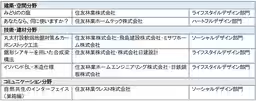
Sumitomo Forestry was recognized in three main categories this year: Architecture and Space, Technology and Building Materials, and Communication. The winning entries promoted a high-quality lifestyle centered around the use of wood, contributed to the sustainability of forests and communities, and aimed to enhance psychological well-being.
1. Architecture and Space Category
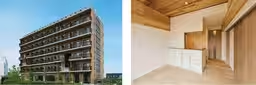
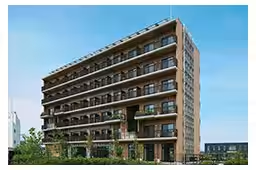
- - Green Garden: Designed and constructed by Sumitomo Forestry, this six-story company townhouse utilizes a hybrid structure—reinforced concrete in the center and wood at both ends. It serves as a model case for mid-rise wooden buildings, focusing on cost reduction and shortened construction timelines through efficient design and construction techniques. Key features include:
- Carbon Emission Reduction: The building uses 322 m³ of timber, capturing approximately 267.239 tons of CO₂ over 40 years. Nearly ZEH-M accreditation reflects a 75% reduction in operational carbon emissions.
- Employee Well-being Study: Continuous research at Sumitomo Forestry’s Tsukuba Research Institute will measure the mental and physical health impacts of wooden environments.
2. High-tech Building Solutions
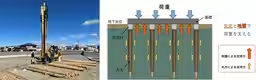
- - Log Driving for Weak Ground Treatment: Developed collaboratively with Tobishima Construction Co. and Misawa Homes, this method reinforces weak ground by driving logs into the soil, effectively supporting buildings and contributing to carbon storage.
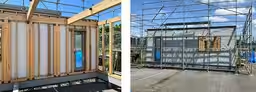
- - Iso-Band for Wooden Structures: Sumitomo Forestry Home Engineering and Nittetsu Steel Plate developed a new panel type applicable for wooden buildings, combining aesthetic appeal with efficiency, enabling quicker construction timelines crucial for disaster recovery housing.
3. Communication and Sustainability
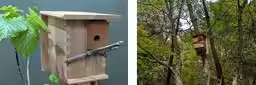
- - The Nature Coexistence Interface (Nest Box) initiative, designed by Sumitomo Forestry Crest, repurposes manufacturing waste into birdhouses, promoting biodiversity and showcasing the circular economy in wood product use.
Future Vision
Sumitomo Forestry aims to further expand its global operations centered around wood through its long-term vision, Mission TREEING 2030. By enhancing carbon absorption in forests and promoting wooden constructions, they are committed to contributing to a decarbonized society alongside global partners. The company's unique solutions work towards a sustainable future to meet the challenges of climate change.
Conclusion
With eleven consecutive awards, Sumitomo Forestry continues to set the standard for innovative uses of wood in architecture and design, driving forward the mission of sustainability and enhancing overall well-being. Their ongoing efforts reflect a deep commitment to harnessing the power of wood for a carbon-neutral future.


Topics Consumer Products & Retail)
【About Using Articles】
You can freely use the title and article content by linking to the page where the article is posted.
※ Images cannot be used.
【About Links】
Links are free to use.