



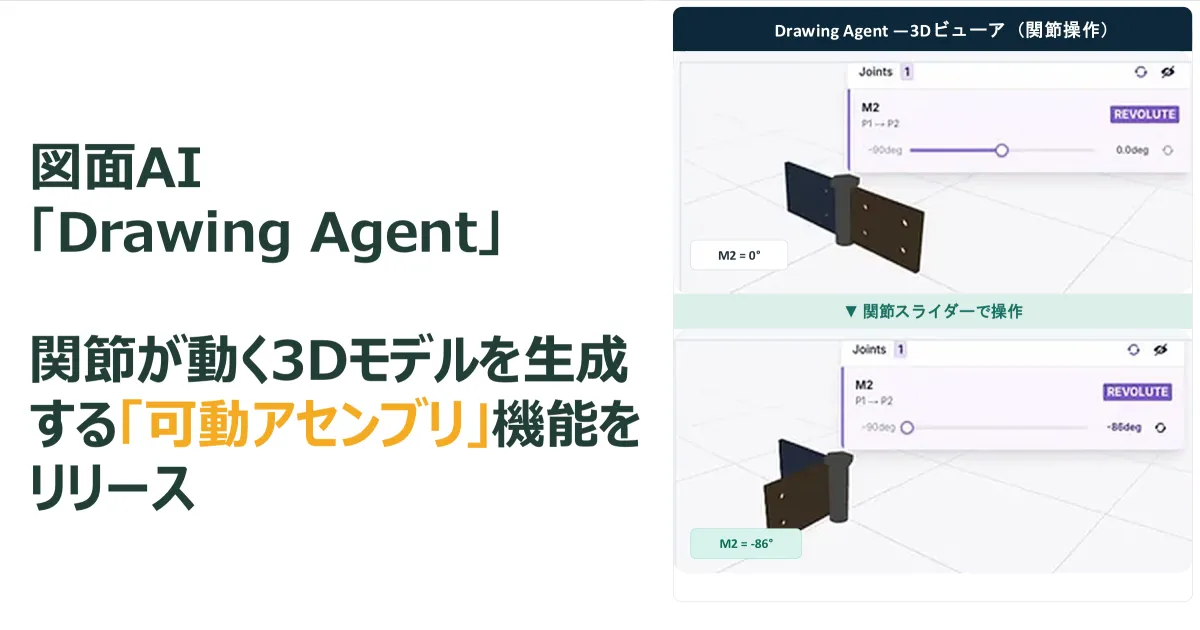
Renue Launches New Functionality for Dynamic 3D Models using Drawing Agent Technology
Introduction
Renue, a Tokyo-based company, has announced an exciting new feature within its AI tool, Drawing Agent. This innovative function allows users to generate dynamic 3D models from assembly drawings, making it easier than ever to visualize and manipulate mechanical designs. The new feature, dubbed Movable Assembly, reads joint information from 2D drawings and transforms it into interactive 3D models.
What is Movable Assembly?
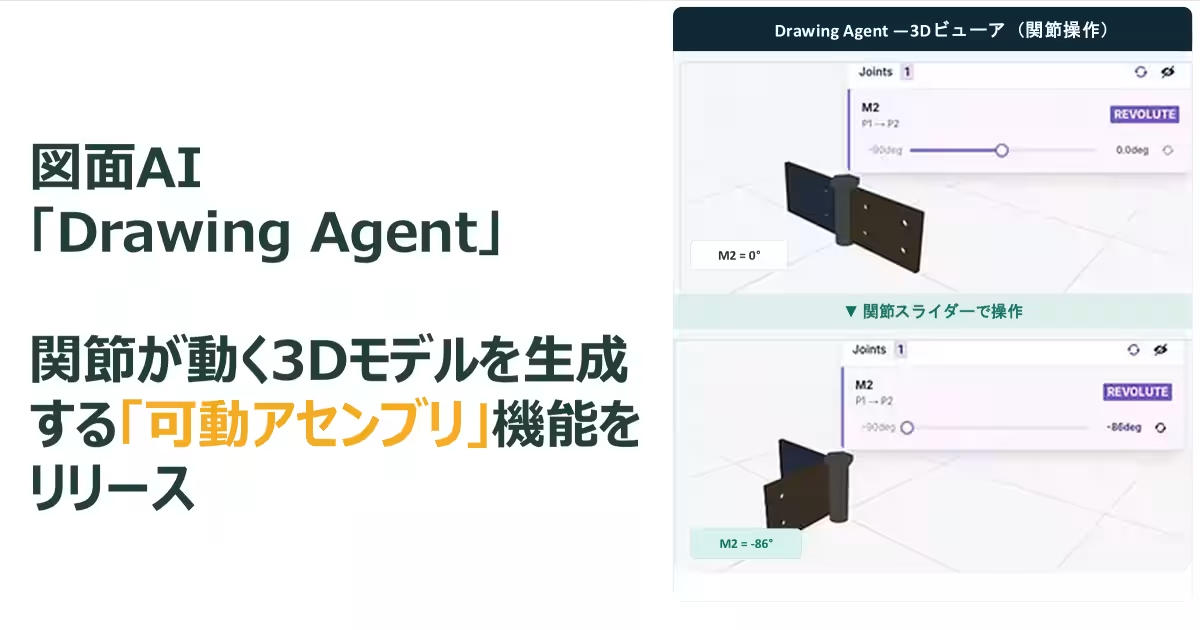
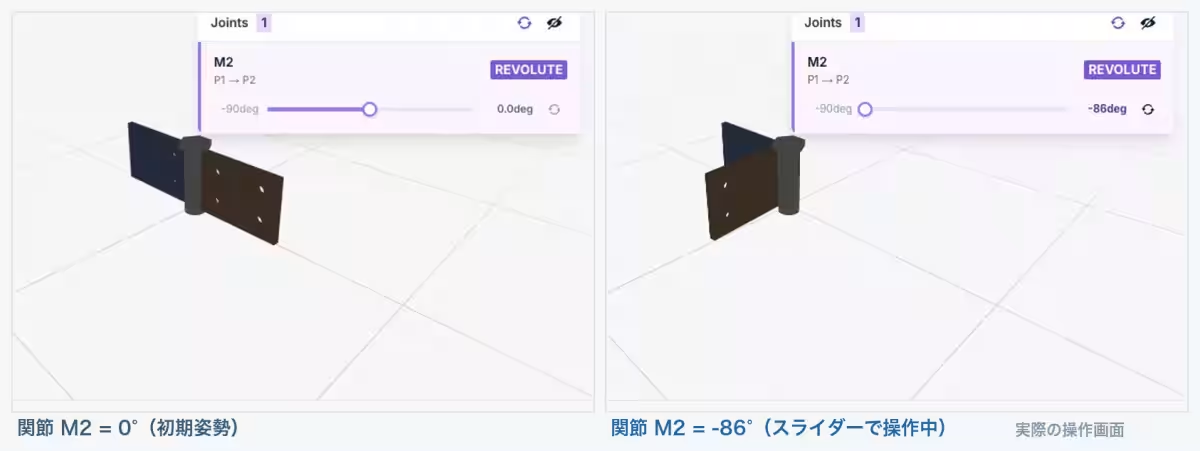
The Movable Assembly feature enhances the capabilities of Drawing Agent by not only converting 2D blueprints into 3D models but also enabling the joints within these models to move as intended. Users can simply upload their assembly drawings and receive a 3D model that can be manipulated directly on-screen. For example, when analyzing a hinge assembly, the tool separates components like plates and hinges, interpreting their movement range from the assembly instructions. This enables users to see real-time operation by adjusting sliders for joint movements, demonstrating the full range of motion for each articulated joint.
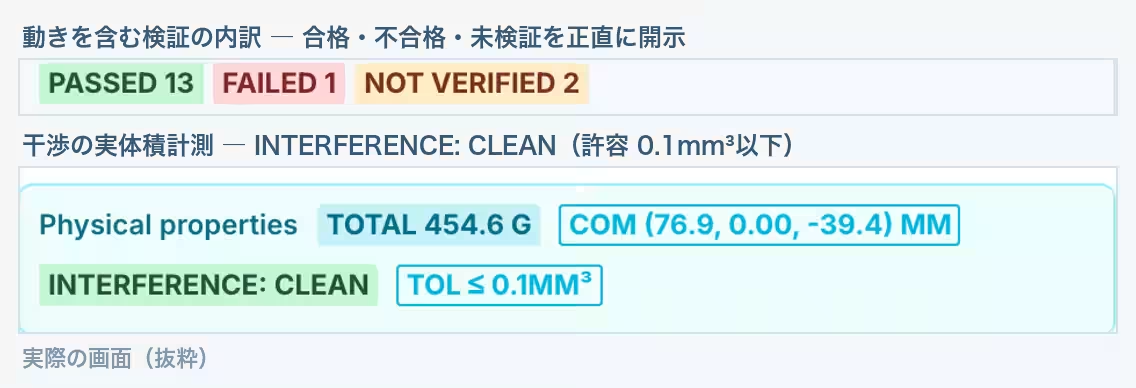
Moreover, this feature includes an automated verification process where the AI tests the joint movements against sample poses, ensuring that the components do not detach during operation. If the model fails the verification, it will not be finalized, and any unverified aspects will be clearly marked.
The Technology Behind Drawing Agent
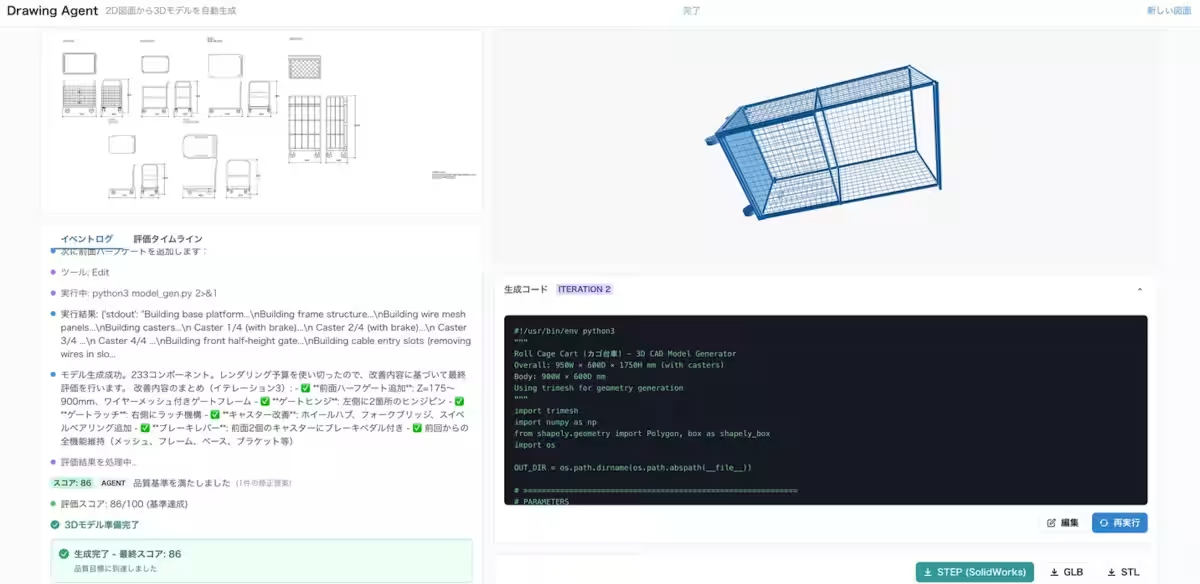
Drawing Agent utilizes cutting-edge AI technology to automatically analyze 2D drawings provided in formats such as images, PDFs, DXF, or DWG. The AI creates 3D CAD models in various formats, including STEP, GLB, or STL, allowing even those without prior CAD training to turn their designs into 3D assets. Since its launch in March 2026, this tool has repeatedly enhanced its capabilities, including features for part previews, automatic material identification, and structural analysis.
Addressing Industry Challenges
In industries such as manufacturing and construction, an overwhelming number of 2D drawing assets exist. The transition from 2D to 3D is increasingly vital for tasks such as pricing, preparation for machining, and even for creating digital twins of physical models. Yet, the traditional conversion to 3D often omits critical movement information found within the drawings themselves. As a result, these static 3D models can fall short in practical applications, requiring time-consuming rework by professionals to define joint relationships and movement parameters manually.
With Movable Assembly, Renue aims to minimize that manual labor by using AI to read and execute the movement dynamics directly from the drawings. This feature not only intends to create accurate 3D representations but also includes validations to ensure functionality in mechanical applications.
Features and Benefits
Reading Joints from Drawings
One of the standout capabilities of the Movable Assembly function is the advanced reading of joint information directly from the assembly drawings. The AI analyzes elements such as rotation arrows and joint diagrams to determine which components can move and how they interact with each other based on the specified joints and relationships. This automatic reading process allows for an efficient review and adjustment before final model generation.
Interactive Joint Movement
Once the 3D model is created, users can manipulate it directly on their screens via intuitive joint sliders, which are pre-configured with the limits derived from the original drawing. The interface allows for checking individual joint movements in real time, ensuring that even complex assemblies can be explored thoroughly without the requirement of additional software.
Comprehensive Validation
In a first for such tools, the AI performs comprehensive movement validations to prevent the final models from having operational flaws. By focusing on connections at the joint level, it prevents disguised issues that could arise due to discrepancies in assembly. After rigorous checks, any model that fails the validation remains unqualified as a final product, effectively ensuring quality and reliability.
Looking Ahead
This feature is just the beginning for Drawing Agent. Future plans include expanding capabilities to accommodate more complex mechanisms and refining the AI’s ability to read dynamic representations from a wider array of drawing formats. Renue is also working to enhance integration with physical simulation environments, further streamlining the pathway from design to testing.
In conclusion, Renue is committed to transforming traditional 2D drawing assets into fully functional 3D data that not only represent shapes but also the movements inherent to mechanical designs. With Drawing Agent, companies can finally bring their static designs to life, ensuring their potential is realized in a dynamic environment. Interested businesses are encouraged to reach out for a trial of the Renue Drawing Agent and experience the capabilities firsthand.

Topics Consumer Technology)
【About Using Articles】
You can freely use the title and article content by linking to the page where the article is posted.
※ Images cannot be used.
【About Links】
Links are free to use.