



The Impact of COVID-19 on Elite Japanese Athletes and Their Return to the Game
The Impact of COVID-19 on Elite Japanese Athletes and Their Return to the Game
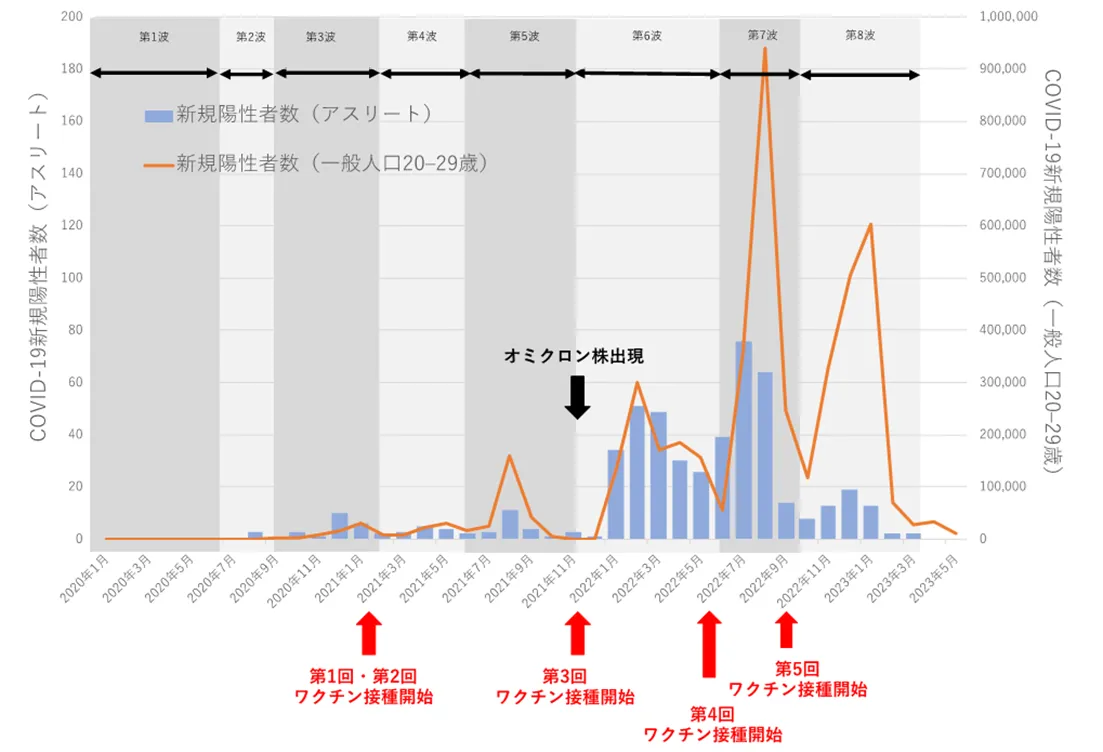
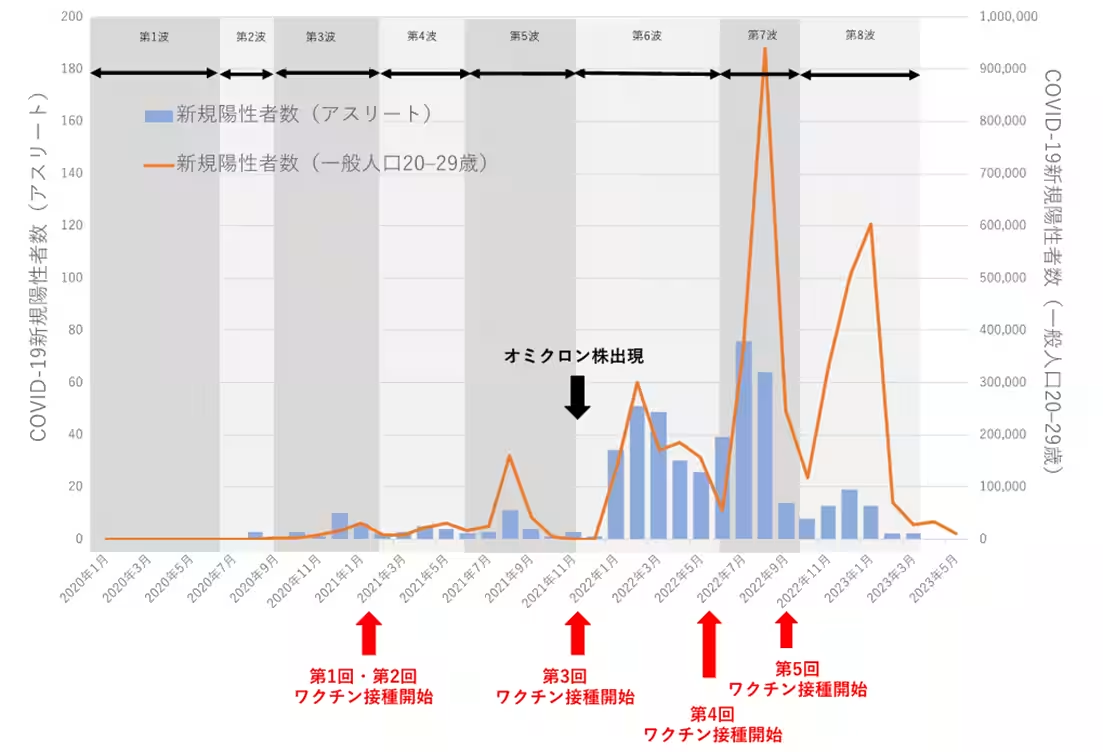
The COVID-19 pandemic significantly affected elite athletes worldwide, and Japan is no exception. A recent study conducted by the Japan Sports Agency (JSC) in collaboration with Professor Yoshio Nakata from the University of Tsukuba examined the infection rates among Japanese elite athletes and their timelines for returning to competitive sports. The retrospective analysis included 994 athletes who underwent medical checks at the National Sports Science Center (JISS) from June 2022 to May 2023, revealing crucial insights into the impact of COVID-19 on athletic performance in this demographic.
Study Results and Insights
Out of the 994 athletes analyzed, 456 were reported to have contracted COVID-19, with 492 recorded infections. A staggering 88% of these cases occurred during the sixth wave, primarily driven by the Omicron variant. The data indicated that indoor sports athletes were at a higher risk, with particularly high infection rates among badminton (16%), volleyball (10%), and handball (7%) competitors. Symptoms exhibited ranged from fever (80%), throat pain (58%), to coughing (44%), while a surprising 11% of infected athletes remained asymptomatic.
The average time from COVID-19 onset to return to sports was found to be around 10 days, with a significant 90% of athletes resuming their activities within 14 days. Importantly, only 4% experienced prolonged absences exceeding 28 days. Notably, the duration of these longer recoveries decreased following the emergence of the Omicron variant, leading researchers to consider factors like training environments, the specific variant in circulation, and the absence of stringent behavioral restrictions during the later waves as influential factors.
Factors Affecting Recovery
The study highlights that the close-contact nature of indoor training likely contributed to higher infection rates among these athletes. Moreover, it was observed that the prolonged recovery rates dropped significantly from 15% in earlier waves to just 3% during the later periods dominated by the Omicron variant. Experts attribute this change, in part, to the lack of emergency measures and behavioral restrictions that characterized the pandemic's earlier phases.
This study serves as a significant resource in understanding COVID-19's effect on elite athletes, allowing for better risk assessments and recovery strategies moving forward. As we look toward the future, developing tailored return-to-play protocols that consider specific sport characteristics and environments will be essential.
Future Implications
Continuing to gather data and conducting thorough clinical assessments will be key in enhancing support for athletes both during and after COVID-19 infection. The focus will shift towards integrating vaccination status and pre-existing health conditions into personalized care plans. The insights gleaned from this research not only illuminate recovery timelines but also advocate for structured approaches in mitigating future health risks associated with COVID-19 for elite athletes.
The study, supported by the Mizuno Sports Promotion Foundation, emphasizes the importance of continuous research in sports medicine, particularly in a post-pandemic world. As we adapt to the evolving landscape of sports amidst global health challenges, the findings provide a foundational understanding necessary for safe return strategies and long-term athlete health.

Topics Health)
【About Using Articles】
You can freely use the title and article content by linking to the page where the article is posted.
※ Images cannot be used.
【About Links】
Links are free to use.