



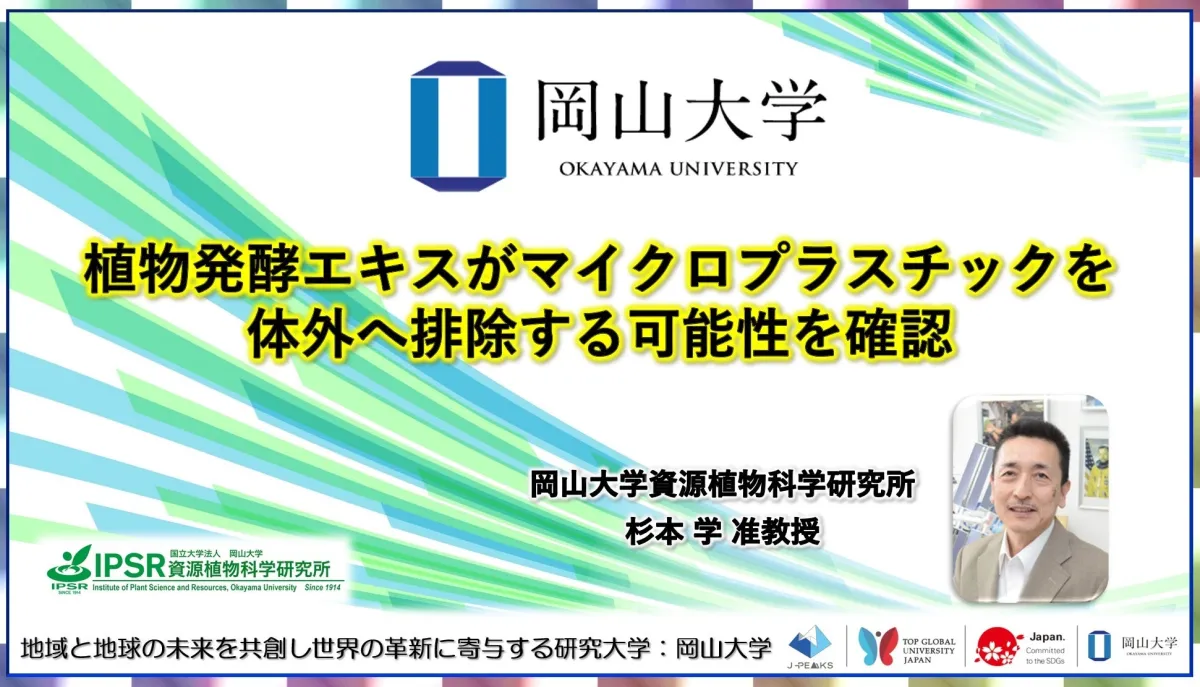
Research from Okayama University Reveals Plant Fermented Extract's Potential Against Microplastics
Potential of Plant Fermented Extract in Eliminating Microplastics
A significant breakthrough has emerged from Okayama University regarding the utilization of plant fermented extracts in combating the pressing issue of microplastics. Research conducted by Professor Manabu Sugimoto and his team at the Institute of Resource Plants Science sheds light on how these extracts interact with microplastics in artificial gastric and intestinal fluids.
Key Findings
The research, published in the journal Current Nutrition and Food Science, emphasizes that plant fermented extracts exhibit a notable ability to bind with microplastics, particularly in artificial gastric juices. The findings suggest that the extracts demonstrate a higher binding rate with microplastics in acidic environments compared to neutral ones. This indicates a complex interaction, likely involving ionic bonds between components of the extracts and the microplastics.
Microplastics have raised significant health concerns, as their potential to be absorbed into the human body could lead to detrimental effects such as thrombosis and organ failure. The ability of plant fermented extracts to facilitate the removal of microplastics from the digestive tract presents a potential solution to mitigate these risks.
Experimental Process
In the study, researchers mixed plant fermented extracts with artificial gastric and intestinal fluids. The results showed significant binding between the extracts and microplastic particles. Specifically, in the acidic conditions of the artificial gastric juice, the binding was considerably higher than in the neutral conditions of the intestinal fluid. This suggests that the acidic environment aids in the ionic binding process, further enhancing the extract's efficacy.
Implications for Health
The implications of these findings are monumental. As microplastics continue to infiltrate food and water sources, leading to health hazards, the research hints at a natural approach to potentially detoxifying the bodily effects of microplastics. By promoting the elimination of these harmful substances, plant fermented extracts could play a critical role in safeguarding public health and minimizing the absorption risks associated with microplastics.
A Word from Professor Sugimoto
Professor Sugimoto, sharing insights during a press conference on December 16, 2025, stated, “The immune-boosting effects of fermented foods largely stem from short-chain fatty acids produced by beneficial gut bacteria, which enhance immune responses. We hope that this research uncovers more about the components within plant fermented extracts that can effectively eliminate microplastics from the body.” His words underscore the potential for these natural remedies to address escalating health concerns in a world increasingly riddled with microplastics.
Publication Details
The findings are detailed in the study titled Potential of Fermented Plant Extract for Removing Microplastics in Artificial Gastric and Intestinal Juices. The research was shared widely among scientific circles and emphasizes the collaborative efforts between Okayama University and the Functional Food Development Research Institute.
Read the full article
For the broader context of the research and ongoing developments in plant-based solutions for environmental and health issues, the Okayama University research team invites further inquiry and collaboration, reinforcing the commitment to addressing critical challenges in sustainability and public health through innovative scientific investigations.







Topics Health)
【About Using Articles】
You can freely use the title and article content by linking to the page where the article is posted.
※ Images cannot be used.
【About Links】
Links are free to use.