



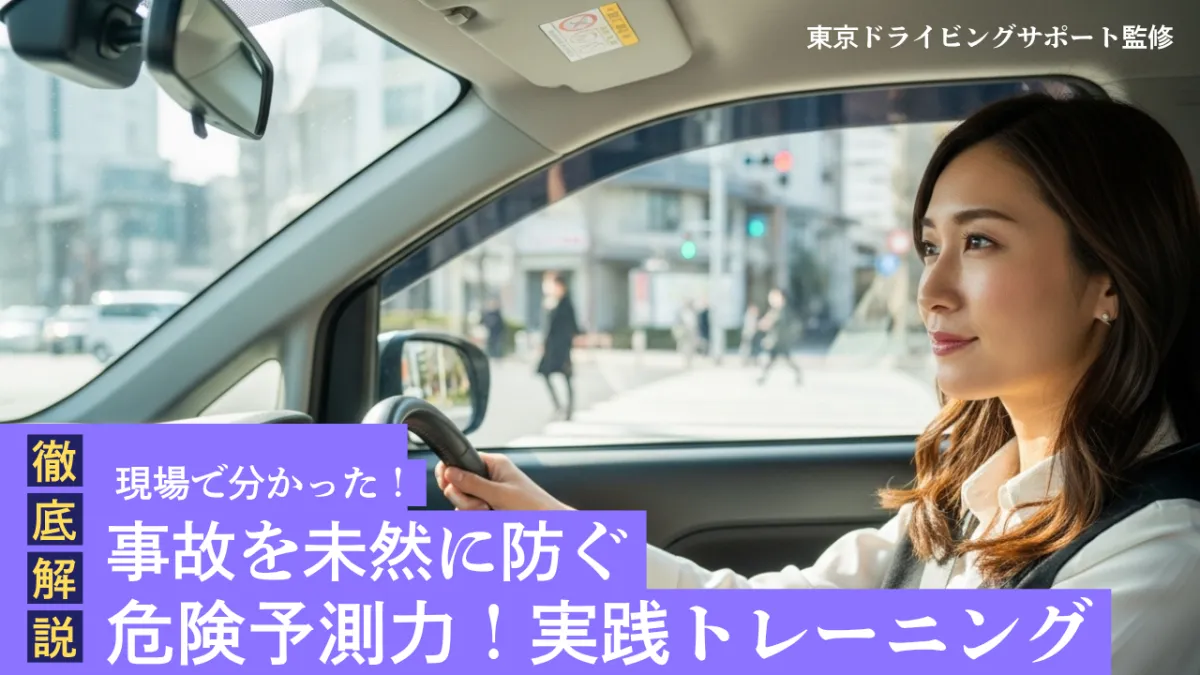
New Training Program Aims to Reduce Dangerous Wrong-Way Driving Incidents
Alarm Raised Over Increase in Wrong-Way Driving Accidents
The phenomenon of wrong-way driving in Japan has been steadily increasing, raising pressing concerns about the risks associated with deteriorating decision-making capabilities among drivers. Particularly for those who have not driven for an extended period, such as elderly drivers and those with long gaps in driving, the latent dangers of common driving environments—like intersections and parking lots—can lead to serious accidents.
One notable example is a fatal accident that occurred in April 2025 due to a wrong-way driver on the Tohoku Expressway in Nasu-Shiobara, Tochigi Prefecture. The incident spurred nationwide media attention and prompted a collaborative training session held by NEXCO East Japan and the Tochigi Prefectural Police on August 6, 2025, designed to prepare for potential wrong-way driving scenarios. This situation highlights the critical need to improve “hazard anticipation” skills within society to guard against accidents stemming from a lack of predictive capability.
In response to these concerns, Tokyo Driving Support, based in Itabashi, Tokyo, is launching a new training program aimed at enhancing drivers’ judgment abilities. Starting in August 2025, this program will specifically cater to novice drivers and those who have not driven in a long time, integrating hazard prediction training into their driving lessons.
What Is the Hazard Anticipation Training Program?
Tokyo Driving Support has developed a real-world training program that focuses on building hazard anticipation skills. This initiative acknowledges recent statistics from the National Police Agency highlighting "failure to verify safety" and "predictive errors" as primary causes of traffic accidents, where personal judgment shortcomings risk causing significant safety issues.
The new program, termed Hazard Anticipation Training, includes practical training through residential areas, intersections, and commercial districts, where participants learn to anticipate potential dangers in real-time with instructor guidance. The training format encourages simulation of various driving scenarios, effectively nurturing participants' silent “strengths” that help prevent accidents.
Key Features of the Training Program
1. Training in Real Road Environments
Participants will practice in high-risk settings like complex intersections and residential areas, developing a realistic approach towards the “real hazards” they face, which cannot be learned from books.
2. Interactive Instruction with Real-Time Feedback
Instructors encourage participants by asking questions such as, “Can you imagine what will happen ahead?” or “Who should you be paying attention to right now?” This dialogue facilitates the development of predictive skills, highlighting the interactive nature of the session.
3. Psychological Support and Feedback
Instructors bring over 15 years of experience to the table, ensuring that they understand participants' unique anxieties, characteristics, and judgment habits. After each drive, they provide personalized feedback and constructive improvement suggestions.
Structure of the Training Session (90 minutes)
The training is divided into four main steps focused on enhancing decision-making through imaginative judgment rather than just practicing operation skills.
STEP 1: Participant Assessment and Route Design
Instructors will begin by assessing the participant’s uncertainties and years away from driving, before customizing driving routes that might include residential areas, complex intersections, and night-time driving depending on individual comfort levels. For instance, someone who plans to drive children might have a route focused on school zones, while a participant nervous about weekend shopping trips may have their training tailored around commercial districts during busy hours.
STEP 2: Warm-Up Driving
Participants will start by regaining their sense of the steering wheel and spatial awareness on quiet roads, vocalizing their perspective by noting where they look or why they stopped at a particular point, allowing instructors to provide instant feedback on driving habits.
STEP 3: Hazard Prediction Drills
This middle segment of the training will include various scenarios that elevate risk and urge participants to become people who predict dangers and enact appropriate responses, reinforcing their practical skills:
- Residential Areas: Children running into the street, unregulated intersections, bicycles emerging from behind parked cars—participants will learn to keep their foot ready on the brake while remaining alert to surrounding sounds.
- Urban Areas: Participants will encounter complicated signal patterns, such as when to yield, and see how to adjust their speed based on bus and taxi behaviors.
- Parking Lots: Scenarios around safely exiting a parking space, utilizing mirrors and checks to avoid contact with neighboring vehicles.
- Different Time-of-Day Hazards: Participants learn to adapt their driving based on different traffic flows throughout the week.
STEP 4: Summary and Feedback
The final step reviews the entire drive, asking participants to reflect on their judgment, awareness, and actions while receiving feedback on what could have been potentially overlooked, thereby strengthening their awareness and decision-making skills.
Expected Outcomes from the Program
- - Develop a habit of preparing and envisioning dangers rather than merely reacting.
- - Acquire practical techniques and attention skills necessary for accident avoidance.
- - Cultivate a patient decision-making process that maintains composure under pressure.
- - Gain a confidence-boosting objective perspective on one’s driving skills.
Ideal Participants for the Training
- - Those who haven't driven for over a decade and feel apprehensive about returning to the road.
- - Individuals with past traumatic accident experiences or anxiety from interaction in driving schools.
- - People who feel uncertain about recognizing road signs and foreseeing traffic conditions.
- - Drivers who are concerned about managing hazardous situations on highways.
Testimonials from Training Participants
- - A 40-year-old woman, after taking a break from driving for 12 years, expressed, "I can drive, but I don't know what's dangerous." After practicing for the second time and exploring higher-risk scenarios, she shared, "It was thrilling to translate what I mentally understood into proactive behaviors!"
- - A 70-year-old man and former sales driver shared anxiously, “I see the signals, but I feel my reactions are delayed!” throughout the seminar, he appeared to reignite awareness about his decision-making abilities. Noticing his misjudgment, he stated, "Realizing I needed to be more cautious was a relief to know before it’s too late.”
This 90-minute training program is becoming a vital choice for many embarking on a journey towards renewed driving independence, emphasizing the nurturing of predictive decision-making over simple technical operation.
Instructor's Comments
- - Ken Kozao, instructor: “Accidents from wrong-way driving or unexpected pedestrian crossings often stem not from operational failure but from a lack of imagination around potential scenarios. This program is crafted with the intent to foster the mindset and preparation that can ultimately protect lives.”
Register for Your Free Consultation
- - Individual Free Consultation
- - Sign Up Today for Hazard Anticipation Training
Explore Further for Details on the Program
The hazard prediction training contents are elaborated on our dedicated media platform.
- - 【Are You Aware of Hidden Dangers?】 Explore the training program that bolsters hazard anticipation and prevents accidents, endorsed by Tokyo Driving Support.
Training Vehicles
Participants may use either the instructor’s vehicle (like a Prius), their personal car, a shared vehicle, or a rental car—all at the same course fee.
Cost (including tax)
The program fee is 17,000 yen for hazard prediction training.
Coverage Area
- - Tokyo 23 Wards: Areas include Itabashi, Nerima, Suginami, Nakano, Setagaya, Meguro, Shibuya, Shinagawa, Shinjuku, Minato, Bunkyo, Kita, Toshima, Arakawa, Taito, Adachi, Edogawa, Sumida, Koto, Ota, Chuo, and Chiyoda.
- - Tama Region: Cities include Chofu, Mitaka, Koganei, Musashino, Fuchu, Tachikawa, Hino, Nishitokyo, Koda, Higashikurume, and Kiyose.
- - Nearby Areas: Saitama (Wako, Asaka, Toda, Kawaguchi) and Chiba (Ichikawa, Urayasu). Other locations may be discussed upon request.
Company Overview
- - Company Name: Tokyo Driving Support Co., Ltd.
- - Location: 4-18-8 Akatsuka, Itabashi, Tokyo.
- - Established: 2024
- - Representative: Ken Kozao
- - Business Services:
- Safety driving checks for elderly drivers
- Re-entry support for parents while raising children
- Training for foreign visitors (English and left-hand driving compatible)
- Training on EVs and Tesla considerations.
Media Coverage
- - Tokyo Driving Support's efforts have been featured by numerous media outlets, including Fuji TV, Tokyo Shimbun, Mainichi Shimbun Digital, NewsPicks, Mynavi News, Nikkei COMPASS, and MSN News.
Official Website
Visit our official site for more information and registration details.
Inquiries for Press and Public Relations
- - Contact Person: Satoshi Itakura, PR Director of Tokyo Driving Support Co., Ltd.
- - Email: [email protected]
- - Phone: 0120-763-818 (Hours: Weekdays 10:00-18:00)
- - Location: 4-18-8 Akatsuka, Itabashi, Tokyo.
Note: Please feel free to consult us about interviews, filmings, and experience-driven media coverage.
Topics Other)
【About Using Articles】
You can freely use the title and article content by linking to the page where the article is posted.
※ Images cannot be used.
【About Links】
Links are free to use.