



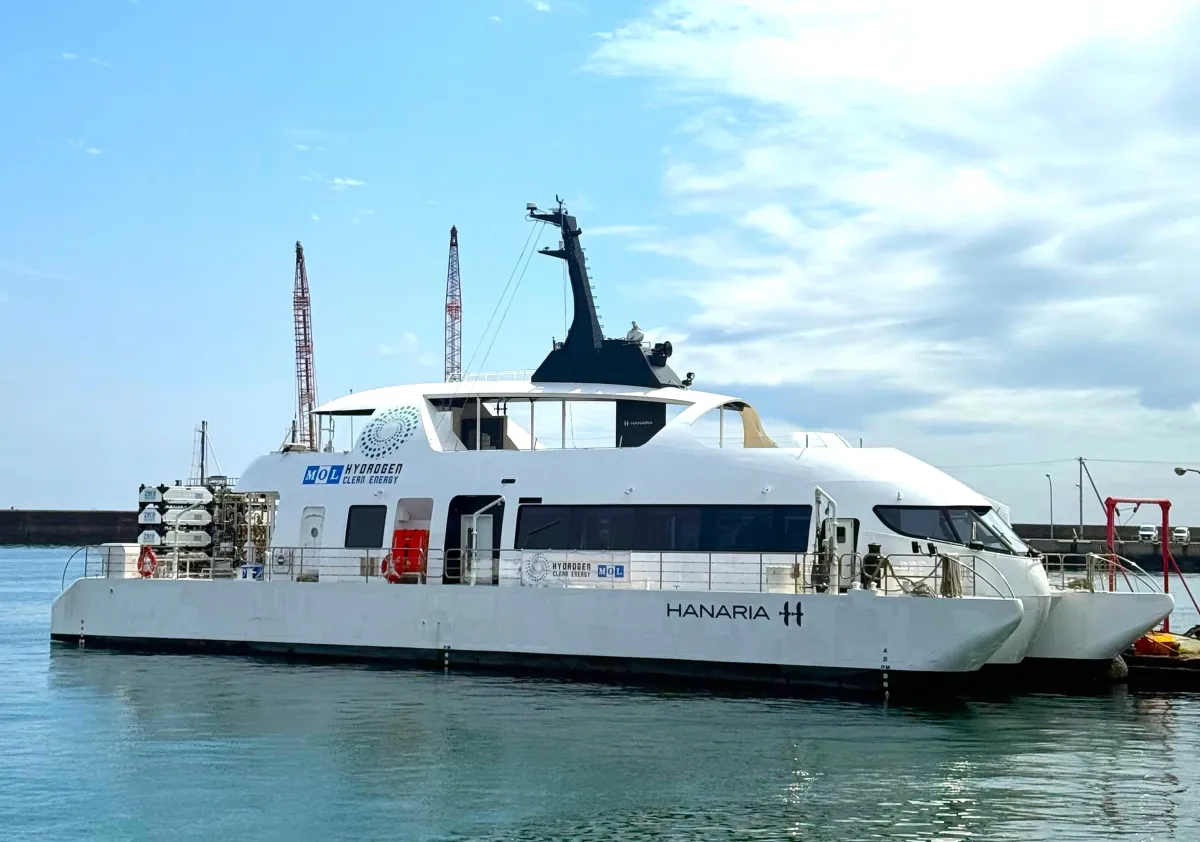
Japan's First Hydrogen Fuel Passenger Ship, HANARIA, Wins Ship of the Year 2024
Introduction
Japan has reached a significant milestone in maritime innovation with the introduction of the HANARIA, the nation’s first hydrogen fuel-powered passenger ship. Operated by Mitsui O.S.K. Lines, this groundbreaking vessel was recently awarded the prestigious "Ship of the Year 2024" title, marking a significant evolution in sustainable maritime transportation.
Award Details
The "Ship of the Year" award, established in 1990 by the Japan Society of Naval Architects and Ocean Engineers, rewards exceptional vessels and marine structures that demonstrate excellence in technical, artistic, and social aspects. This year’s recognition of HANARIA is a testament to its pioneering technology and commitment to environmental sustainability, and it marks the 35th iteration of this esteemed award.
The HANARIA's Technology
The HANARIA boasts a unique hybrid power system that includes hydrogen fuel cells, lithium-ion batteries, and a biodiesel generator. This combination enables the ship to achieve zero-emission navigation, significantly reducing its environmental footprint. The flexibility of being able to alternate power sources allows for efficient operation tailored to specific journeys, optimizing energy usage while maintaining environmental standards.
Moreover, the vessel utilizes eco-friendly technologies, contributing to the global environmental vision. Its incorporation of these renewable energy elements plays a vital role in Mitsui O.S.K. Lines' broader objectives, which include achieving net-zero emissions by 2050.
Previous Achievements
This recent award marks a significant achievement for Mitsui O.S.K. Lines, as it is only the second time in two years that a vessel operated by the company has been recognized in such a prestigious manner. In 2023, the dual-recognition of the wind-powered coal transport ship "Matsukaze Maru" and Japan's first LNG fuel ferry “Sunflower Kurenai” underscores the company's commitment to pioneering clean transportation solutions.
Future Vision
Mitsui O.S.K. Lines has articulated its commitment to sustainability in its "Environmental Vision 2.2," which aims to achieve group-wide net zero emissions by 2050. This commitment underpins the company's operations and technologies, encompassing a wide range of initiatives from harnessing wind power to integrating clean alternative fuels into their vessels.
As one of the world's largest shipping companies, Mitsui O.S.K. Lines leverages its extensive operational expertise and technological know-how to provide a range of essential infrastructure and services, catering to diverse customer needs. The vision for a global social infrastructure company focuses on supporting daily lives through maritime services while creating a richer future and delivering value to all stakeholders.
Conclusion
The success of HANARIA is not just a win for Mitsui O.S.K. Lines but represents a critical step forward in the adoption of environmentally friendly technologies in maritime transportation. By prioritizing innovation and sustainability, the company is paving the way for a new era in shipping, underscoring the importance of integrating green technologies and practices in the industry. As we look toward the future, vessels like HANARIA serve not merely as modes of transportation but as beacons of progress in the quest for a sustainable planet.
Topics Consumer Products & Retail)








【About Using Articles】
You can freely use the title and article content by linking to the page where the article is posted.
※ Images cannot be used.
【About Links】
Links are free to use.