



Five Essential Safety Checkpoints for Safe Reuse Practices
With the rise of the internet, the ease of trading items between individuals has led to significant growth in the reuse market. Using products for as long as possible and welcoming the concept of reuse is vital for environmental sustainability. However, every product has a lifespan, and reusing defective or malfunctioning items can inevitably lead to unforeseen accidents. As many people prepare for new beginnings this April, they're likely to evaluate which products to let go of and which to acquire. In light of this, the Independent Administrative Institution, the National Institute of Technology and Evaluation (NITE), led by Director Mitsuhiko Hasegawa, based in Shibuya, Tokyo, has issued a reminder on key points to consider when it comes to reused items.
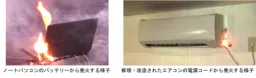
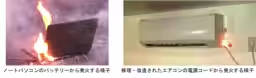
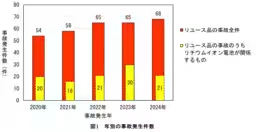
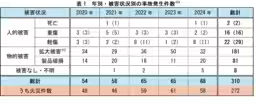
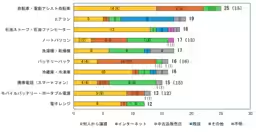
Between 2020 and 2024, NITE reported a staggering 310 accidents related to reused products, with nearly 90% of these incidents involving fires. Accidents also stem from recalled products and deterioration over time. Thus, both the seller and the buyer must reflect on the potential dangers associated with reused items. Notably, incidents involving products equipped with lithium-ion batteries constitute about 30%, highlighting the need for awareness regarding such batteries in reused products. Ensuring the following five checkpoints can help promote safe reuse practices.
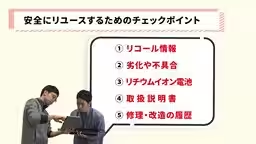
1. Check for Recalls: Always verify whether the item is subject to any recalls. As a subsequent owner, individuals may miss out on direct communications from manufacturers about important recall information.
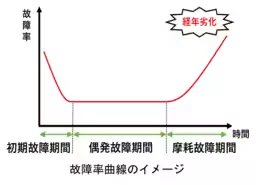
2. Evaluate Production Age & Conditions: Items that have aged significantly since production, or have any issues, may pose a risk of malfunctioning or potentially causing danger. This is particularly pertinent for reused products where the prior usage details may be unclear.
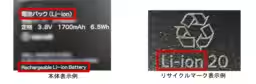
3. Scrutinize Lithium-ion Batteries: For products with lithium-ion batteries, extra caution is required. Check for any signs of swelling, overheating, or other abnormalities. Confirm the item’s compatibility with the battery and verify that a genuine battery pack is used to minimize risks.
4. Obtain User Manuals: Secure an instruction manual to ensure correct usage and assembly. Proper knowledge of the product’s functionality can prevent many accidents.
5. Assess Repairs or Modifications: Avoid items that have been altered or repaired in ways that could affect their function. Always consult the manufacturer’s advice if repairs are necessary.
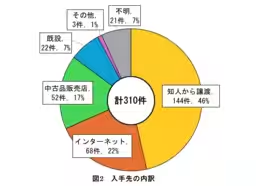
According to NITE, a concerning trend has emerged in accident reports between 2020 and 2024, with 310 accidents relating to reused items, predominantly occurring due to issues with lithium-ion batteries. Among these, friends or acquaintances accounted for the majority of product transfers linked to incidents, followed by online transactions.
In light of these findings, as consumers participate in the reuse economy, it’s critical to be aware of the potential risks and take preventive measures. Ensure that every used item checks all boxes on safety and reliability before integrating it into your daily life. For further tips, NITE has prepared various resources and videos detailing these safety checkpoints. The organization's emphasis on consumer awareness and safety serves as a timely reminder as the reuse market continues to flourish.

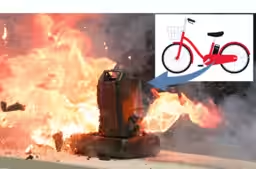
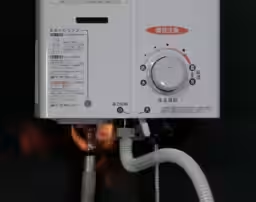
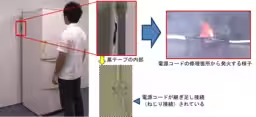

Between 2020 and 2024, NITE reported a staggering 310 accidents related to reused products, with nearly 90% of these incidents involving fires. Accidents also stem from recalled products and deterioration over time. Thus, both the seller and the buyer must reflect on the potential dangers associated with reused items. Notably, incidents involving products equipped with lithium-ion batteries constitute about 30%, highlighting the need for awareness regarding such batteries in reused products. Ensuring the following five checkpoints can help promote safe reuse practices.
Five Key Checkpoints for Reused Items
1. Check for Recalls: Always verify whether the item is subject to any recalls. As a subsequent owner, individuals may miss out on direct communications from manufacturers about important recall information.
2. Evaluate Production Age & Conditions: Items that have aged significantly since production, or have any issues, may pose a risk of malfunctioning or potentially causing danger. This is particularly pertinent for reused products where the prior usage details may be unclear.
3. Scrutinize Lithium-ion Batteries: For products with lithium-ion batteries, extra caution is required. Check for any signs of swelling, overheating, or other abnormalities. Confirm the item’s compatibility with the battery and verify that a genuine battery pack is used to minimize risks.
4. Obtain User Manuals: Secure an instruction manual to ensure correct usage and assembly. Proper knowledge of the product’s functionality can prevent many accidents.
5. Assess Repairs or Modifications: Avoid items that have been altered or repaired in ways that could affect their function. Always consult the manufacturer’s advice if repairs are necessary.
According to NITE, a concerning trend has emerged in accident reports between 2020 and 2024, with 310 accidents relating to reused items, predominantly occurring due to issues with lithium-ion batteries. Among these, friends or acquaintances accounted for the majority of product transfers linked to incidents, followed by online transactions.
In light of these findings, as consumers participate in the reuse economy, it’s critical to be aware of the potential risks and take preventive measures. Ensure that every used item checks all boxes on safety and reliability before integrating it into your daily life. For further tips, NITE has prepared various resources and videos detailing these safety checkpoints. The organization's emphasis on consumer awareness and safety serves as a timely reminder as the reuse market continues to flourish.
Topics Consumer Products & Retail)
【About Using Articles】
You can freely use the title and article content by linking to the page where the article is posted.
※ Images cannot be used.
【About Links】
Links are free to use.