



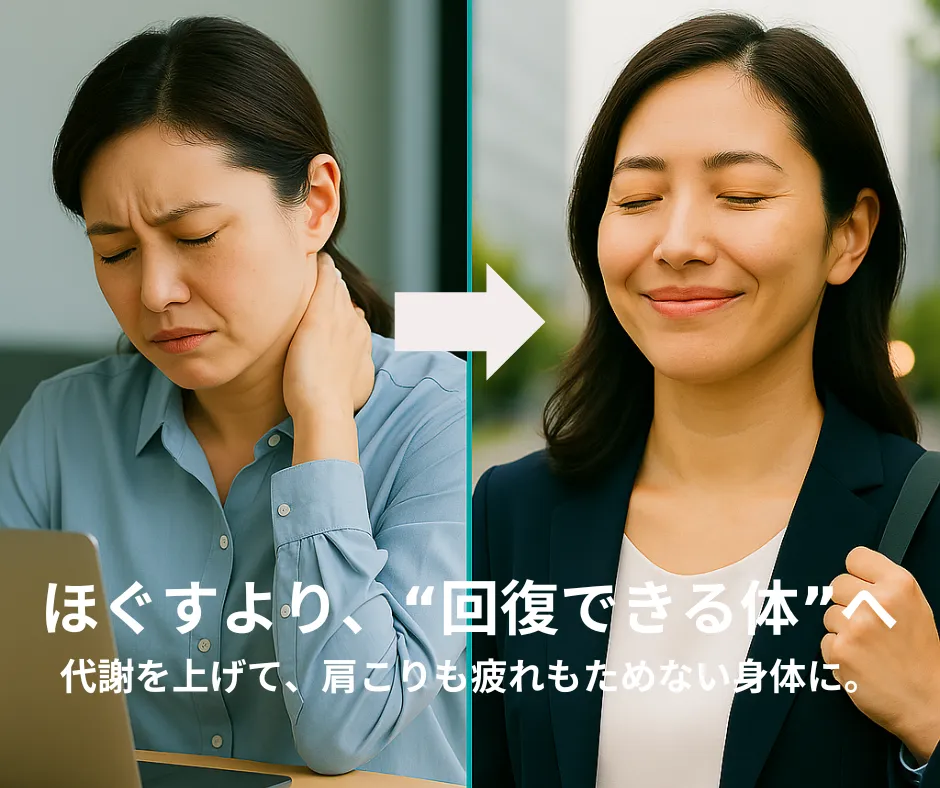
Revealing New Research: Fatigue Causes Rooted in Metabolism, Not Muscles
Uncovering the Real Causes of Chronic Fatigue
Despite numerous attempts to alleviate fatigue, many individuals still find that their fatigue persists even after rest or massage. Recent findings suggest this chronic fatigue is not merely a muscular issue, but rather a signal of lowered recovery capability within our bodies.
The Underlying Problem: Metabolism and Blood Flow
According to data from the Ministry of Health, Labor and Welfare, nearly 39% of people experience persistent fatigue; a condition that is increasing annually. The core issue lies in a deficiency of the body’s recovery mechanisms, which is affected by contemporary work lifestyles.
Impact of Sedentary Lifestyles
With prolonged hours dedicated to desk jobs and remote work, scenarios of inactivity have become the norm. This sedentary behavior slows metabolism, drains energy production, and creates stagnant blood flow, primarily affecting the shoulders and neck. Coupled with factors like excessive air conditioning and stress, our physical condition deteriorates, leading to muscle fatigue and chronic exhaustion. Additionally, such maintained lifestyles could disturb the balance of the autonomic nervous system, compounding stress resistance and resulting in unrelenting fatigue, despite efforts towards recovery.
The Cycle of Poor Recovery
In a society where inactivity prevails, the following harmful cycle emerges:
- - Lack of muscle engagement leads to decreased metabolism.
- - Stagnant blood flow reduces oxygen and nutrients.
- - Cellular repair slows down leading to muscle and joint fatigue.
As we advance into adulthood, these issues become exacerbated. Studies indicate that average daily steps have dropped by approximately 1,500 over the past two decades, revealing concerning trends in health and activity levels.
Solutions: Reinvigorating Metabolism and Blood Flow
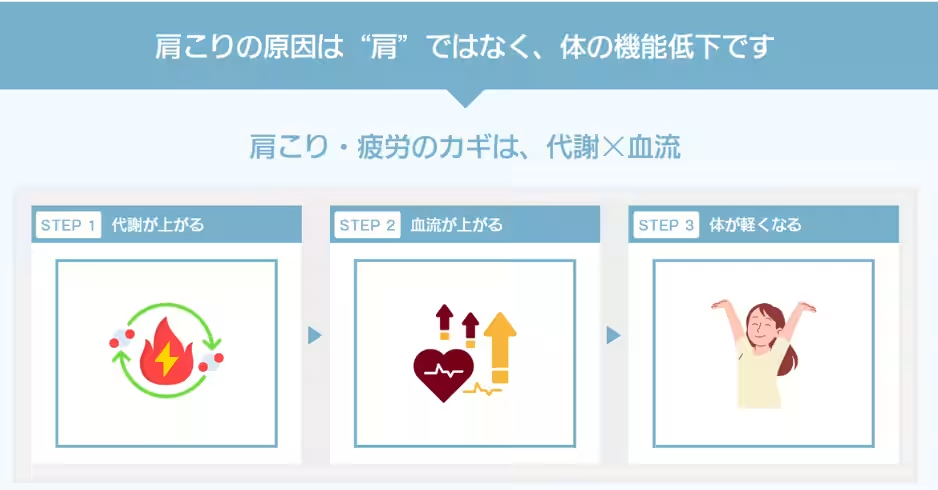
The remedy for alleviating fatigue correlates to enhancing both metabolism and blood flow, which is an intertwined factor in how our bodies recover. The following steps can guide this process:
1. Boosting Metabolism: Activities such as walking and light exercise stimulate mitochondria, increasing basal metabolism.
2. Enhancing Blood Flow: Improved circulation allows for better oxygenation and nutrient delivery to muscles and the brain, crucial for alleviating fatigue.
3. Facilitating Recovery: Effective hydration and nutrient intake speed up waste disposal, ensuring your body can naturally transition into recovery mode.
Combining Evidence and Scientific Approaches
Research from Kyoto University and Tokyo University Graduate School confirms that stimulation from mild exercise promotes vasodilation via metabolic activation, leading to enhanced blood flow.
The Hidden Role of Sleep and Nutrition
Many individuals grapple with feelings of continuous fatigue. The issues extend beyond sleep quality and delve into our body’s ability to enter a recovery phase. Particularly for those over 40, age-related changes affect muscle mass and hormone levels, causing lower metabolic rates and disrupting recovery.
Despite potential solutions like changing bedding or using sleep apps, they often overlook the more critical need to prepare your body for restful sleep. Proper metabolic function and blood circulation are paramount to achieving restorative rest.
Practical Steps: Establishing Resilience Through Aerobic Exercise
Building endurance doesn’t solely rely on strength training; we need to emphasize aerobic exercises that enhance metabolic rates and overall energy production. A simple routine of walking or cycling can significantly uplift circulation and, in turn, stabilize the autonomic nervous system. This also facilitates the production of serotonin, a hormone that encourages balanced sleep patterns.
Addressing the Broader Health Perspective
Amid growing interest in low-oxygen training techniques, which stimulate muscle metabolism and improve recovery, facilities like High Altitude are at the forefront of developing health-enhancing programs. Their innovative approach allows individuals to experience effective training in low-oxygen environments, enabling higher metabolic stimuli without strenuous exertion.
Join the Movement: Try a Sample Training Program
Currently, High Altitude is offering a two-week trial campaign for people to experience a cycle of improvement through just thirty minutes of aerobic exercise per week. Addressing chronic fatigue and shoulder pain necessitates simultaneous improvements in metabolism and blood circulation. By participating in this program, individuals can explore how movement can recover their body's natural resilience.
For more details on joining the program, explore High Alti's initiative. Let’s set out on a journey to improve your body’s metabolic response and recovery capabilities today!





Topics Health)
【About Using Articles】
You can freely use the title and article content by linking to the page where the article is posted.
※ Images cannot be used.
【About Links】
Links are free to use.