



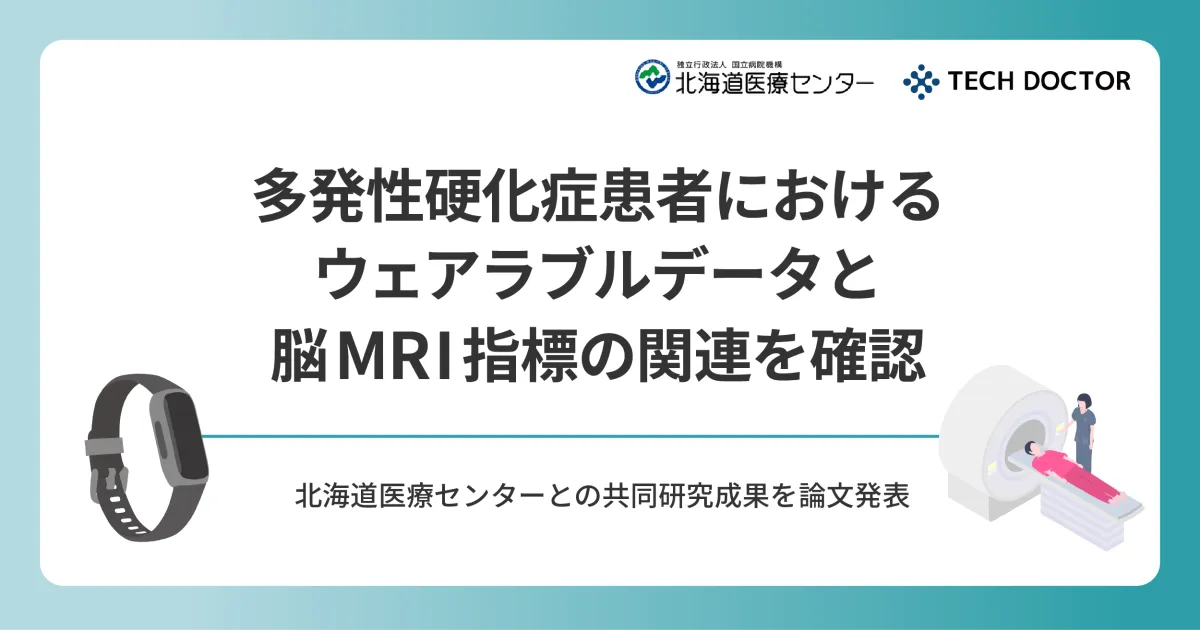
Exploring the Connection Between Wearable Data and MRI Metrics in MS Patients
Understanding the Role of Wearable Devices in Multiple Sclerosis Research
On November 22, 2025, an influential research study exploring multiple sclerosis (MS) was published in the esteemed Journal of Neuroimmunology. Conducted by Tech Doctor Co., Ltd. in collaboration with the National Hospital Organization Hokkaido Medical Center, the study focuses on how physiological data collected from wearable devices can serve as complementary indicators for monitoring the progression of this debilitating disease.
Background of Multiple Sclerosis
Multiple sclerosis is a chronic autoimmune demyelinating disorder that affects the central nervous system, characterized by acute neurological symptoms and progressive declines in nerve function (Jakimovski et al., 2024). One critical aspect of the disease is brain atrophy, which serves as a vital indicator of disease progression, reflecting neurodegeneration, deterioration of bodily functions, cognitive impairments, and a reduced quality of life (Bermel and Bakshi, 2006; Miyazaki et al., 2022; Mowry et al., 2009).
Interestingly, even in the absence of clinical relapses, reductions in brain volume have been reported (Akaishi et al., 2024b; Cree et al., 2019; Yokote et al., 2018). Therefore, there is an increasing need for sensitive, early, and non-invasive biomarkers to track disease activity and neurodegeneration, particularly at stages where patients might not exhibit any observable symptoms (Comi et al., 2024; Scalfari et al., 2024).
Research Overview
This study was conducted with the cooperation of the Neurology Department at Hokkaido Medical Center, involving 30 MS patients (23 with relapsing-remitting MS, 5 with secondary progressive MS, and 2 with primary progressive MS).
Device Used: Google Fitbit Inspire3
Duration of Study: Up to 30 days
Parameters Collected: A total of 29 items, including sleep indicators, autonomic nervous system metrics, and activity levels
MRI Metrics: Brain volume, T2 lesion volume (T2LV), C2/3 cervical spinal cord cross-sectional area (CSA)
Questionnaires: Japanese versions of the Pittsburgh Sleep Quality Index (PSQI) and Fatigue Severity Scale (FSS)
Analysis Method: Correlation analysis adjusted for age and sex assessed the relationship between parameters obtained from sensors and neuroimaging measurements.
Research Findings
The following results highlighted in the abstract of the study document the significant correlations found:
1. Relationship Between Deep Sleep Proportion and MRI Metrics
A higher percentage of deep sleep was associated with a smaller T2 lesion volume (T2LV) (ρ = -0.46) and a larger C2/3 cervical spinal cord cross-sectional area (CSA) (ρ = 0.59).
Implication: Quality of sleep, particularly deep sleep, may relate significantly to the extent of MS lesions as observed through MRI.
2. Heart Rate Variability During Sleep
Variability in RR intervals during sleep was linked to brain volume (ρ = 0.41).
Implication: Autonomic nervous system indicators may correlate with CNS atrophy.
3. Daytime Activity and Heart Rate Indicators Linked to Cervical Atrophy
All parameters, including minimum daytime heart rate (ρ = -0.44), heart rate range (ρ = 0.41), step counts (ρ = 0.64), and total metabolic equivalents (METs) (ρ = 0.54) were associated with C2/3 CSA.
Implication: Daily data concerning physical activity and heart rate might reveal pertinent connections with cervical cord atrophy.
(ρ represents Spearman's partial correlation coefficient adjusted for age and sex)
Social Significance and Future Outlook
This research demonstrates the potential of physiological data from wearable devices to reflect neuroanatomical pathology in MS patients. It suggests a promising approach to capturing signs of clinical change in an ongoing, non-invasive manner. The confirmed associations between accessible indicators like deep sleep, autonomic nervous function, and daytime activity levels with brain and spinal cord atrophy or lesions is an essential first step in bridging everyday changes to clinical medicine.
Going forward, it is crucial to validate these physiological indicators in larger patient populations and through longitudinal studies to determine their contribution to early detection and enhanced monitoring of MS health status.
The establishment of digital biomarkers through wearable data could pave the way for new healthcare models with reduced patient burden. Tech Doctor will continue collaborating with institutions to promote the application and implementation of this research in clinical settings.
Article Information
- - Publication: Journal of Neuroimmunology
- - Publisher: Elsevier B.V.
- - Article Title: Wearable-based physiological monitoring and brain magnetic resonance imaging metrics in multiple sclerosis: A feasibility study
- - DOI: 10.1016/j.jneuroim.2025.578819
Commentary by Dr. Yusei Miyazaki
Dr. Miyazaki, the head of the Neurology Department at Hokkaido Medical Center, points out the inadequacy of traditional evaluations in capturing the daily states of patients with neurological diseases, including MS. This study indicates that measuring physiological functions in everyday life through wearable devices could reflect the extent of neurological impairments in MS. By combining these methods with traditional assessments, a new monitoring approach can be developed that better captures disease states and improves overall healthcare delivery.
About the National Hospital Organization Hokkaido Medical Center
Hokkaido Medical Center is equipped with a tertiary emergency center and meets the acute healthcare needs of the region. It addresses policy-relevant medical conditions such as neurodegenerative diseases and muscular dystrophy and provides comprehensive care, including managing mental health comorbidities and tuberculosis treatment. Recognized as a designated “Difficult-to-treat Disease Medical Collaboration Base Hospital” by Hokkaido, the center engages broadly across healthcare sectors.
About Tech Doctor Co., Ltd.
Tech Doctor Co., Ltd. aims to revolutionize health management through data. The company develops and implements innovative “digital biomarkers” derived from everyday sensing data to provide insights into health. Collaborating with the healthcare and pharmaceutical sectors, Tech Doctor strives to realize AI-driven medical solutions.
- - CEO: Kazushi Minato
- - Chief Physician: Keisuke Izumi
- - Headquarters: 2-2-1 Kyobashi, Chuo-ku, Tokyo, 104-0031, Japan
- - Establishment: June 21, 2019
- - Business Focus: Development of the digital biomarker platform “SelfBase” and digital healthcare solutions.
- - Website: Tech Doctor
Definition of Digital Biomarkers
Digital biomarkers are metrics based on everyday biometric data captured from smartphones and wearable devices, allowing continuous and objective evaluation of disease presence, changes in health status, and treatment efficacy. Unlike conventional biomarkers, which are typically measured at medical facilities, digital biomarkers enable the continuous tracking of data during daily life, offering potential for early disease detection and monitoring treatment effects.
Topics Health)
【About Using Articles】
You can freely use the title and article content by linking to the page where the article is posted.
※ Images cannot be used.
【About Links】
Links are free to use.