



Sapporo Co-op and DeCM-PF Achieve Excellence in Food Logistics Optimization
The Remarkable Achievement of Sapporo Co-op and DeCM-PF in Food Logistics Optimization
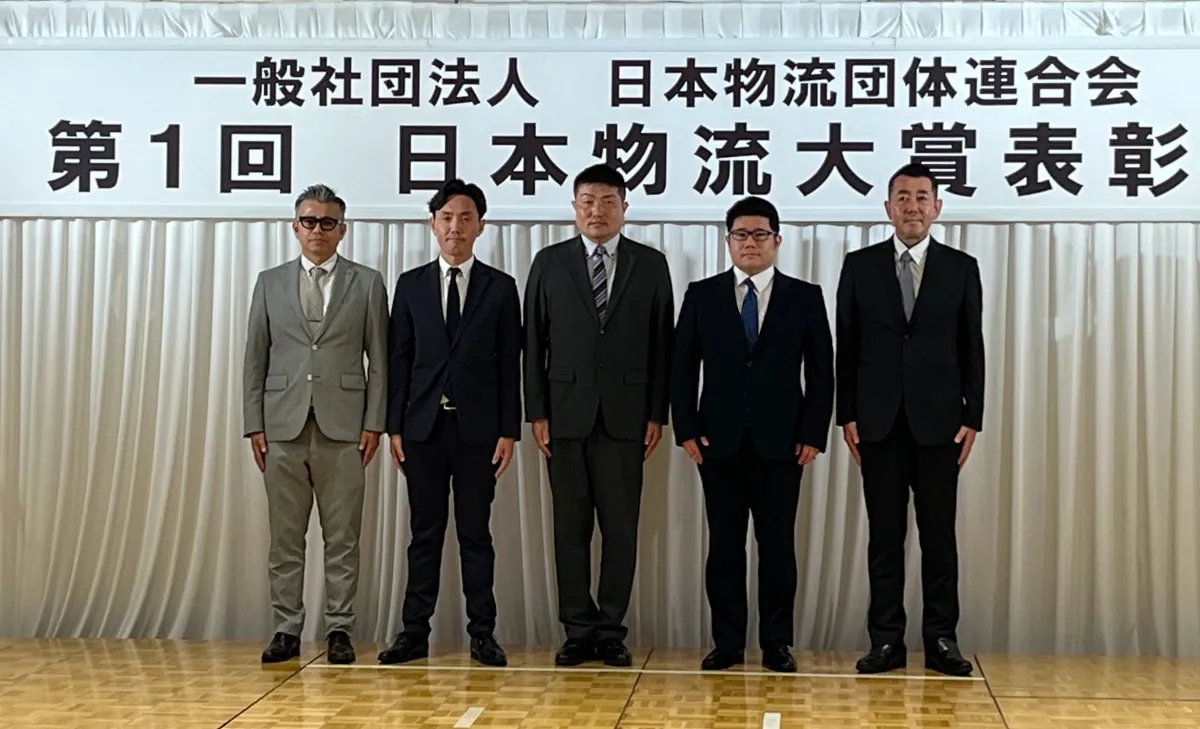
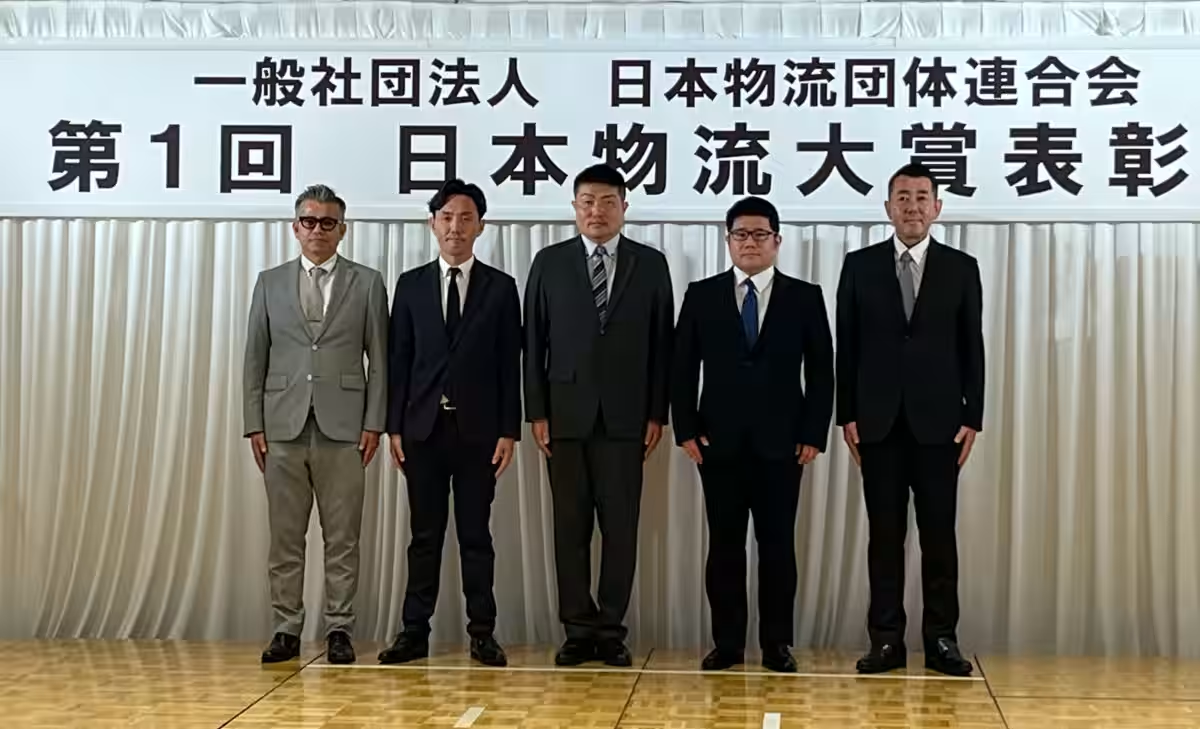
Sapporo Co-op, in collaboration with the support of Sinops and Itochu Corporation, has officially initiated the implementation of the food value chain optimization service known as DeCM-PF. This project has not only transformed their logistics operations but has also garnered the prestigious Grand Prize at the 1st Japan Logistics Award by the Japan Logistics Association. The award was granted for the innovative venture titled "Logistics Structural Reform through 'DX × Expert Field Capability' - Building Delivery Optimization and Regional Sharing Model Using AI Demand Forecasting."
Background
The current food logistics landscape is plagued by severe labor shortages due to the ongoing population decline affecting overall workforce numbers, particularly in truck driving. Additionally, the revised Logistics Efficiency Law, effective from April 2026, mandates transportation companies and shippers to actively enhance delivery efficiencies. Under such pressing circumstances, Sapporo Co-op, with over 100 retail locations and home delivery services throughout Hokkaido, faced significant challenges in the efficient delivery of perishable items like dairy products and tofu.
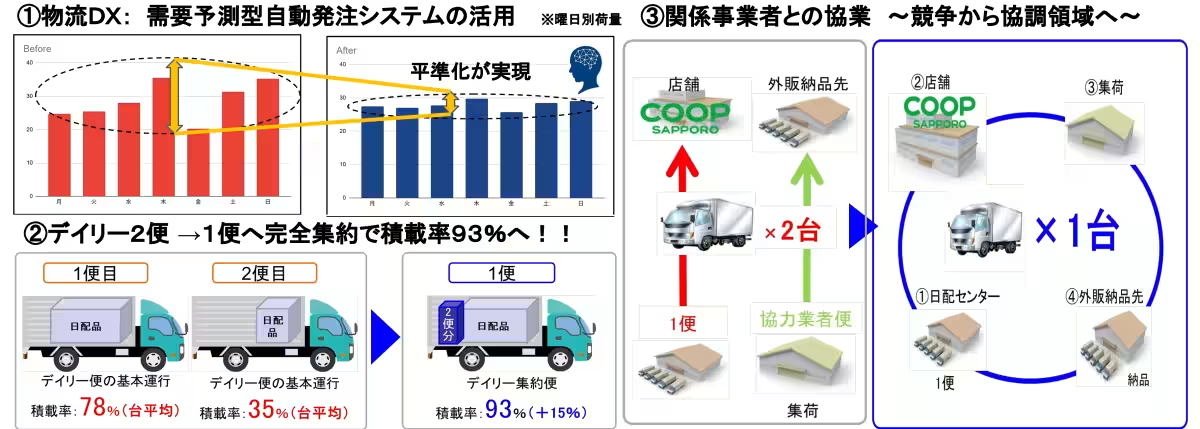
Historically, the logistics scheduling from dedicated centers run by Hokkaido Logistics Service (a subsidiary of Sapporo Co-op) was hampered by competing priorities within the supply chain—manufacturers, logistics centers, and retail establishments were often driven by individual constraints. Consequently, there was a reliance on two delivery runs per day due to concentrated delivery demands on certain peak days, leading to an alarming average load factor of just 35%. As the driver shortage worsened, the logistics model strived to sustain itself under unsustainable conditions, signaling the need for a transformative overhaul. This led to the introduction of DeCM-PF, which underpins their core logistics reform initiative focused on demand balancing.
Initiatives and Implementation
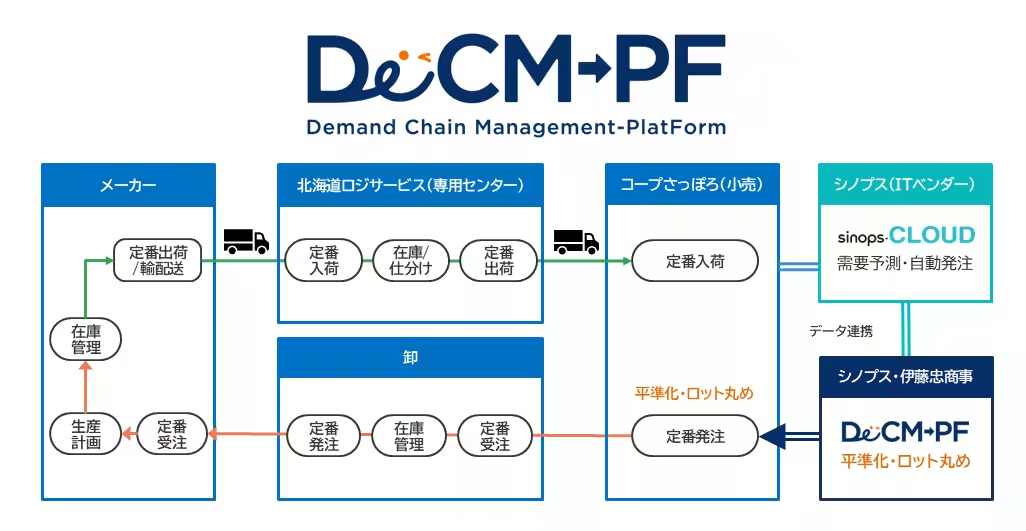
Since 2021, Sapporo Co-op has been utilizing the demand forecasting and automated ordering service developed by Sinops, known as sinops-CLOUD. By integrating this system with the demand-balancing logic from DeCM-PF, they are set to achieve volume standardization starting July 2024. The varying sales volume across different days of the week led to erratic ordering and delivery difficulties. The award-winning initiative utilized sinops-CLOUD's advanced predictive capabilities alongside DeCM-PF to stabilize ordering volumes, considering product shelf-lives and store capacities to ensure consistent delivery quantities.
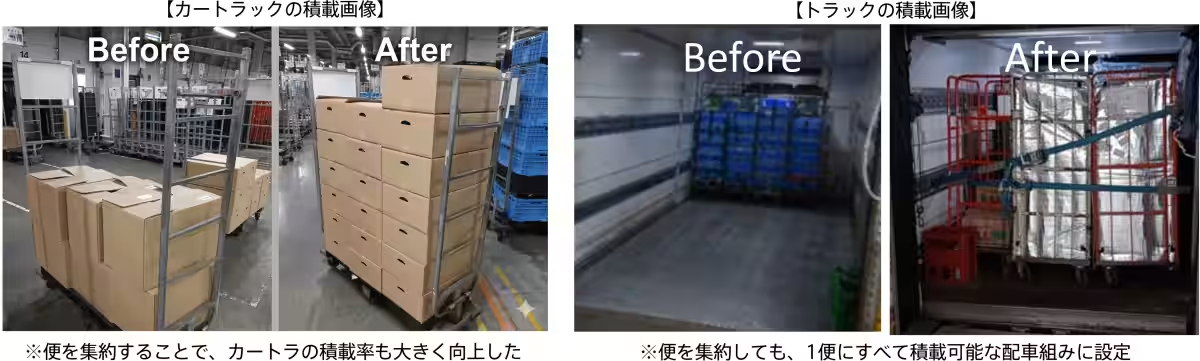
The successful implementation resulted in a consolidation from two to one daily delivery run, optimizing inventory management. This, in turn, allowed for collaboration with other systems to propose optimized delivery routes and establish a regional sharing model for collaborative delivery leveraging the newfound scheduling flexibility.
The recognition of this initiative was attributed to the synergy between the data-driven aspects of DeCM-PF and the practical execution capabilities that form a robust supply chain optimization strategy.
Outcomes and Achievements
This venture yielded significant improvements in logistics efficiency and environmental sustainability, with measurable outcomes including:
- - Increased Load Factor: Achieved a remarkable 93% load factor, a substantial 58-point improvement compared to pre-implementation levels.
- - Reduction in Labor Hours: Saved 26,448 hours annually, equivalent to freeing up seven truckloads per day.
- - Decreased Environmental Impact: Reduced annual CO2 emissions by 310 tons, which is comparable to about 22,000 cedar trees.
According to Hokkaido Logistics Service's executive, Toshiya Kawakami, the partnership with Sinops in leveraging demand forecasting through DeCM-PF has been pivotal in their operational efficiency efforts and contributed significantly towards the award win. They expressed gratitude for ongoing collaboration in striving to forge a sustainable logistics model.
Future Prospects
As DeCM-PF continues to optimize the food value chain by connecting retailers, wholesalers, and manufacturers, the award symbolizes a groundbreaking shift towards using retail-driven demand data as a foundation for volume standardization. Sapporo Co-op is now preparing to extend this methodology from staple products to special sale items and wholesale ordering. Sinops and Itochu also aim to deepen their partnership to address ongoing logistics challenges, promoting the adoption of sustainable models on a national scale.
Conclusion
Sinops stands out as a software provider committed to reducing waste across various sectors, operating under the vision of eliminating 10% of global waste. They have developed and marketed the sinops system, tailored for managing high-demand products with short shelf lives. This strategic partnership has proven to be a model of success in the complex landscape of food logistics, paving the way for more efficient, sustainable practices in the industry.
Topics Consumer Products & Retail)



【About Using Articles】
You can freely use the title and article content by linking to the page where the article is posted.
※ Images cannot be used.
【About Links】
Links are free to use.