



Sound as a Medium for Pain Transmission: Insights from New Research
Understanding Sound's Role in Pain Transmission
Introduction
Recent scientific investigations led by researchers at Tokyo University of Science have provided intriguing insights into how pain can be communicated through sound. Notably, the sounds emitted by animals experiencing pain may play a crucial role in transmitting pain sensations to others within their environment. This study highlights a phenomenon known as emotional transmission of pain, which occurs even in the absence of direct physical injury to other individuals in proximity.
The Study
The research group, including notable figures such as Assistant Professor Tomoka Kasai and Professor Kazumi Yoshizawa, conducted experiments using mice to discern how sound functions as a mediator in pain perception. The main focus was on ultrasonic vocalizations—sounds beyond human hearing capability—produced by mice subjected to pain. By isolating these sounds, the researchers set out to explore how they might affect pain responses in other mice nearby.
Methodology
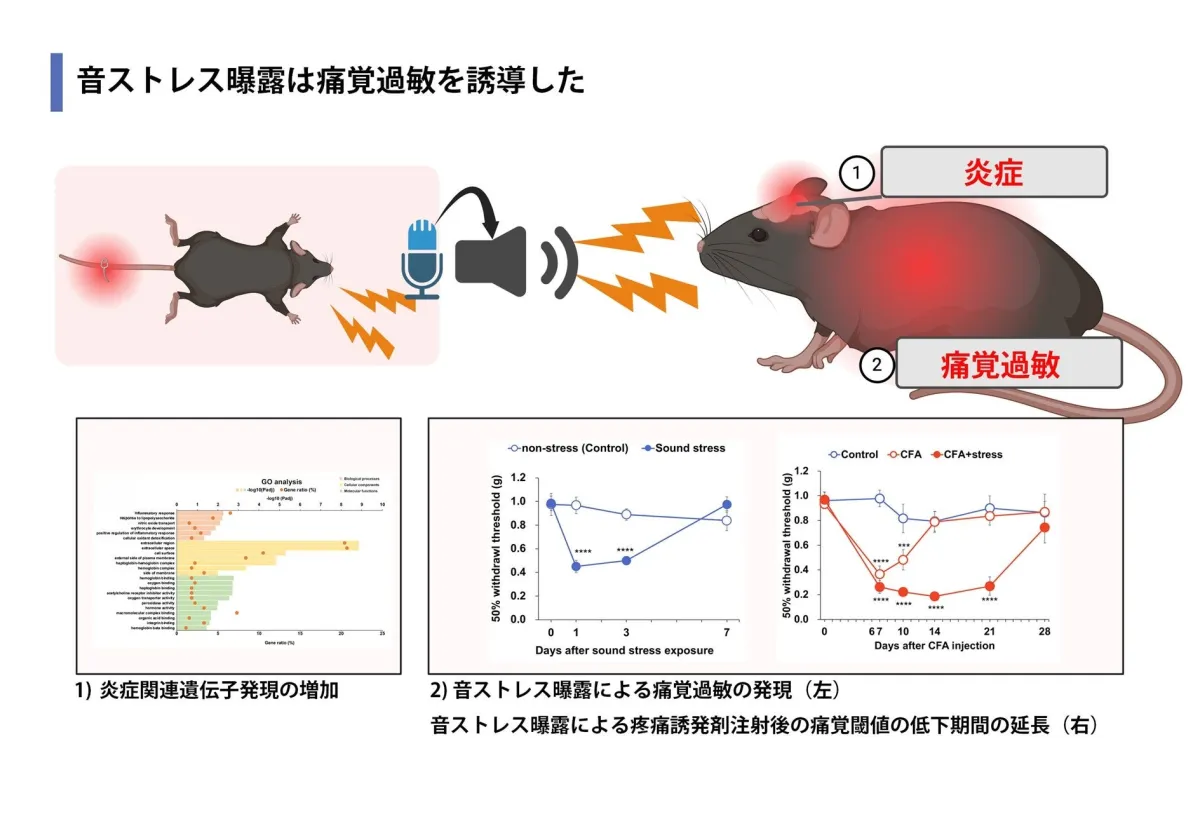
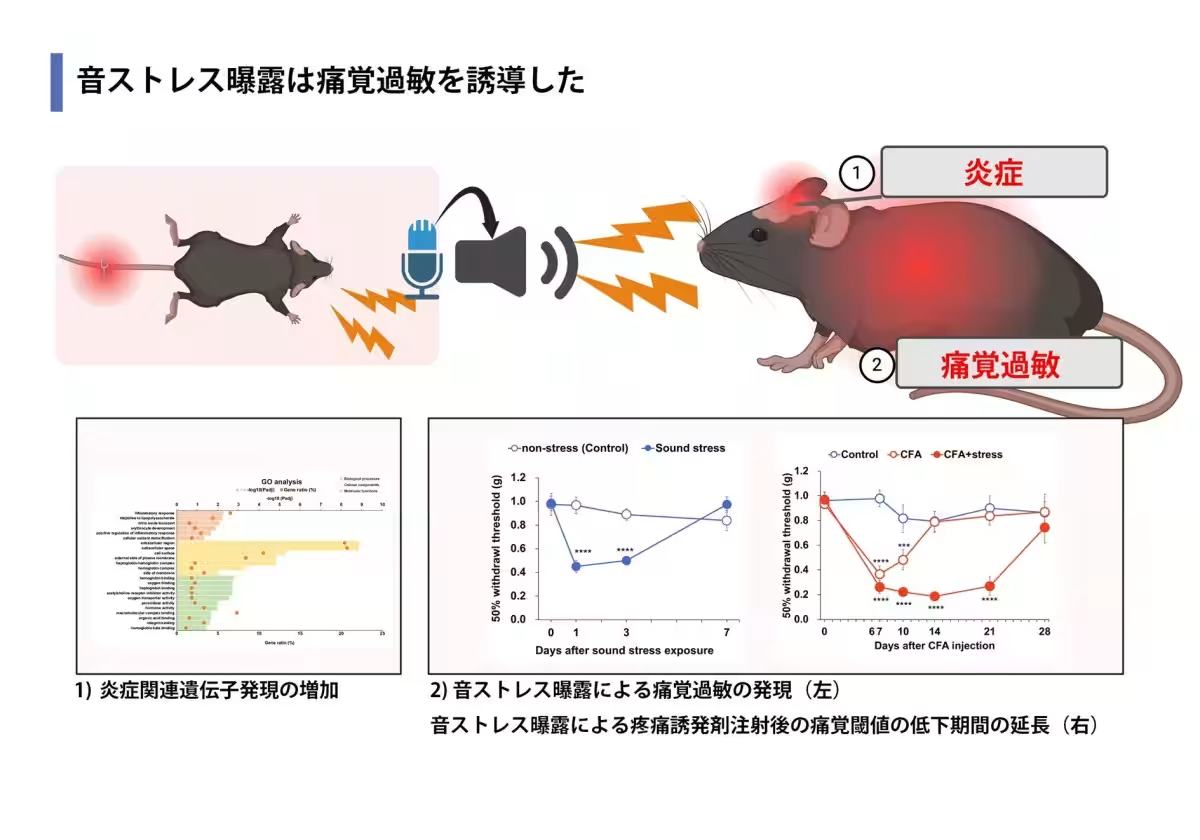
To investigate this, the team inflicted a mild pain stimulus on a group of mice by applying a vascular clip to their tails, during which their ultrasonic vocalizations were recorded. After analyzing the frequencies of these sounds, the researchers exposed separate mice—who had not been subjected to any pain—to this auditory stress, simulating the pain-induced vocalizations at a decibel level of 80 for a four-hour duration.
The results were compelling: these naive mice exhibited heightened sensitivity to pain two days and three days post-exposure, alongside noticeable increases in inflammation-related genes in their brains. These findings reinforce the concept that even without direct physical stimulus, auditory inputs from pain-experiencing peers can evoke a significant pain response in others.
Unpacking the Mechanism
The emotional transmission of pain goes beyond mere auditory stimulus; it encapsulates a complex interplay of physiological and psychological factors. This research elucidates one potential mechanism of this phenomenon, indicating that sound stress from pain vocalizations can instigate inflammatory responses in the brain of non-injured mice, leading to a state of hyperalgesia, a condition marked by heightened sensitivity to pain.
In essence, the study posits that sound, as a non-invasive stimulus, can significantly influence the pain experience and mental state of individuals in its vicinity. Assistant Professor Kasai notes that understanding the implications of sound-induced stress will allow for the development of evidence-based treatment methods for pain management, potentially providing patients with innovative therapeutic avenues.
Application and Future Directions
The implications of this research extend beyond basic science, suggesting new strategies for pain management in clinical settings. With further investigation, the findings could foster the development of therapeutic environments that mitigate pain-related stressors. For example, creating sound environments devoid of pain-associated noises can be explored as a means to enhance recovery and pain management strategies in healthcare settings.
Future studies will aim to deepen the understanding of the connections between emotional transmission, auditory stimuli, and pain perception. Ultimately, establishing a framework for how stress-based pain can be managed through environmental controls and sound modulation could revolutionize pain therapy.
Conclusion
This groundbreaking study, published in PLOS One, highlights the significant role of sound in the emotional transmission of pain, enriching our understanding of both pain perception and communication. As we delve further into the physiological mechanisms behind these findings, there lies potential for innovative therapeutic solutions in the realm of pain management. Researchers anticipate a future where non-invasive strategies can effectively alleviate pain by managing external auditory environments. The journey towards understanding pain continues, and these insights are paving the way for tangible changes in pain treatment approaches worldwide.
Topics Health)
【About Using Articles】
You can freely use the title and article content by linking to the page where the article is posted.
※ Images cannot be used.
【About Links】
Links are free to use.