



Insights from Professor Daimon on 1D Simulation in Space Development
The Value of 1D Simulation in Space Development by Professor Daimon
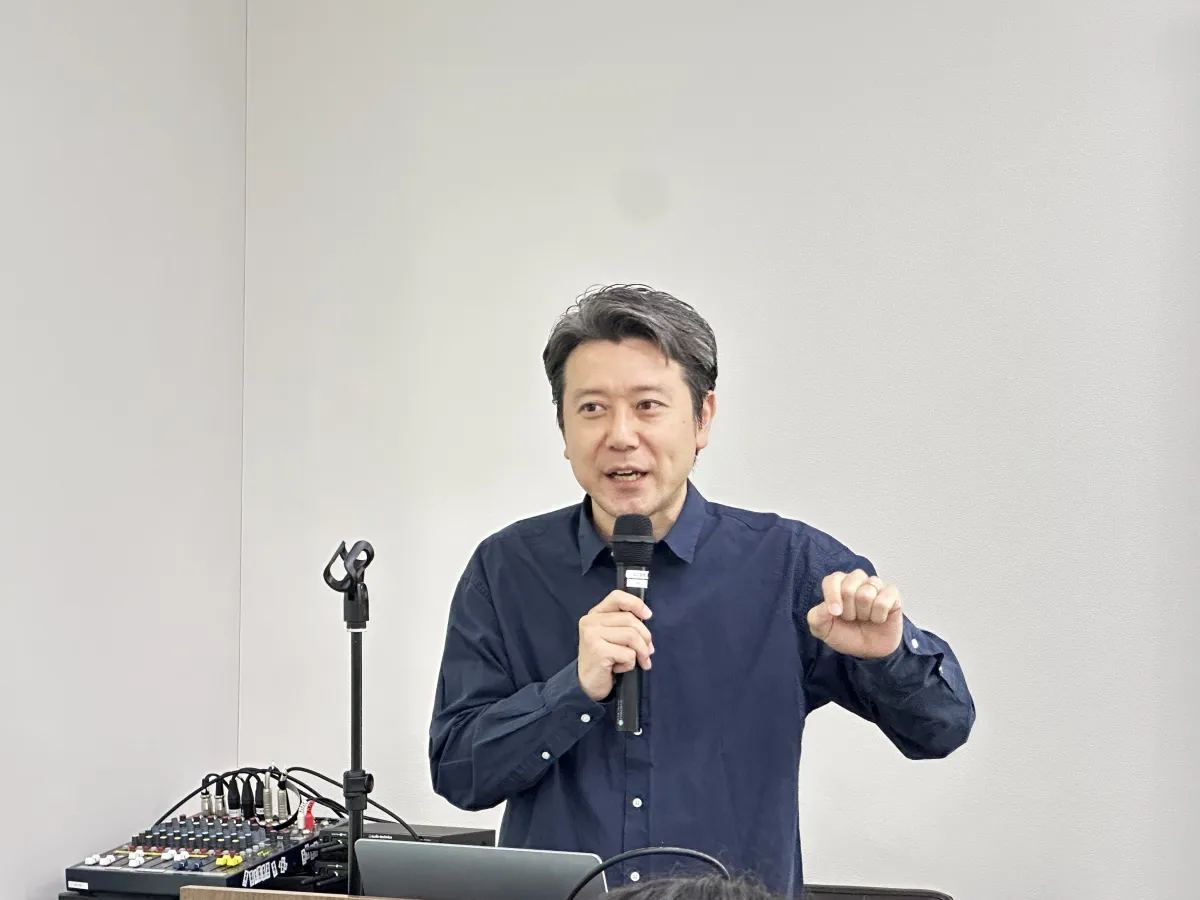
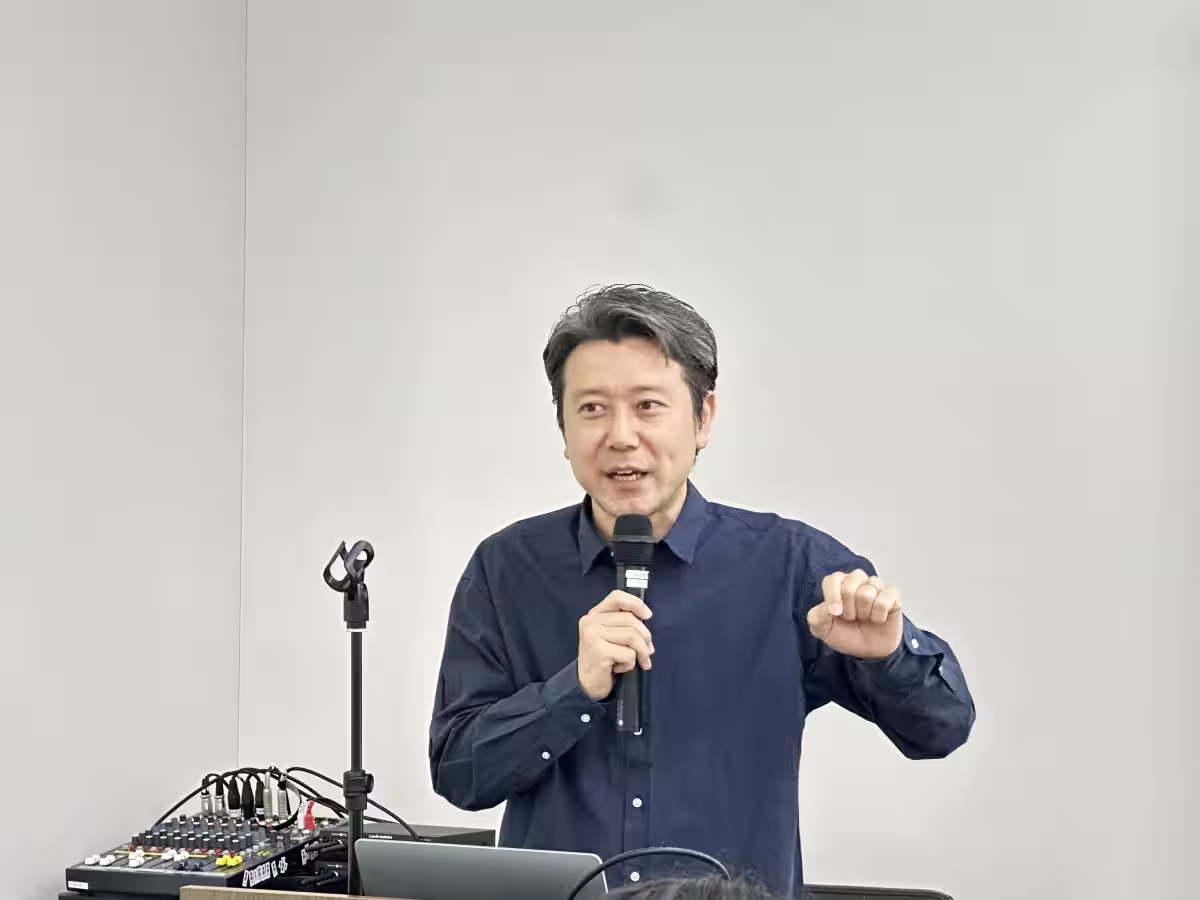
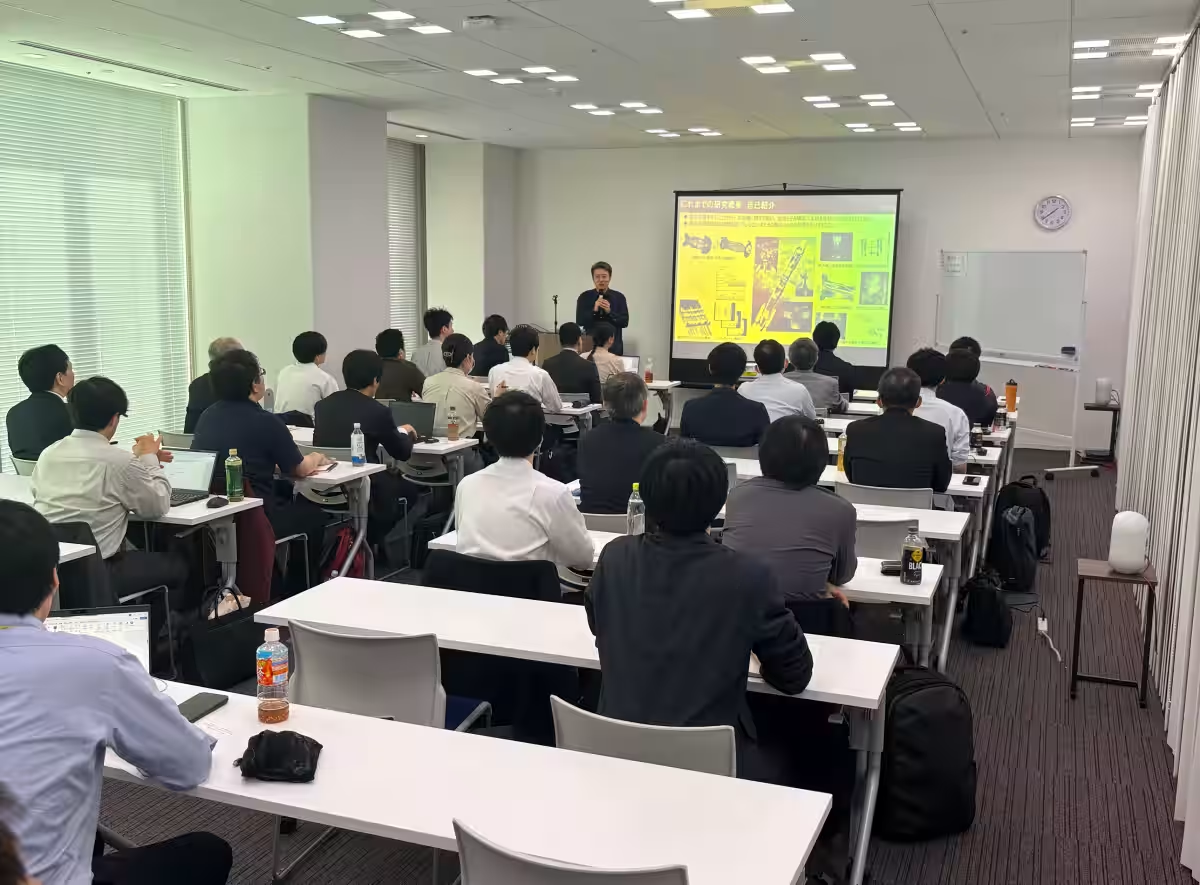
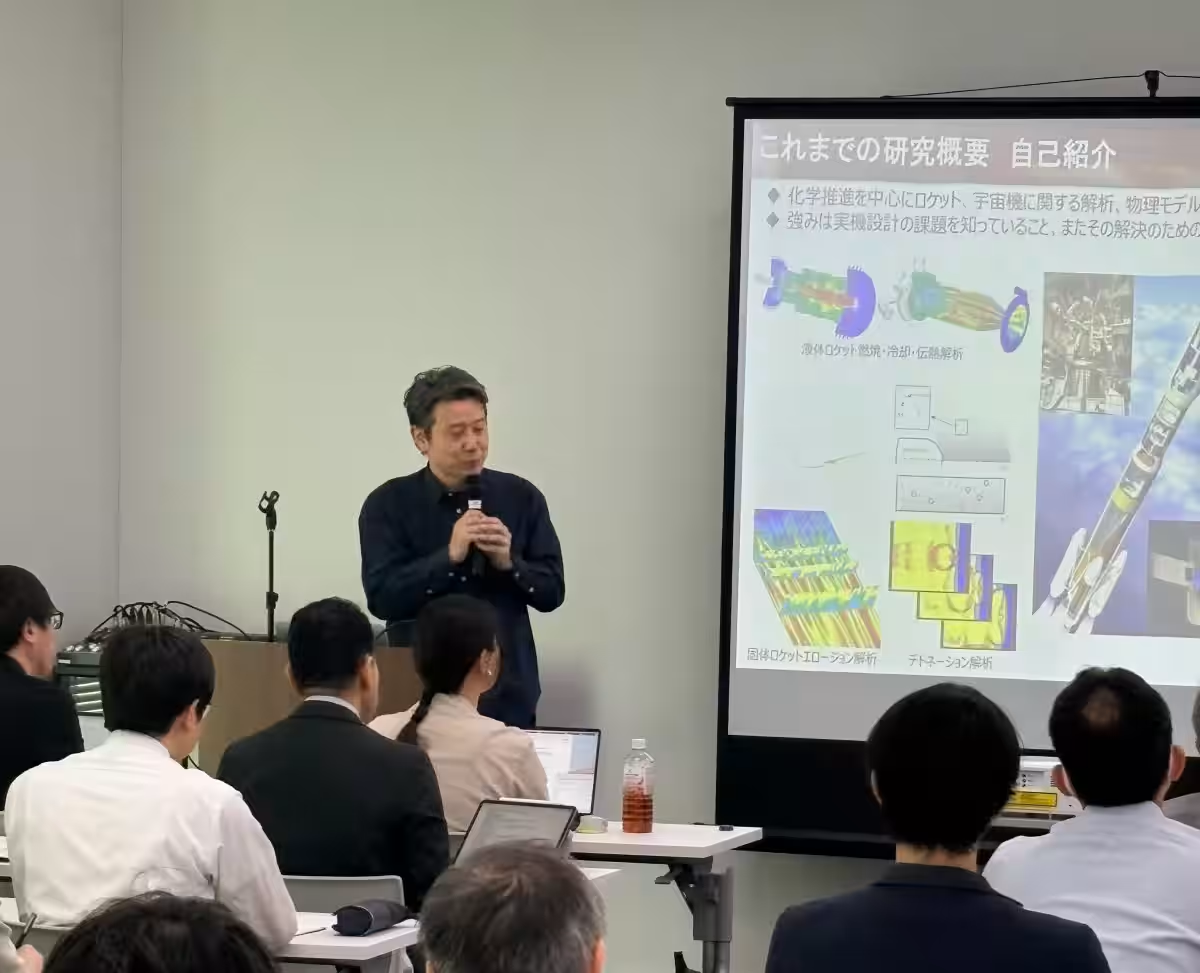
On April 16, 2026, NewtonWorks Corporation held a highly anticipated seminar in Kyobashi, Tokyo, titled “Why 1D? Learning from Space Development: The Essence of Complex Physical Modeling and Its Application to Thermal Energy Management.” The event saw a full house, featuring guest speaker Professor Yu Daimon from Tsukuba University, a leading figure in aerospace development with experience at JAXA.
Importance of 1D Modeling
During his talk, Professor Daimon discussed the crucial role of one-dimensional (1D) modeling in understanding physical phenomena in complex systems. In an era where many engineers grapple with the extensive computational demands of 3D computational fluid dynamics (CFD) and its discrepancies from real-world scenarios, Professor Daimon introduced a thought-provoking perspective: “Are the provided flow and temperature data truly accurate?” This question became the foundation of his exploration into 1D analysis, emphasizing the re-evaluation of input conditions themselves.
By employing 1D simulation as a tool not merely as a simplified version of 3D modeling, but rather as a strategic approach to grasp the causal relationships within entire systems, Professor Daimon illustrated its significance in accurately simulating upstream physical phenomena.
The Role of SimulationX in Engine Development
A notable application of 1D modeling discussed was in the development of the LE-9 engine, the heart of the upcoming H3 rocket launch. The advanced 1D system simulation software, SimulationX, played a significant role in this context, allowing for:
- - The construction of advanced physical models, integrating regeneration cooling, phase change, and combustion reactions.
- - Predictions of behavior under extreme conditions that are difficult to replicate in ground testing.
- - Rapid feedback to ensure overall system stability.
Professor Daimon has consistently demonstrated the importance of these analytical methods by conducting experiments himself to verify data accuracy. His unique integration of real machine tests with advanced simulations has proven to be a vital key in tackling the challenges of space development.
Visualizing the Unknown
Moreover, Professor Daimon addressed the difficulty of controlling phenomena such as contact ignition in thrust control systems. His unwavering belief in the power of visualization allowed him to translate complex ignition dynamics into 1D models, effectively fostering a common language among engineers working on control systems. His collaborative approach to design overcoming conflicts among team members resonated deeply with the seminar audience.
A New Definition of Design Analysis
In closing, Professor Daimon redefined 1D simulation by saying, “1D is not merely a simplified version of 3D. The vital distinction lies in the capability to selectively utilize physical and causal details versus spatial details. It’s not about the superiority of dimensions, but the resolution of understanding that the designer possesses.” He powerfully concluded that design analysis is defined not by what calculations were performed, but by what was genuinely understood throughout the process. His lecture transcended mere technical discourse, ultimately emphasizing the essence of next-generation engineering.
NewtonWorks Contributions
In addition to Professor Daimon’s insights, the seminar featured practical sessions directly applicable to industry by NewtonWorks:
1. Modeling Techniques for Thermal Sources and Fluid Circuits: Practical approaches to efficiently analyze complex thermal fluid systems were discussed.
2. Optimization through Interaction of Details and System: The latest simulation technology covering thermal management from micro-devices to macro urban infrastructures was unveiled.
Through these discussions, NewtonWorks aims to continue contributing to solving increasingly complex design challenges through advanced analytical techniques.
Understanding 1DCAE and SimulationX
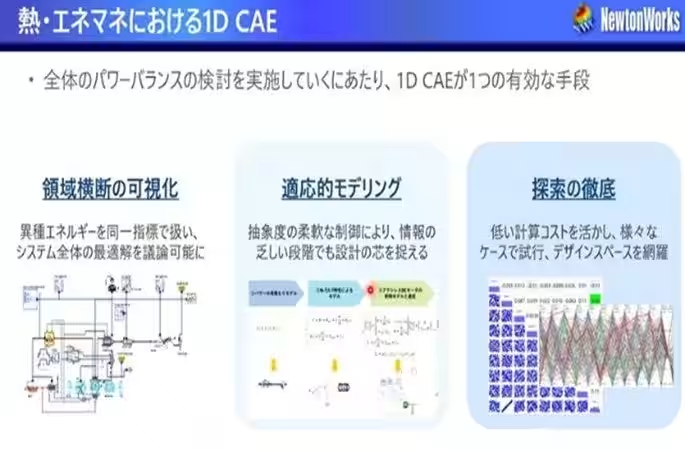
1DCAE: This intelligent design methodology emphasizes validating concepts logically using block diagrams before diving into detailed drawings. Beyond simply representing one dimension, 1DCAE is about simplifying and clearly depicting the essence of systems, allowing for a comprehensive simulation viewpoint at the upstream of design processes.
SimulationX: Developed by Keysight Technologies, SimulationX is a user-friendly 1DCAE software that can be awfully deployed not just by dedicated personnel but also by design and testing staff due to its intuitive GUI. In Japan, it is distributed by NewtonWorks Corporation.
About NewtonWorks Corporation
Headquartered in Chuo-ku, Tokyo, led by President Toshikazu Yamanashi, NewtonWorks stands as an independent engineering solution provider focusing on CAE (Computer Aided Engineering). They boast extensive expertise ranging from micro-level FEM (Finite Element Method) analysis to macro-level 1D-CAE (system simulation) modeling, covering all phases of product development. Their unique approach combines software capabilities with years of support and consulting expertise, demonstrated through the innovative “NewtonSuite” software suite. In pursuing solutions to Japan's manufacturing challenges across various sectors, including automotive and energy, NewtonWorks continues to back the evolution of next-generation product development.
For inquiries:
NewtonWorks Corporation
Marketing Group
Phone: 03-3535-2631
Email: [email protected]

Topics Consumer Technology)
【About Using Articles】
You can freely use the title and article content by linking to the page where the article is posted.
※ Images cannot be used.
【About Links】
Links are free to use.