



The Truth About Red Face: Not Just Rosacea - A Dermatologist's Insight
Understanding Red Face: Common Misconceptions and Treatment Options
Red face, often perceived as merely a sign of rosacea, is a condition that many individuals struggle with but feel uncertain on how to address. The medical entity, Iron Knot Association, led by Dr. Kota Takakua, operates IC Clinic across various locations in Tokyo, focusing on skin health and beauty. They recently conducted a study to better understand perceptions and solutions surrounding facial redness.
Common Misconceptions about Red Face
Many people think, "I notice my red face but don't know what to do," or feel resigned to only covering it up with cosmetics. However, red face encompasses multiple types, each with distinct causes and treatment approaches. A prevalent misunderstanding is equating all instances of red face with rosacea, but medically, it is categorized into four primary types—each requiring specific treatments.
Survey Overview
During a study between December 5 and December 15, 2025, the Iron Knot Association surveyed 300 men and women aged 20 to 50 across the country to explore the awareness and strategies regarding red face. The findings shed light on the general misconceptions and treatment habits of the subjects.
Key Findings from the Survey
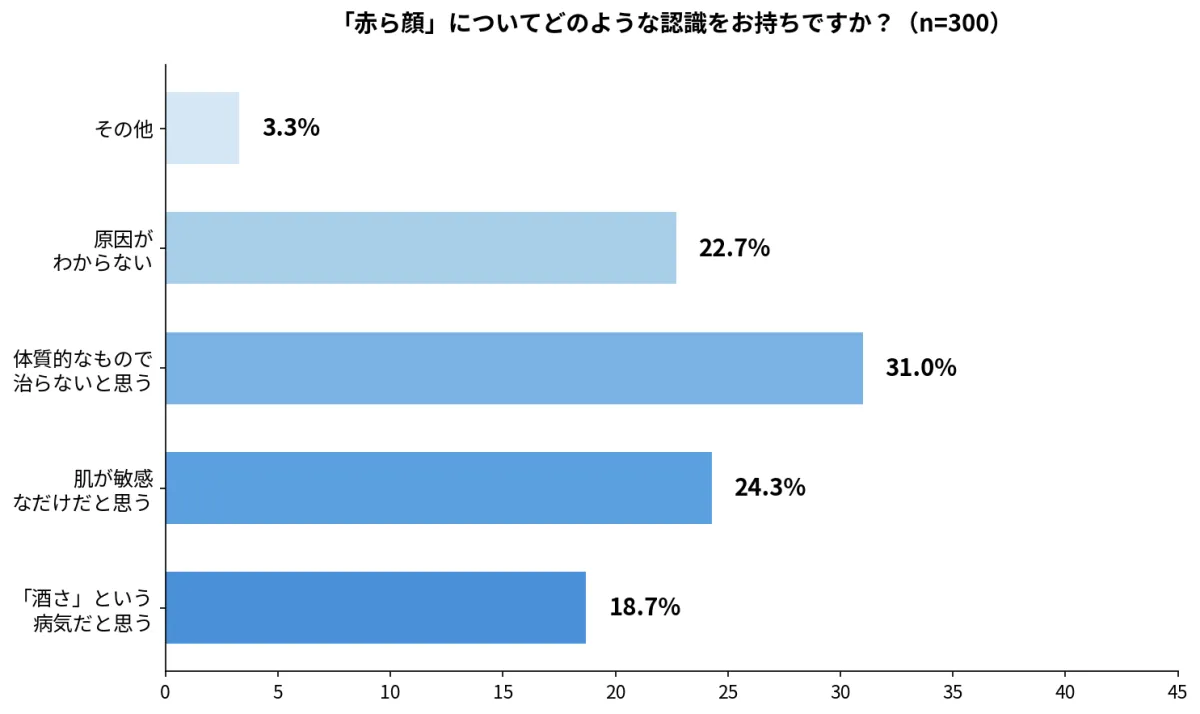
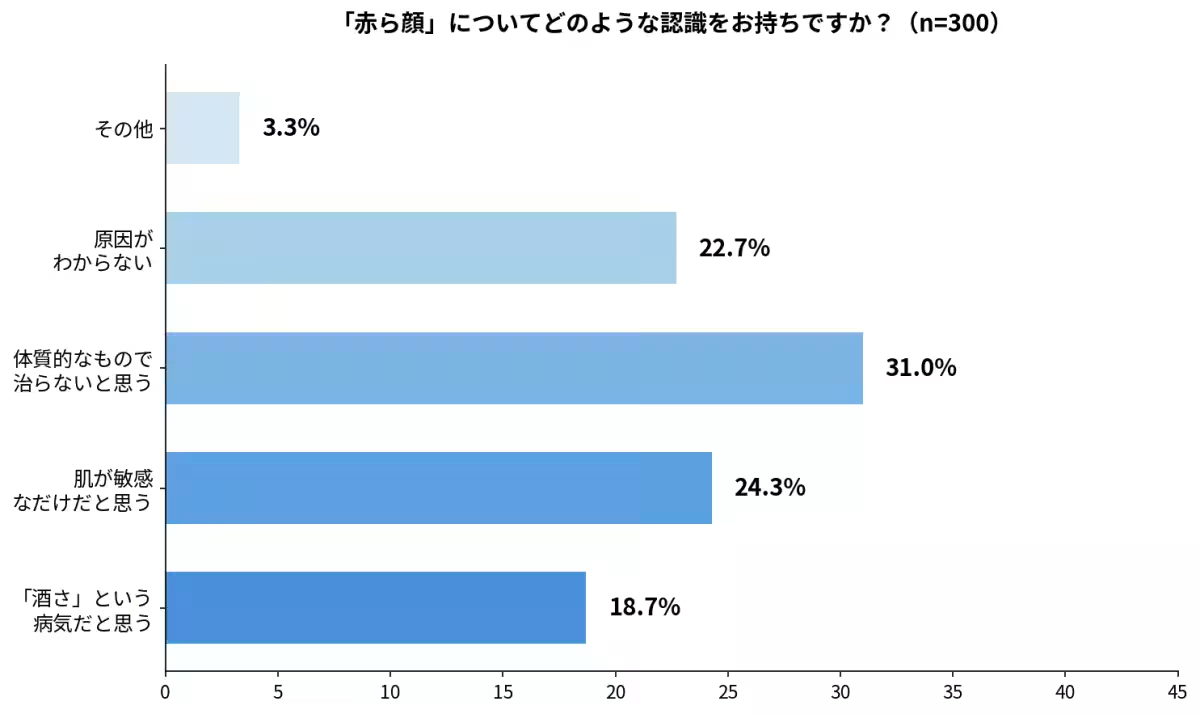
1. Perception of Red Face: Approximately 31% of respondents believed that red face is a genetic issue that cannot be treated. Other common perceptions included sensitivity of the skin (24.3%), unknown cause (22.7%), and recognizing it as rosacea (18.7%). It became clear many remain unaware of the precise causes behind red face.
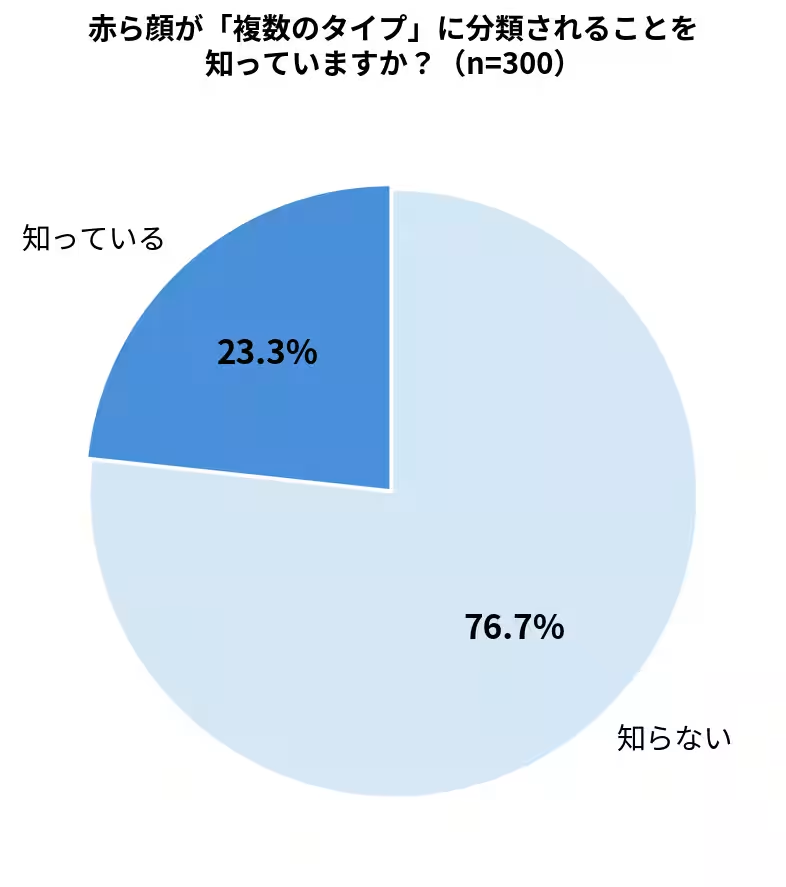
2. Unawareness of Types: When asked whether they understood that red face could be classified into multiple types, a staggering 76.7% responded that they did not. This indicates a significant gap in knowledge about the medical distinctions behind red face.
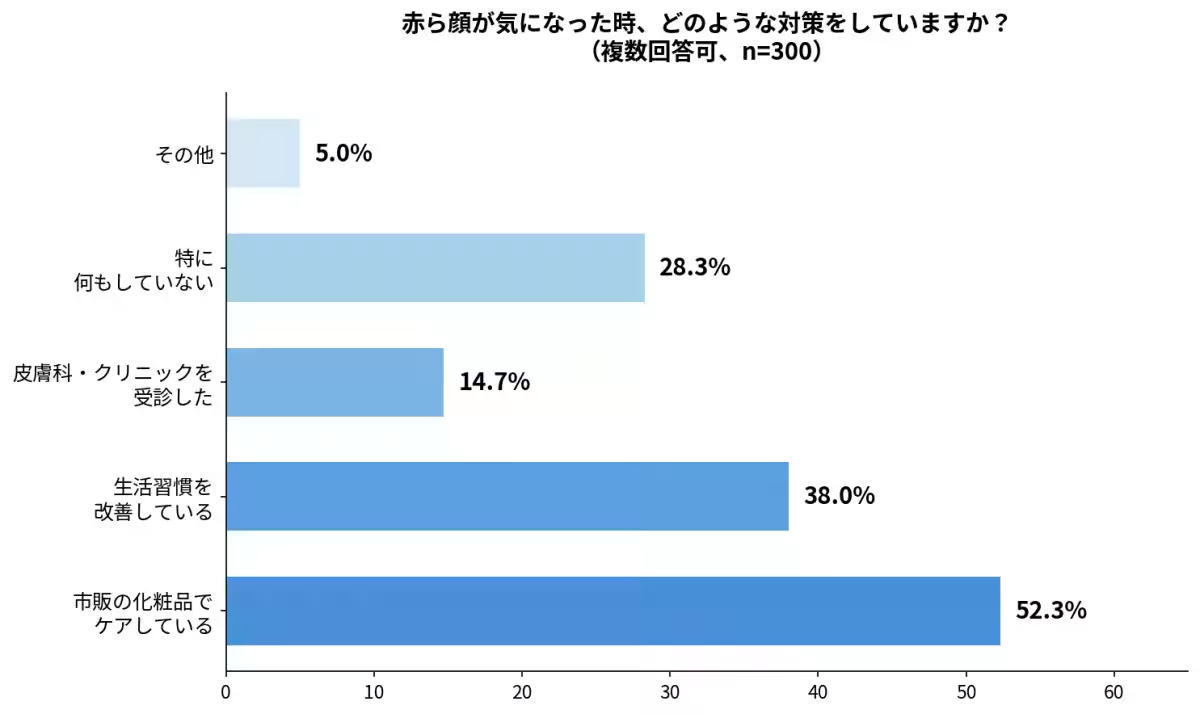
3. Treatment Trends: Among those concerned about their red face, 52.3% opted for over-the-counter cosmetics for care, while 38.0% took steps to improve lifestyle habits. Only about 14.7% consulted dermatologists or clinics, indicating a trend toward self-care rather than professional advice.
Summary Insights
The survey results revealed that nearly 80% of participants were not aware of the classifications of red face, with 30% resigning to the belief that it was an unalterable trait. Furthermore, self-care appears to dominate treatment methods, while consultations with professionals are minimal. However, inadequate self-treatment may exacerbate symptoms in specific types of red face.
Expert Commentary
Dr. Kota Takakua from IC Clinic commented on the findings: “This survey highlighted that many are unaware of facial redness classifications and rely on self-care. In reality, red face can be categorized into four distinct types, each requiring different treatment protocols.”
The Four Types of Red Face Defined by Dermatologists
1. Rosacea
- Characteristics: Persistent redness and flushing in the central facial area (nose, cheeks), chronic inflammatory condition that can lead to acne-like bumps and nasal enlargement.
- Treatment: Options include topical medications (metronidazole, azelaic acid), oral medications, and laser therapy.
- Prevention: Avoid irritants, alcohol, and sudden temperature changes.
2. Seborrheic Dermatitis
- Characteristics: Flaky skin and redness in oil-rich areas (around the nose, between eyebrows, hairline) triggered by the proliferation of Malassezia fungus.
- Treatment: Antifungal topical medications, gentle cleansing and moisturizing, and short-term steroid use are effective, along with lifestyle changes (sleep, diet, stress management).
3. Telangiectasia
- Characteristics: Visible dilated blood vessels, creating linear or web-like patterns primarily on the cheeks and nose, often caused by aging, sun exposure, or alcohol consumption.
- Treatment: Laser treatments (like V-beam) are effective. Protection against UV rays and avoiding triggers (alcohol, spicy food, saunas) is recommended.
4. Contact Dermatitis / Allergic Reactions
- Characteristics: Redness, itching, and swelling caused by skin contact with irritants or allergens such as cosmetics or metals, typically appearing after exposure.
- Treatment: Identification and avoidance of triggers is essential. Patch testing may be necessary for diagnosis, and low-irritant products should be used as substitutes.
“Thus, red face is not a singular symptom. For example, attempting to cover up rosacea with cosmetics can aggravate the condition. Likewise, a lack of comprehensive treatment for seborrheic dermatitis won’t lead to proper improvement. It’s crucial to seek accurate diagnosis from a specialist for tailored treatment,” Dr. Takakua elaborated.
Risks of Neglecting Red Face
Ignoring untreated red face can lead to serious repercussions, such as:
- - Chronicity or Worsening of Symptoms: Without treatment, redness may become established and harder to reverse.
- - Compromised Skin Barrier: Ongoing inflammation can heighten skin sensitivity and invite further issues.
- - Aesthetic Concerns: Conditions like rosacea may result in visible changes, such as nasal enlargement.
- - Psychological Stress: Concern for appearance can lead to lowered self-esteem and reduced quality of life.
Guidelines for Seeking Professional Help
Consult a dermatologist or beauty clinic if you experience symptoms such as:
- - Persistent redness lasting several weeks.
- - Ineffectiveness of over-the-counter treatments.
- - Accompanying spots, peeling, or itching alongside redness.
- - Symptoms escalating in response to certain foods or environments.
- - Concerns about appearance impacting daily life.
Frequently Asked Questions (FAQs)
Q. Is red face an immutable trait?
A. Not necessarily; proper treatment can lead to improvement. While 31.0% view it as an unchangeable trait, tailored treatments exist based on the underlying cause.
Q. What types of red face are recognized?
A. Four major types include rosacea, seborrheic dermatitis, telangiectasia, and contact dermatitis. The survey revealed 76.7% were unaware of this classification.
Q. Are over-the-counter products safe to use?
A. Depending on the type, they can sometimes be counterproductive. While 52.3% of respondents used commercial products, some may exacerbate conditions like rosacea. A professional diagnosis is advisable for proper treatment.
Q. What happens if red face is left untreated?
A. It risks chronicity and worsening; untreated rosacea can lead to changes like nasal enlargements. Chronic conditions diminish the skin’s barrier and could lead to further complications.
Q. When should I see a dermatologist?
A. If redness persists for weeks, if no improvement occurs with OTC remedies, if there’s an emergence of bumps or peeling, or if your quality of life is impacted, then it's time to consult a specialist. Less than 14.7% seek professional advice despite the importance of precise diagnosis and tailored treatment strategies.
Seeking Help from IC Clinic
If you wish to learn more about different types of red face or seek personalized treatment options, feel free to schedule a consultation with us. At IC Clinic, our board-certified specialists are here to address your concerns thoroughly and help devise the best treatment plan based on the type and severity of your symptoms.
About Dr. Kota Takakua
- - Education: Graduated from the University of Tokyo School of Medicine in 2009.
- - Experience: Worked at several prestigious hospitals until joining IC Clinic as head of treatment in 2019.
Key Benefits of IC Clinic
- - Consultations by board-certified specialists with ample experience and knowledge.
- - Transparent pricing with detailed estimates provided during consultations.
- - Extensive outcomes showcased for reference.
- - Free consultations offering a comfortable atmosphere for discussions.
- - Conveniently located near major train stations in Shinjuku, Shibuya, Ueno, Ikebukuro, Tokyo, and Omiya.
- - Equipped with cutting-edge medical devices for effective red face treatment.
Clinic Locations
- - IC Clinic Shinjuku
Access: 3 mins walk from Shinjuku Station South Exit.
- - IC Clinic Shibuya
Access: 3 mins walk from Shibuya Station.
- - IC Clinic Ueno
Access: 1 min walk from Ueno Station.
- - IC Clinic Ikebukuro
Access: 5 mins walk from Ikebukuro Station East Exit.
- - IC Clinic Tokyo
Access: 5 mins walk from Tokyo Station.
- - IC Clinic Omiya
Access: 1 min walk from Omiya Station East Exit.
Book Your Appointment Today!
Topics Health)
【About Using Articles】
You can freely use the title and article content by linking to the page where the article is posted.
※ Images cannot be used.
【About Links】
Links are free to use.