



Preparing for the 2026 Labor Standards Law Reform with R-Shift
Preparing for the 2026 Labor Standards Law Reform with R-Shift
As we approach 2026, significant changes to the Labor Standards Act are on the horizon, marking the first major revision in about 40 years. The new regulations aim to address the various issues arising from long working hours and inadequate breaks that have become commonplace in many workplaces. This reform is part of a broader movement to reassess work styles in Japan and enhance employee health and productivity.
Background of Labor Law Reform
The impetus for the 2026 reform stems from the urgent need to clarify legal standards regarding work practices. Companies, especially those in retail, food service, and caregiving sectors that utilize shift systems, have highlighted pressing issues such as:
- - The need to correct long working hours
- - Ensuring employee health and minimizing risks
- - Preventing mistakes in attendance management and wage calculations
With these objectives in mind, the new regulations will significantly alter standards for shift and attendance management that have previously lacked clear requirements.
Key Points of the Labor Law Reform
The upcoming labor law revisions introduce several essential changes, particularly regarding shift and attendance practices. Key points include:
1. Limit on Continuous Working Days: Continuous working days will now be limited to a maximum of 13 days. Previously, under a 4-week work schedule with 4 days off, employees could theoretically work consecutively for 48 days. The new regulations propose a shift to a 2-week work schedule that would prevent working beyond 13 continuous days.
2. Mandatory Work Intervals: A new requirement will ensure that there is at least an 11-hour break between the end of one shift and the start of the next. Previously, this was merely a recommendation, but now it is set to become a legal obligation to reduce the risks associated with inadequate rest.
3. Designating Official Holidays: Companies must now clearly specify which days constitute official holidays when offering a 2-day weekend. This change aims to eliminate ambiguities that have previously led to wage calculation errors and unpaid wages.
Challenges in the Field and Risks of Labor Law Violations
While these regulatory changes aim to protect workers, shift managers in the field often face overwhelming challenges. Many struggle to balance operational efficiency with regulatory compliance, potentially resulting in unintentional deviations from legal requirements in shift planning.
How R-Shift Addresses These Changes
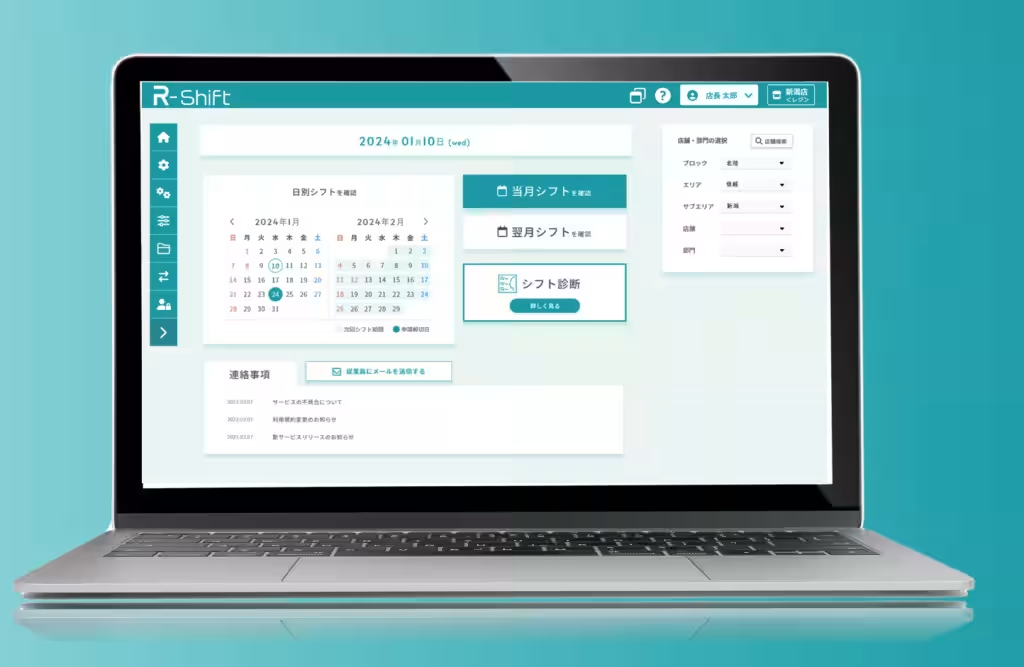
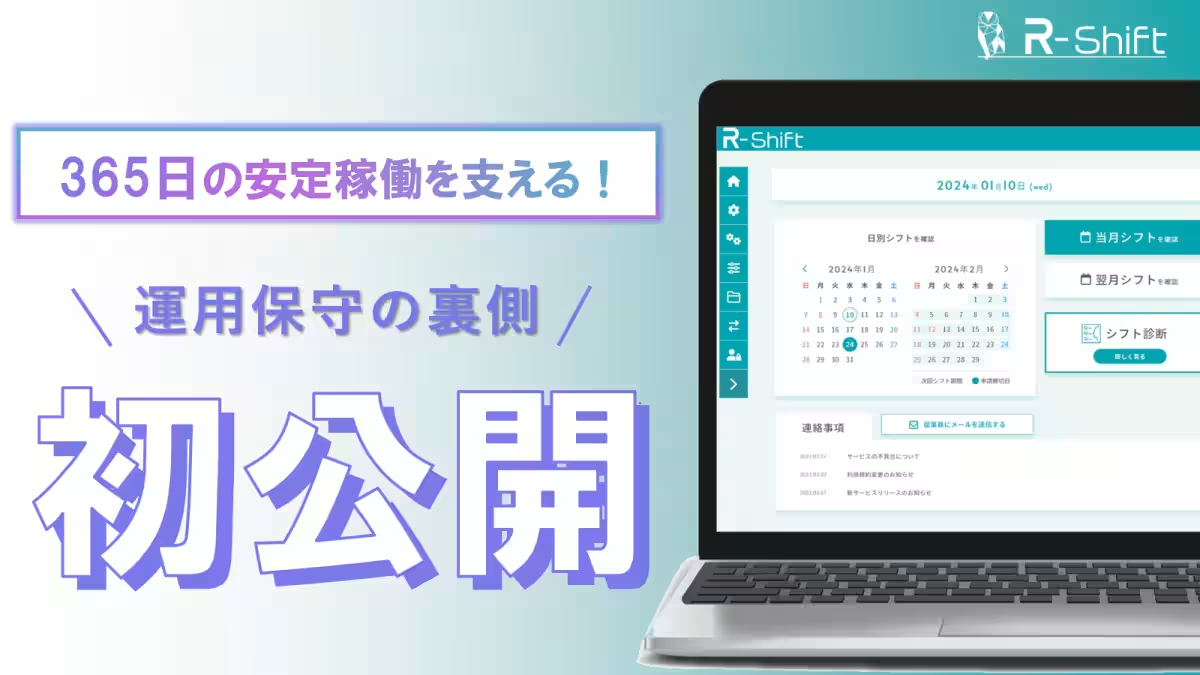
オーエムネットワーク株式会社's cloud-based shift management system, R-Shift, is equipped with features that comply with the upcoming labor law changes, making it a reliable tool as we approach 2026.
Key Features of R-Shift:
1. Setting Work Rules (Continuous Working Days): Users can set a maximum limit for consecutive working days. Custom alerts can be configured, with warnings triggered after 6 days and errors after 10 days of consecutive work.
2. Defining Work Intervals: It allows users to specify hours between shifts, ensuring the automated creation of schedules that meet the required break durations. Manual adjustments that violate these breaks will also trigger warnings.
3. Adding Holiday Categories: R-Shift enables users to differentiate between legal holidays and other days off, providing automatic assignment capabilities for holidays.
These functionalities empower managers to create schedules in adherence to labor regulations, significantly reducing the risk of non-compliance.
Monitoring Attendance with R-Kintai
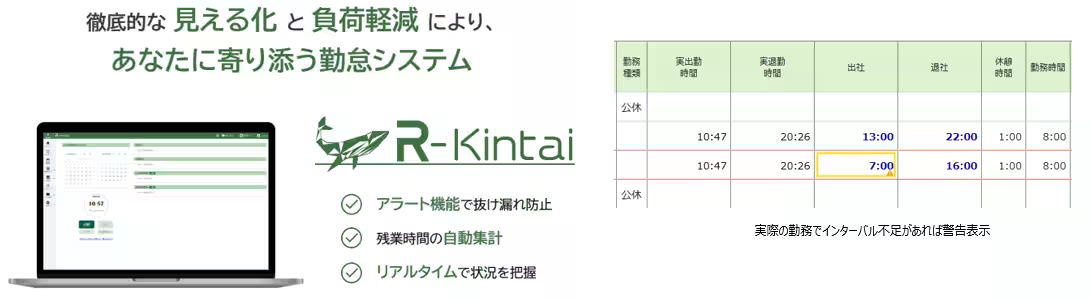
In addition to R-Shift, the attendance management system R-Kintai offers the tools necessary for tracking real work conditions. It identifies discrepancies such as missed intervals or excessive continuous working days, and it can notify managers about these issues effectively—eliminating the need for manual checks and ensuring seamless regulatory compliance.
R-Shift and R-Kintai: Evolving Solutions
Our goal is to transform the prevailing negative perception of shift and attendance management as burdensome to a more positive view that facilitates ease of management and employee satisfaction. Therefore, R-Shift and R-Kintai will continue evolving to meet the changing landscape of workplace policies and expectations.
Conclusion
R-Shift and R-Kintai are digital transformation tools designed to solve the challenges faced by retail and service organizations in managing shifts and attendance. Provided by オーエムネットワーク株式会社, these solutions are tailored to meet our clients' needs. For detailed information, please visit the official R-Shift and R-Kintai websites.




Topics Other)
【About Using Articles】
You can freely use the title and article content by linking to the page where the article is posted.
※ Images cannot be used.
【About Links】
Links are free to use.