



Development of Bio-Inspired Non-Contact Sweat Sensor for Early Hydration Monitoring
Breakthrough in Sweat Sensing Technology: The Future of Hydration Monitoring
In a groundbreaking development, researchers from Waseda University have created a bio-inspired non-contact sweat sensor that could revolutionize the monitoring of hydration levels, potentially preventing dehydration and heatstroke. This innovative sensor mimics the microtexture of rose petals, allowing it to detect sweat ions with high sensitivity without direct contact with the skin.
The Innovative Features of the New Sensor
The newly developed thin-film sensor boasts several advanced features:
- - Enhanced Ion Detection: Utilizing a microtexture that resembles rose petals, the sensor can measure ion concentrations in sweat non-invasively. This advancement allows for up to three times greater moisture retention compared to previous technologies, significantly increasing its reliability during physical activities.
- - Self-Cleaning Mechanism: The sensor exhibits superior self-cleaning properties; it can retain water droplets and expel them when they exceed a certain threshold, thus maintaining accuracy during prolonged use. This capability minimizes the risk of skin irritation associated with traditional, adhesive-based sensors.
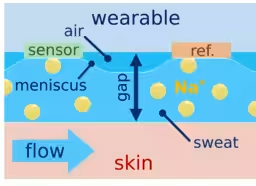
- - Non-Contact Measurement: It can operate effectively with a gap of up to 2mm between the skin and sensor, making it comfortable for long-term wear and reducing the potential for skin damage.
Importance for Health Monitoring
The implications of this technology extend far beyond sports. The ability to monitor dehydration and electrolyte balance in real-time can significantly enhance safety in various situations, particularly for athletes and workers in hot environments. Professor Shinjiro Umezu and his team are optimistic about the application of this sensor in human-machine interfaces, such as prosthetics and exoskeletons, where feedback on hydration could improve functionality and comfort.
Technical Specifications and Testing
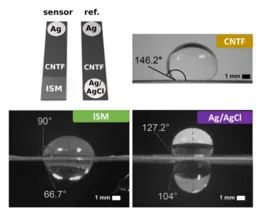
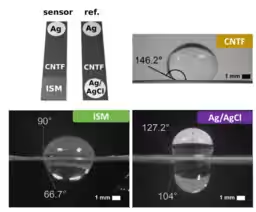
The research team detailed their work in an article published in the journal Cyborg and Bionic Systems. The study involved precise engineering techniques to reproduce the rose petal effect in the ion-selective membrane (ISM), resulting in significant performance improvements. Key features noted in tests include:
- - Water Retention: The bio-mimetic ISM demonstrated a water retention capacity three times greater than untreated membranes.
- - Increased Surface Area: By introducing petal-like structures, the effective surface area of the membrane increased, enhancing its sensitivity to Na+ ions by 1.1 to 1.2 times.
- - Response Times: Even with a maximum two-millimeter gap, the sensor maintained response times of less than a second, ensuring timely updates on hydration levels.
Future Prospects and Applications
Looking ahead, the researchers see immense potential in broadening the applications of this technology. It could serve in various fields, including healthcare, industrial settings, and sports science. The non-adhesive nature of the sensor allows for longer use without skin irritation, making it suitable for elderly patients and those with skin conditions, thus expanding the home monitoring market.
Professor Umezu conveyed his vision, stating that the project showcases how nature-inspired designs can enhance technology, ultimately improving our quality of life. The aim is to develop accessible bio-integrated tools that can deliver smarter and more effective healthcare solutions.
Challenges Ahead
Despite these advancements, the team acknowledges the need for further development, including enhancing the durability of carbon nanotube electrodes and optimizing mass production processes. Future efforts will focus on integrating AI to analyze sweat data, leading to optimized dehydration prediction algorithms.
Conclusion
The innovative non-contact sweat sensor developed by Waseda University shows promise in transforming hydration monitoring, with potential applications that may contribute to better health outcomes across various demographics. As technology continues to blend with our understanding of nature, the opportunities for improvement in personal health management remain vast.
Topics Health)
【About Using Articles】
You can freely use the title and article content by linking to the page where the article is posted.
※ Images cannot be used.
【About Links】
Links are free to use.