



Okayama University's Synergy Session Explores Future Applications of Superconductivity
Okayama University's Synergy Session: Pioneering Future Innovations
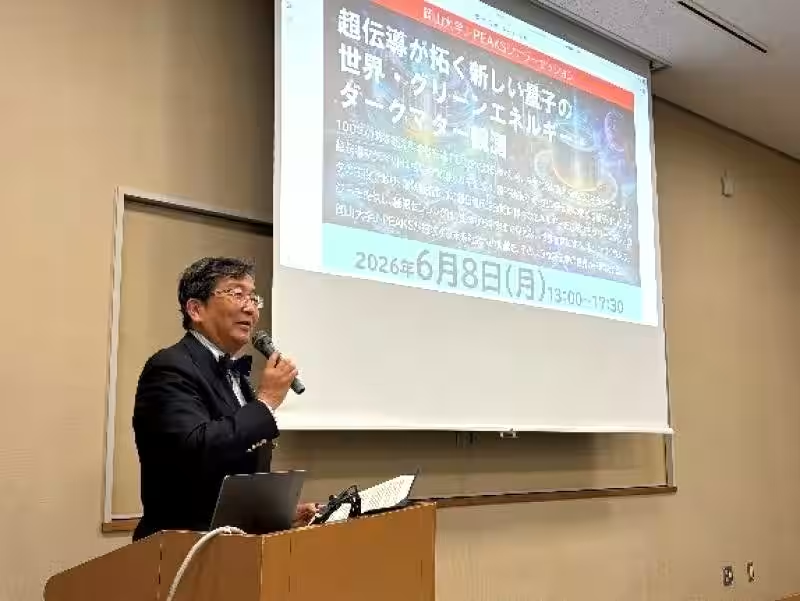
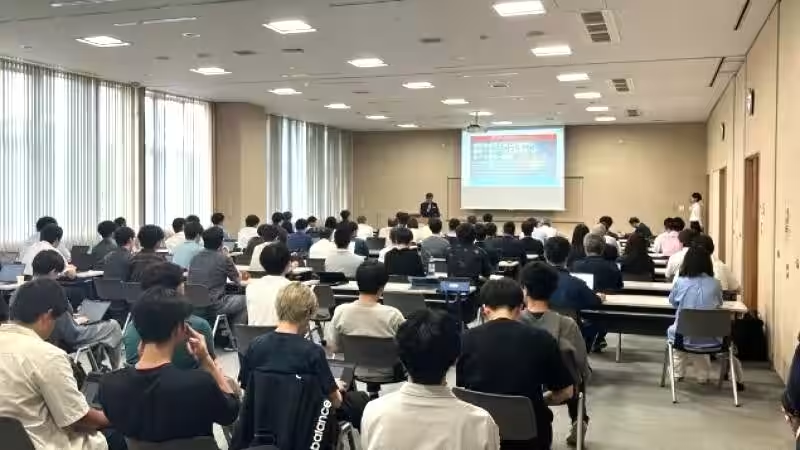
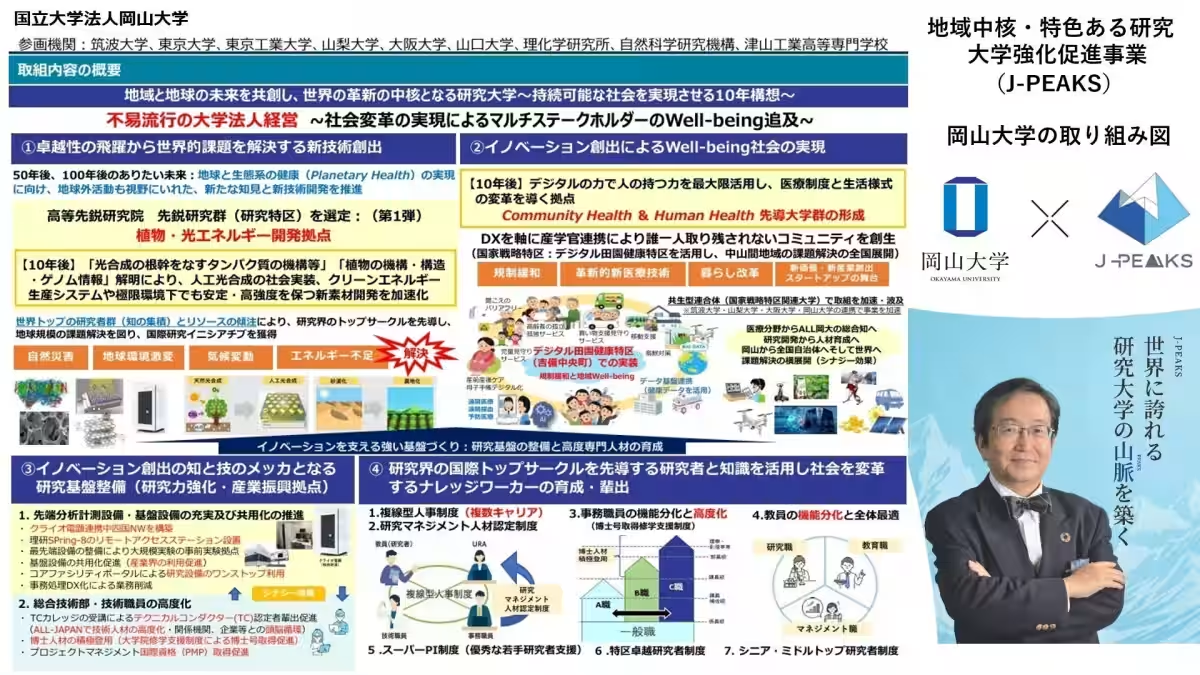
On June 8, 2026, Okayama University, under the leadership of President Yasuto Nasu, hosted an engaging event titled "Superconductivity: Paving the Way for a New Quantum World, Green Energy, and Dark Matter Observation." This event took place at the Tsushima Campus's 50th Anniversary Memorial Hall and was part of the Ministry of Education's innovative research initiative known as J-PEAKS (a project aimed at strengthening regional core and distinctive research universities).
Superconductivity, a phenomenon where materials exhibit zero electrical resistance at extremely low temperatures, holds incredible potential for efficient energy transport and the creation of powerful magnetic fields. The purpose of this symposium was to explore how superconductivity, a field that has fascinated scientists for over a century, can drive innovations in future societies. More than 100 attendees, including researchers, students, and industry representatives, gathered to share insights.
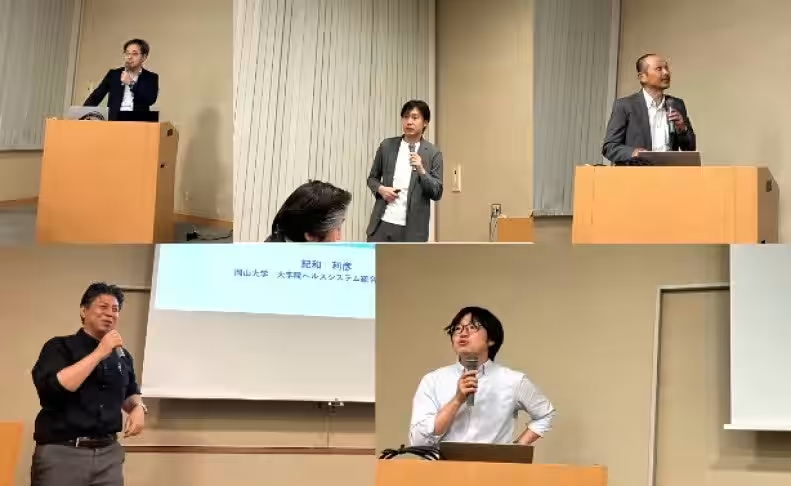
The event opened with a welcoming address by President Nasu, who emphasized the importance of J-PEAKS in connecting fundamental scientific knowledge with societal applications and innovative research. The keynote address was presented by Professor Takamitsu Kisu, the head of the Graduate School of Systems and Information Sciences at Kyushu University. He discussed the development of superconducting infrastructure technology aimed at the early realization of fusion energy, a critical component in the pursuit of sustainable energy solutions. Professor Kisu provided an expert perspective on the future prospects of superconducting magnets pivotal to nuclear fusion power.
In addition to the keynote, Professor Kohei Higashikawa from Kyushu University delivered an invited lecture on "Superconducting Power Technologies for a Carbon Neutral Society," highlighting real-world applications and case studies that illustrate the connection between superconductivity and societal needs.
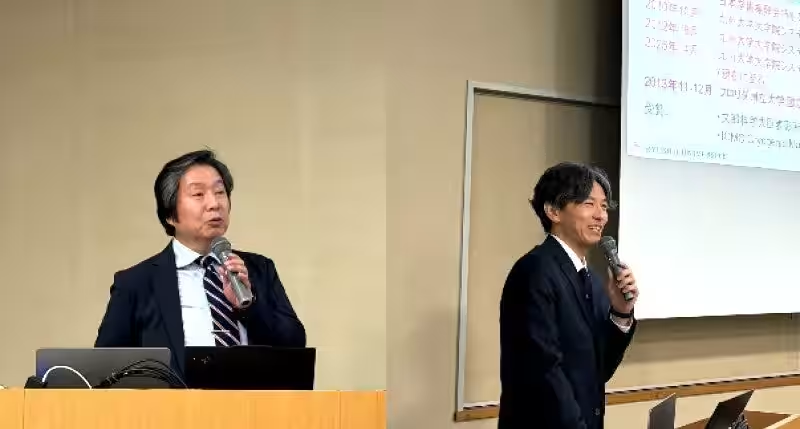
Following these lectures, five presentations were made by researchers from Okayama University: Associate Professor Hiroshi Ueda, Professor Naruharu Kasahara, Associate Professor Hiroto Ando, Professor Toshihiko Kiwa, and Associate Professor Shunsuke Adachi. Topics ranged from high-temperature superconductivity applications in energy and medicine, exotic superconductors, superconductivity/magnetic nanolayer films, superconducting quantum interference devices (SQUIDs), to dark matter observation. Each presentation showcased distinct ways superconductivity is applied across different fields, fostering new knowledge creation and deepening participants' understanding through interactive Q&A sessions.
This symposium not only reinforced collaborations among researchers at Okayama University and beyond but also served as a fertile ground for spawning new partnerships.
Within the context of its research infrastructure, Okayama University plays a key role in the "Plant and Light Energy Development Hub," dedicated to creating clean energy through innovations, including artificial photosynthesis. Superconductivity is crucial as it supports the development of devices and materials for energy transfer derived from photosynthesis and plant proteins. Leveraging the insights and networks gained from the symposium, Okayama University aims to continue producing groundbreaking outcomes in superconductivity and other cutting-edge research that contributes to the sustainability of both local and global environments.
As Okayama University progresses as an open, distinctive research institution, further exciting developments are anticipated for the region and the broader community. Stay tuned for more updates on their innovative initiatives and collaborative projects.
Topics Other)
【About Using Articles】
You can freely use the title and article content by linking to the page where the article is posted.
※ Images cannot be used.
【About Links】
Links are free to use.