



Okayama University Launches Project Management Training to Foster Leadership for University Administration
Okayama University Launches Project Management Training Program
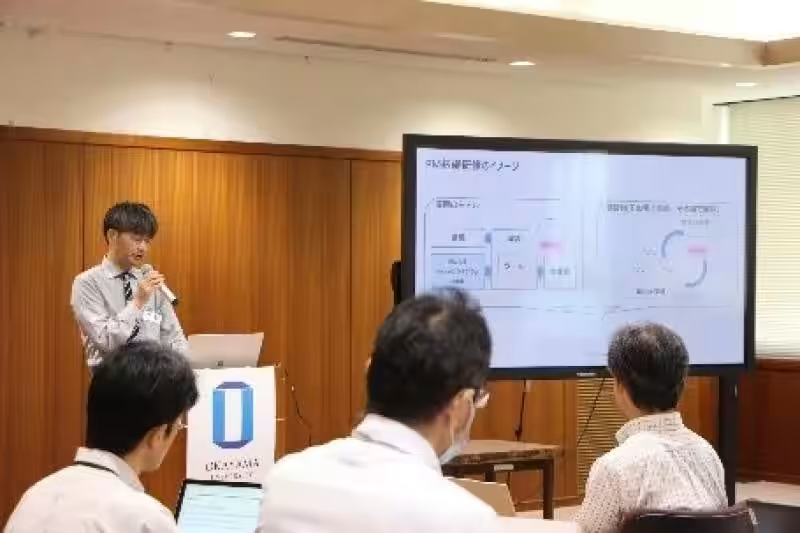
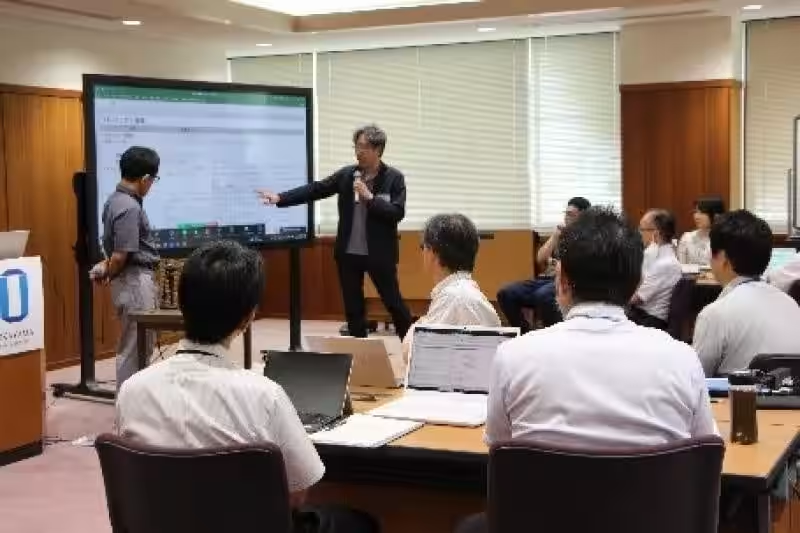
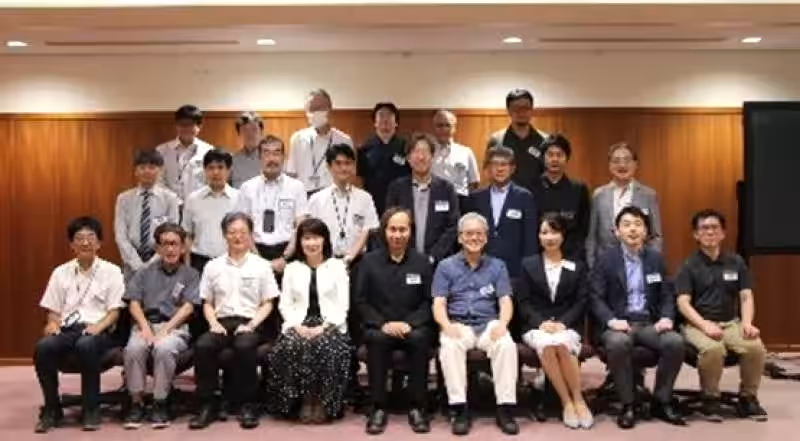
On September 20, 2025, Okayama University held its first day of the "Basic Project Management Training" at the Tsushima Campus. This event brought together several key staff members, including five vice-directors of various departments and technical and administrative staff, to participate in lectures and group activities aimed at empowering future university leaders.
The program is a collaborative effort with the Japan Chapter of the Project Management Institute (PMI), an organization recognized as the largest in the field of project management globally. Its goal is to equip university personnel with foundational project management skills and foster their integration with the existing expertise in education, research, and administrative operations. This initiative hopes to develop a new generation of leaders who will be instrumental in university management.
To facilitate practical learning, participants explored project management techniques using the hypothetical theme of organizing a "Summer Festival for Children," ensuring they could apply concepts in realistic scenarios. Throughout the training, an experienced team from the PMI Japan Chapter, including Vice President Shingo Fujii and program leaders Masuo Ishizuka and Akio Torimoto, guided participants in mastering the essentials of project management.
The opening address by Yukari Mimura, Director of Planning, Assessment, and General Affairs, underscored the expectations from this training. The first lecture provided an overview of project management, followed by an engaging exercise centered around creating a "project charter" for the summer festival. This activity allowed participants to map out specific issues and provided a deeper understanding of the project management process.
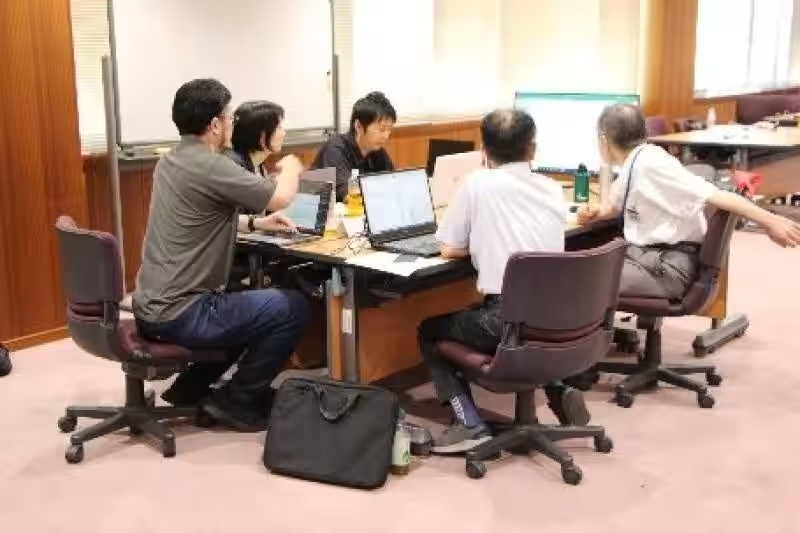
Following this introduction, participants divided into groups of three to four, where they collaborated on developing the project charter for the "Okayama University Vision Symposium." Guided by advisors from PMI Japan, these groups presented their findings at the conclusion of the session. The feedback was overwhelmingly positive, with participants noting how having the support of advisors enhanced their understanding and how valuable it was to share diverse ideas in planning events.
The training served as a bridge for staff from various operational backgrounds to engage in common project management practices, promoting insights from multiple perspectives within the university. By dismantling barriers between different departments, participants enhanced their collaborative skills, contributing to a more integrated approach to university administration.
As this initiative continues, Okayama University aims to ensure that faculty and staff can adapt to evolving challenges and responsibilities inherent in operating a distinctive research institution. The training is part of the larger "Regional Core and Unique Research University Promotion Project (J-PEAKS)," a program to strengthen the university’s distinctive attributes and facilitate regional development.
President Masato Nasu emphasized that achieving the long-term vision of Okayama University by 2050 requires strategic initiatives like this training. While some may view project management as complex or cumbersome, he highlighted its importance in synchronizing efforts across diverse fields and creating a common language for collaboration. The university is committed to continuously adapting and enhancing its project management capabilities and developing skilled personnel to lead these efforts.
In summary, this foundational training aims not only to enhance individual skills but also to foster a culture of shared governance and collaborative success within Okayama University. Future endeavors will build on this groundwork to ensure that staff are well-equipped to follow through on innovative projects that further the institution’s mission.
Topics Other)
【About Using Articles】
You can freely use the title and article content by linking to the page where the article is posted.
※ Images cannot be used.
【About Links】
Links are free to use.