



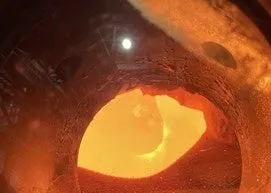
UBE Mitsubishi Cement Begins World-First Commercial Scale Ammonia Co-firing for Decarbonization
UBE Mitsubishi Cement's Innovative Approach to Decarbonization
In a significant step towards lowering carbon emissions in the cement industry, UBE Mitsubishi Cement, based in Chiyoda, Tokyo, has kicked off the world's first commercial-scale demonstration of ammonia co-firing in cement kilns. This undertaking aims to replace approximately 30% of the coal used in cement production with ammonia, a next-generation energy source recognized for its potential to reduce CO₂ emissions during combustion.
A Journey from Laboratory to Commercial Plant
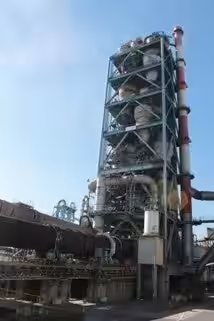
Since the beginning of 2023, UBE Mitsubishi Cement has been making strides to build the infrastructure necessary for ammonia supply and conducting trials with real equipment. The company anticipates completing the construction of its facility by 2025, after which it will enter a validation phase using actual commercial-scale equipment for cement manufacturing. Notably, the company has already achieved its goal of substituting 30% of coal thermal energy with ammonia in cement kilns, while similar tests for calcining kilns are in progress.
This advancement signifies a shift from laboratory experiments to a commercial reality, showcasing the potential of ammonia as a sustainable alternative energy source in the cement manufacturing process.
Overcoming Challenges in Combustion Control
One of the primary challenges UBE faces is the control of combustion temperatures when mixing ammonia with coal. An increased ammonia co-firing ratio can lead to lower burner flame temperatures, which may hinder adequate clinker formation. Moreover, there are concerns about increased emissions of nitrogen oxides (NOx) in the combustion exhaust gases. To tackle these issues, UBE has performed extensive combustion experiments in small combustion furnaces and utilized thermal fluid dynamics simulation software to refine combustion control technology.
As the company progresses, it plans to combine not just ammonia but also recycling fuels from waste materials, such as plastic, to maintain high-quality cement production in a stable manner.
Looking Ahead: Goals for a Sustainable Future
In alignment with its mid-term management strategy

Topics Other)
【About Using Articles】
You can freely use the title and article content by linking to the page where the article is posted.
※ Images cannot be used.
【About Links】
Links are free to use.