



Tsumura Hosts Award Ceremony for 'Frailty Haiku' Contest with Over 30,000 Entries
Tsumura’s 'Frailty Haiku' Award Ceremony: A Celebration of Aging Awareness
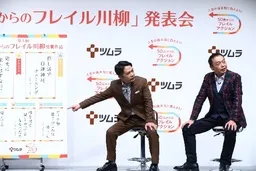
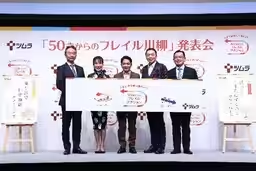
In an inspiring event held on January 27, 2026, at the Tokyo International Forum, Tsumura Co., Ltd. announced the winners of its 'Frailty Haiku' contest, part of the initiative aimed at raising awareness about frailty as we age. The ceremony took place just ahead of Frailty Day, celebrated on February 1 each year, promoting the importance of recognizing and addressing frailty early on.
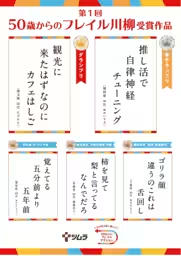
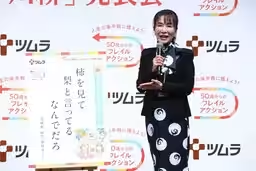
With a staggering 31,937 entries from all over Japan, the contest invited participants aged 50 and above to express their thoughts on frailty through haiku. The grand prize was awarded to the haiku:
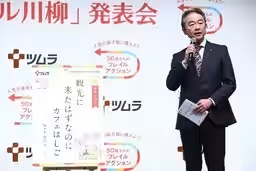
“Came for sightseeing, but ended up cafe-hopping.”
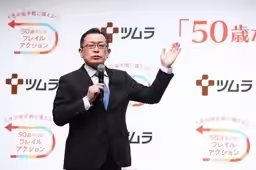
The head of Tsumura's Corporate Communications Department, Makoto Kitamura, commended the winner, saying the poignant words reflected a sincere desire for continual happiness and mobility, enabled by early frailty interventions.
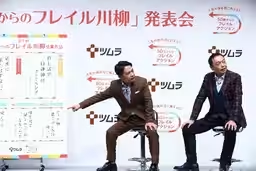
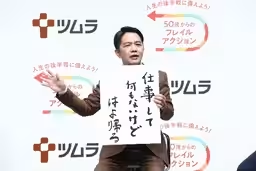
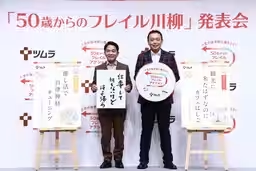
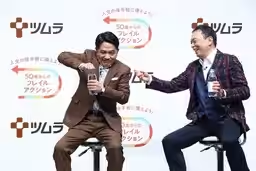
Adding a touch of humor, popular comedians Nakagawa-ke, who served as special judges, awarded their own unique prize to another haiku:
“Remembering more from five years ago than five minutes ago.”
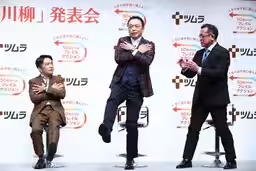
With their characteristic wit, they shared personal anecdotes, engaging the audience with hearty laughter while also addressing the serious implications of frailty among the aging population.
Expert Insights on Frailty
The event also featured a keynote from Dr. Katsuya Iijima, professor at the University of Tokyo's Research Center for the Aging Society. He provided a clear definition of frailty—characterized by a reduction in physical and mental resilience due to aging—and emphasized that recognizing frailty should be viewed as relevant to one’s current life, not as a distant concern. Dr. Iijima discussed vital preventive measures to mitigate frailty's impact, including strengthening physical activity, enhancing nutrition, and promoting social engagement.
The ceremony also highlighted various themes emerging from the submitted haikus, notably:
1. Recognizing physical decline: Many haikus illustrated the gradual realization of one’s own frailty through everyday experiences.
2. Engagement through interests: The role of hobbies and interests ('oshi-katsu') emerged as significant in fostering connections that keep individuals active and engaged.
3. Family involvement: A communal approach to addressing frailty also came through, showcasing the importance of families in supporting one another to maintain health and vitality.
Notable humor came from Nakagawa-ke’s live demonstration of frailty checks, which included challenges like opening a carbonated drink bottle to test grip strength. These light-hearted moments effectively drove home the message that frailty assessments can become a part of daily life.
What Next?
As part of its ongoing commitment to health and well-being, Tsumura plans to continue the 'Frailty Action' initiative. Kitamura stated, “We will leverage the insights and stories gleaned from these submissions to further promote awareness of frailty as we approach next year's Frailty Day.”
The event concluded with a call to action, encouraging attendees to be proactive in their health management. Dr. Iijima relevantly shared, “The importance of maintaining strength doesn't start in old age, but in your 50s.” His parting message resonated: if you suspect you may be experiencing increased frailty, seek help early.
In an age where people are encouraged to live to a hundred, Tsumura’s initiative actively works to ensure that not just the quantity, but the quality of life is enriched for all, fostering a community where everyone can live actively and healthily.
For more details on the 'Frailty Action' initiative and to see a full list of winning haikus, please refer to Tsumura's official page.
Topics Health)
【About Using Articles】
You can freely use the title and article content by linking to the page where the article is posted.
※ Images cannot be used.
【About Links】
Links are free to use.