



Mujin Automates Mixed Container Sorting for Small Manufacturers, Leading to New Standards
Revolutionizing Automation in Small Manufacturing: Mujin's Innovative Solutions
In a groundbreaking move, Mujin Japan has successfully automated the sorting process of mixed containers at Matsuda Electric Manufacturing, becoming the first company to introduce this technology in the small manufacturing sector. This innovative approach utilizes advanced automation technologies to enhance efficiency in logistics and production operations.
Background: Challenges in In-House Logistics
Automotive parts factories typically receive a variety of components from numerous suppliers, all stored in mixed containers. These containers are transported as mixed pallets, and the logistics operations from receiving, storing, supplying to production, and ultimately shipping, rely heavily on these containers. However, there were several complications in the sorting process of mixed pallets:
1. Variety in Shapes and Sizes: The containers come in diverse forms and sizes, often showing signs of deformation due to wear over time.
2. Complex Loading Patterns: Each pallet presents unique loading arrangements, including different orientations and spacing between boxes.
3. Grip Stability Challenges: The limited edges available for robotic grip necessitate careful calculation of the suitable gripping points and movements for each container.
Traditionally, these complexities made automation very challenging, with manual labor being the common solution for unloading heavy mixed containers. In response to difficulties in recruitment and to advance their production techniques, Matsuda Electric took a bold step towards automating the unloading process, which had previously posed significant challenges.
The System: Automating Mixed Container Unloading with Physical AI
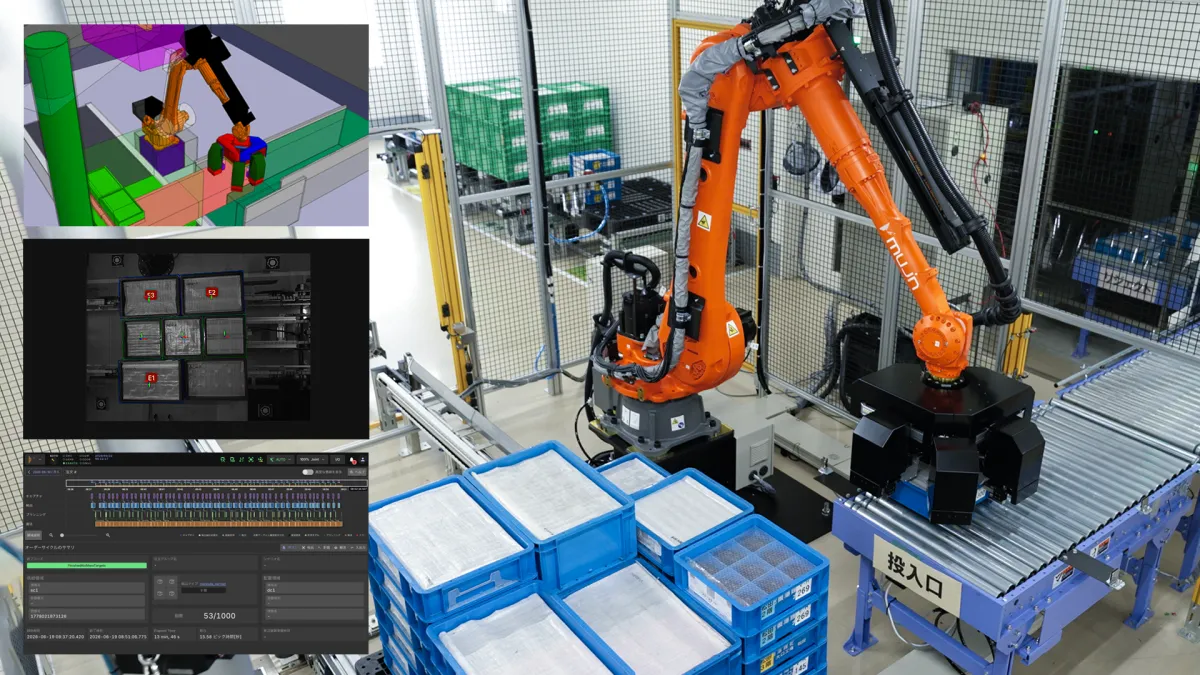
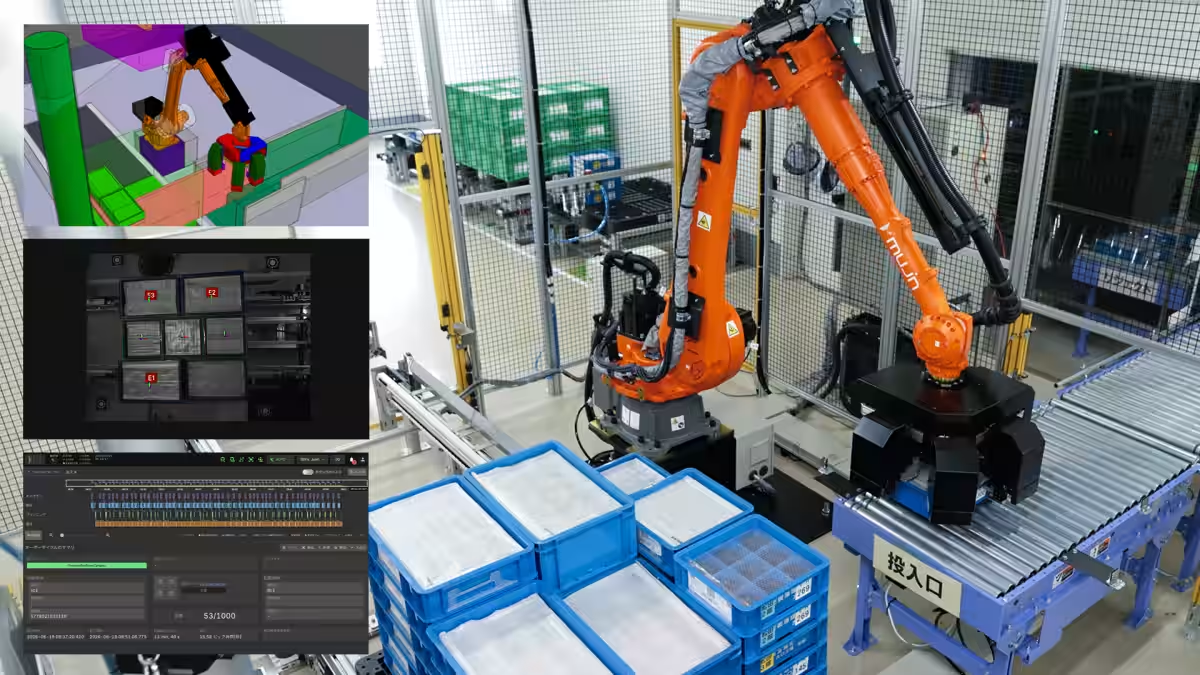
The recent implementation consists of two depalletizing robots equipped with MujinOS, specifically aimed at improving the unloading process from mixed pallets and facilitating the storing of finished products into an automatic warehouse.
3D Recognition for Depalletizing
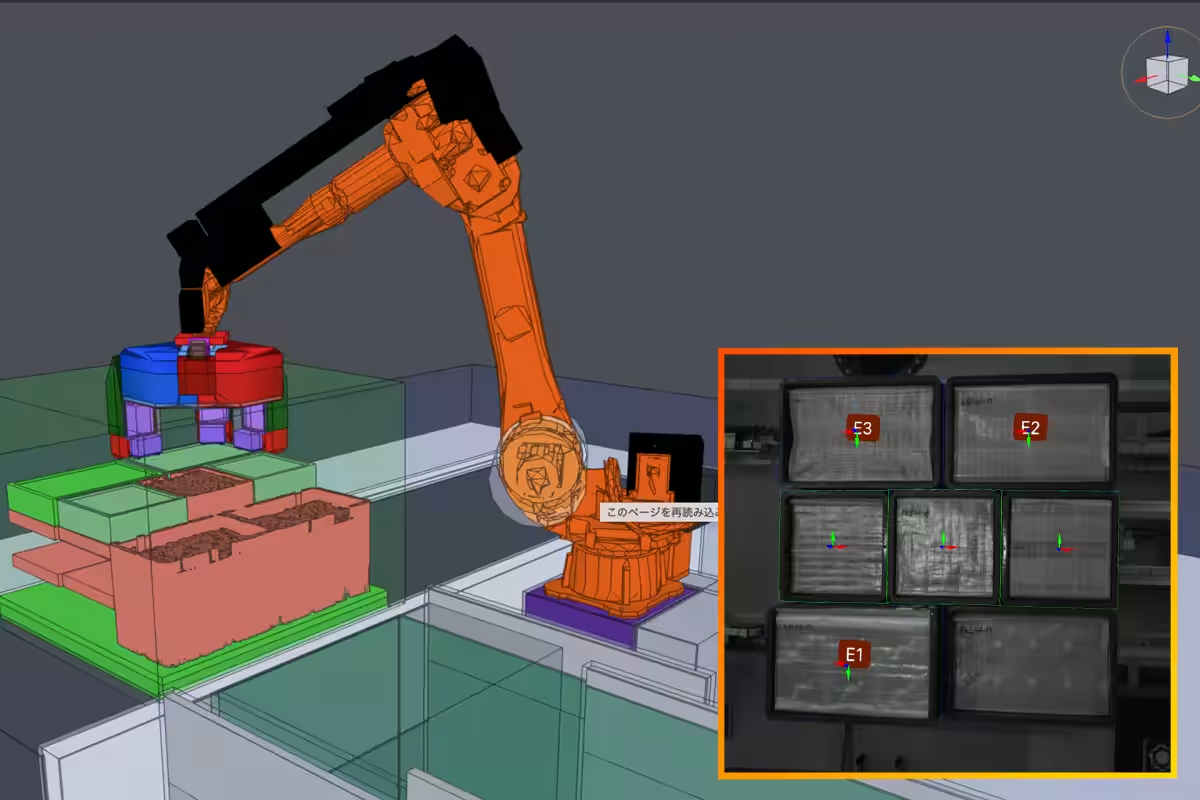
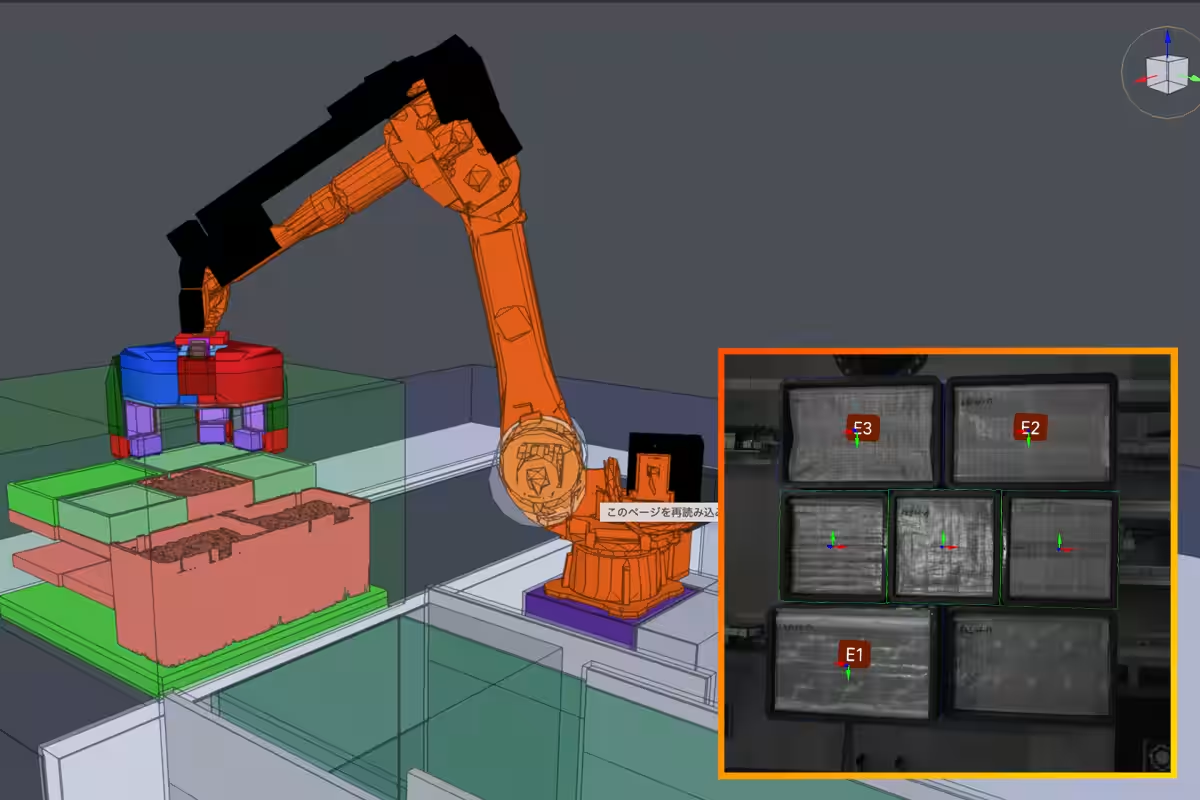
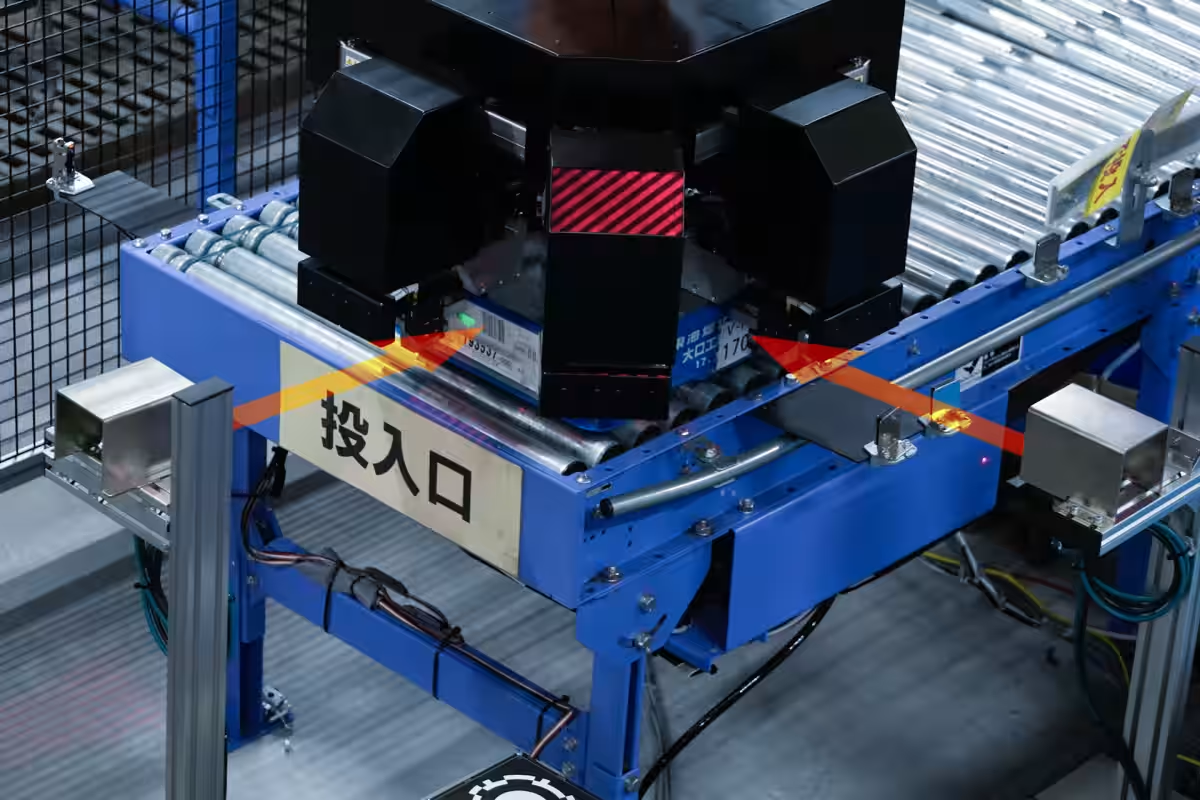
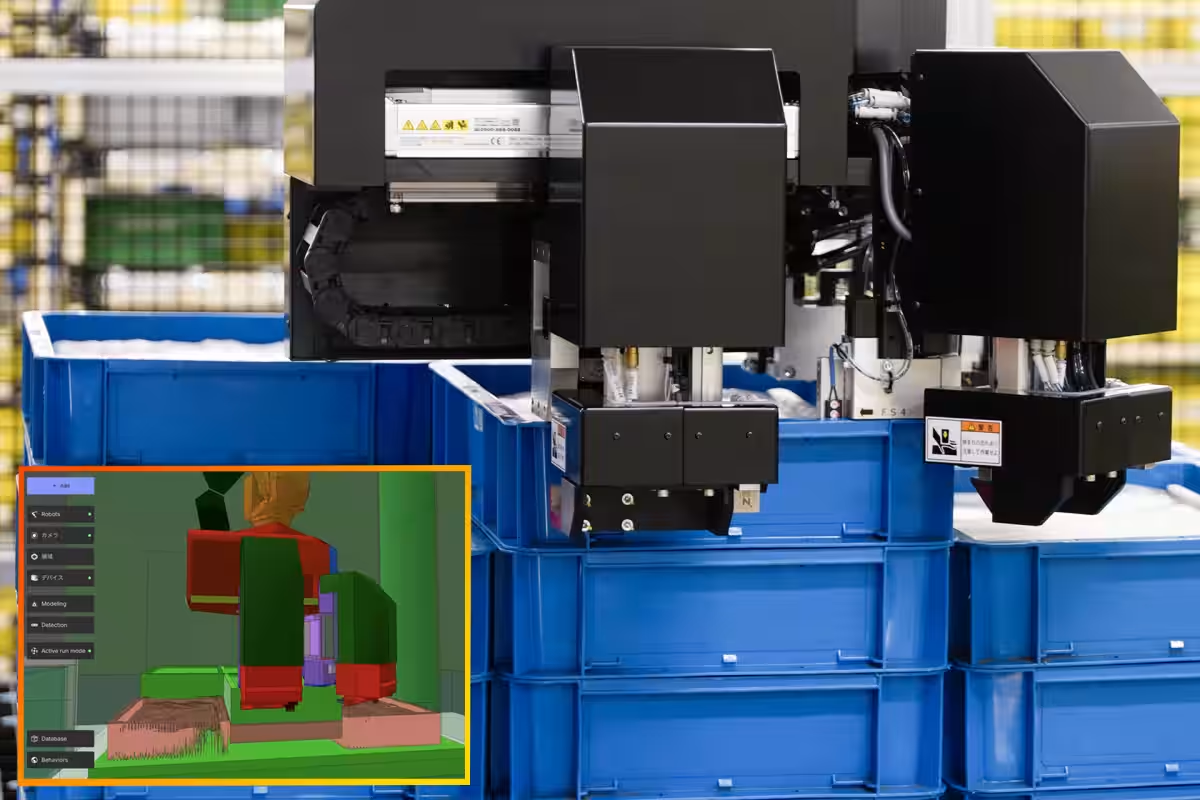
One of the standout features of this system is its 3D vision technology. Mounted atop each robot, this 3D vision scans the mixed pallets to precisely identify positions, shapes, and necessary gripping edges for the containers. Based on this analysis, the robot dynamically determines the proper gripping points and executes the unloading process with remarkable accuracy, autonomously retrieving containers from mixed pallets that cannot have fixed loading patterns.
Kanban Scanning and Orientation Alignment
Once the robot has secured a container, it scans the attached kanban label on the side. If the kanban is not visible, it can rotate the container to another side for scanning. This innovative feature not only simplifies the retrieval process but also ensures that containers are oriented correctly for subsequent processes, thus adding considerable value to the operation.
Adaptability with Variable Robot Hands
The robot hands are designed to automatically adjust their grip width based on container size, enabling them to handle a range of container standards without the need for hand swaps. This adaptability means that even when new container types are introduced post-implementation, logistical operations can adjust swiftly without overhauling the entire setup. As production requirements change, this long-term flexibility signifies that the automated system becomes a valuable asset for the company’s future endeavors.
Impact: Reducing Labor Cost and Relieving Workload
Through a unique improvement initiative known as the
Topics Other)


【About Using Articles】
You can freely use the title and article content by linking to the page where the article is posted.
※ Images cannot be used.
【About Links】
Links are free to use.