




Survey on Hotel Staffing Trends in 2026 Predicts Increased Demand and Workforce Changes
Survey on Hotel Staffing Trends for 2026
The recent joint study conducted by DIVE Inc., a company specialized in human resource services for over 5,900 tourism facilities, and its subsidiary, Shukuyajuku, reveals significant insights into the staffing trends expected in the hotel and inn sector for 2026. The survey targets HR managers and general managers within these establishments and focuses on the anticipated increase in lodging demand, necessary personnel enhancements, and ongoing challenges faced by the industry.
Background of the Survey
The tourism industry is currently navigating a complex landscape characterized by a diminishing labor force, recovering inbound tourism demand, and shifting work styles. In November 2023, Japan welcomed over 3.5 million international visitors, marking a 10.4% increase compared to the previous year and reaching the highest cumulative figure to date. However, the industry grapples with recruitment challenges due to a decreasing number of job seekers, skills shortages in specific roles like service and culinary positions, and region-specific employment issues.
In light of these changing dynamics, DIVE and Shukuyajuku aimed to gather comprehensive insights into the current state of staffing in hotels and inns to establish effective strategies for sustainable workforce management. The survey findings will not only shed light on the existing environment but also equip these establishments with valuable information to adapt to the upcoming demand surge effectively.
Summary of Findings
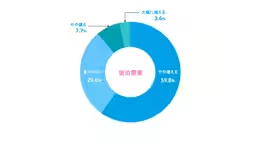
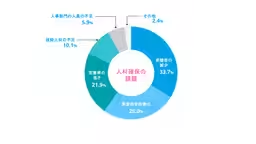
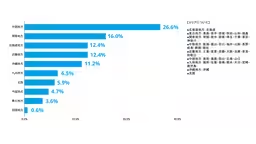
According to the survey results, over 60% of respondents predict an increase in lodging demand leading up to 2026, primarily driven by a robust return to tourism. About 60% also indicated plans to increase their workforce in light of recovering demand. However, the primary hurdle remains the decrease in job applicants, cited by 33.7% of facilities, which directly impacts recruitment efforts.
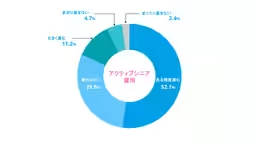
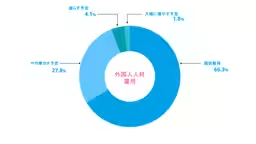
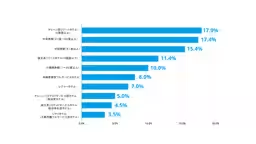
Moreover, around 70% of respondents are planning salary and benefit improvements, primarily as investments to bolster talent acquisition and retention strategies. Innovative workforce solutions are also emerging, with a reported 30% anticipated increase in foreign workers and over 60% of facilities looking to incorporate senior talent into their workforce.
Key Insights Into Workforce Trends
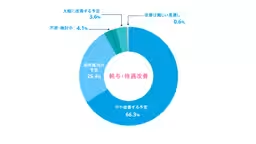
1. Lodging Demand Predictions: The survey revealed that 59.8% of facilities expect a slight increase in lodging demand, while 3.6% anticipate a significant rise. Notably, a minority believes demand will decrease or remain static.
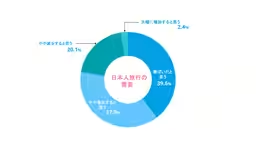
2. Local Guest Trends: The expectations for Japanese travelers remain stable, with 39.6% suggesting a steady demand and 37.9% positing a slight increase.
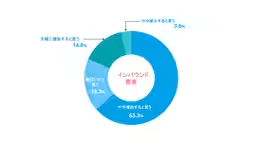
3. Rising Inbound Demand: 63.3% of respondents forecast a slight increase in inbound tourism, with a small percentage anticipating a significant spike, marking positive growth potential in the sector.
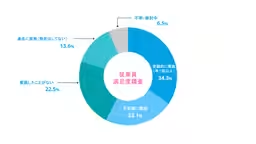
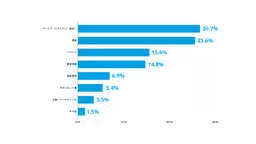
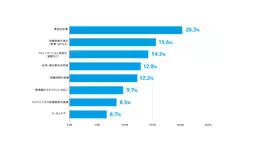
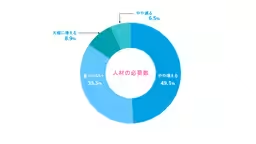
4. Manpower Needs: A significant portion (over 58%) reaffirmed that their staffing needs will increase, with a noted struggle particularly in service and culinary roles.
5. Compensation Improvements: Almost 70% of establishments are planning to enhance their salary structures to better attract and retain talent. Feedback highlights the importance of competitive wages as a vital factor in enhancing retention rates.
6. Diversity in the Workforce: The survey indicates a continued and expanded effort to utilize diverse talent pools, including foreign workers and senior members, adapting to meet the needs of a changing demographic landscape.
Challenges and Future Outlook
The primary challenge cited by respondents is the reduction of job seekers, with many facilities also feeling the strain of escalating wage competition and inconsistent retention rates.
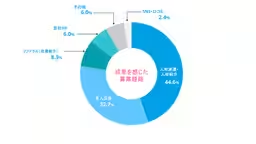
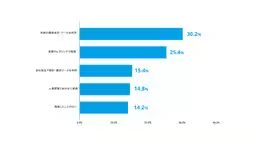
Administrative professionals and HR teams are tasked with enhancing hiring experiences and optimizing recruitment pathways, particularly through staffing agencies as a successful channel for finding qualified candidates.
As 2026 approaches, hotel and inn operators are strategically focused on establishing flourishing work environments that foster employee satisfaction and retention. Through improved salaries, enhanced training programs, and a commitment to diversity in hiring practices, the hospitality sector aims to secure a robust workforce capable of meeting the increasing demand.
Conclusion
This survey not only emphasizes the optimistic outlook for travel and tourism in Japan but also outlines the pressing needs for action in the workforce arena. A proactive approach to staffing, focusing on employee well-being and professional growth, will be crucial for hotels and inns aiming for sustainable success in the coming years.

Topics Consumer Products & Retail)
【About Using Articles】
You can freely use the title and article content by linking to the page where the article is posted.
※ Images cannot be used.
【About Links】
Links are free to use.